

By Qisane · May 2026 · 8 min read
Most people meet chrysanthemum and goji as a sleep tea. Its older and more specific job, the one Chinese herbalists have leaned on for centuries, is the eyes. If your eyes feel dry, hot, or heavy after a long day of screens, this pairing was built for exactly that.
The Eye Tea Before There Were Screens
In Traditional Chinese Medicine the eyes are closely tied to the liver, and a particular cluster of complaints, dry eyes, a gritty or hot feeling, redness, and that heavy ache behind the brow, gets grouped under what practitioners call liver heat. Chrysanthemum flowers, ju hua, are the first herb a classical text reaches for here. They are described as cooling and clearing, used to settle that heat and to brighten the eyes. Goji berries, gou qi zi, sit right beside them as a liver and kidney tonic that nourishes what the cooling herb clears. One cools, one nourishes, and the pair has been written into Chinese herbal formulas for the eyes for well over a thousand years.
The reason this matters now is that modern life produces the same picture by a different route. Hours of close focus on a bright screen, little blinking, dry indoor air, and late nights are a fairly precise recipe for the hot, dry, tired eyes that the old formulas were written to settle. The herbs did not change. The cause did. A pairing built for scholars reading by lamplight turns out to fit a person who has been staring at a monitor since breakfast.
What Is Actually In the Cup
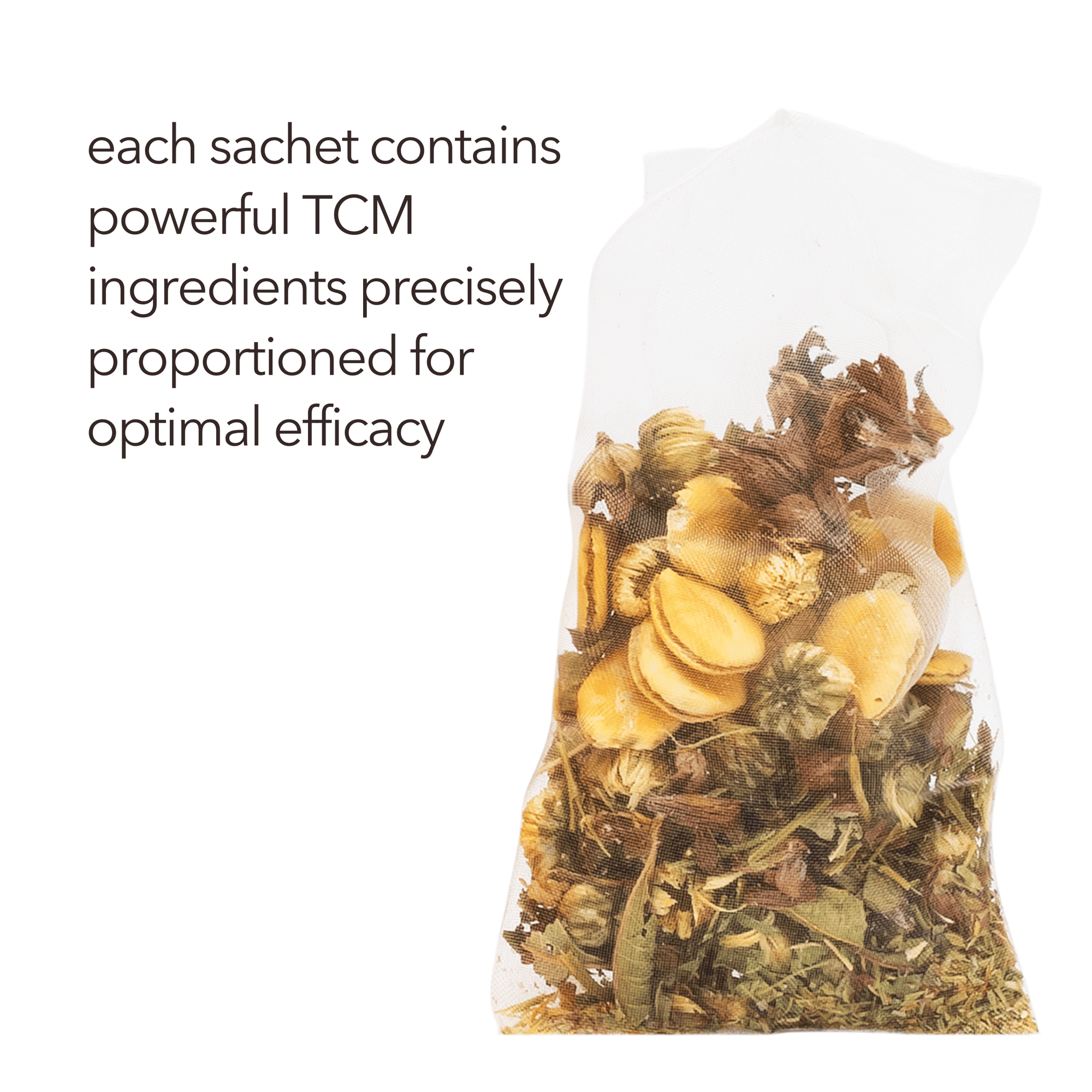
Qisane's Chrysanthemum & Goji keeps the pairing whole and adds two supporting herbs from the same evening tradition. Whole chrysanthemum flowers and goji berries do the eye-focused work. Jujube dates, da zao, are among the most used calming herbs in classical formulas, included to settle the mind. Longans, long yan rou, nourish what TCM calls the heart blood and round the cup into something warmer and sweeter on the second steep. It is caffeine-free, which is the point: an eye-soothing ritual you can keep through the afternoon and into the evening without trading it against your sleep.
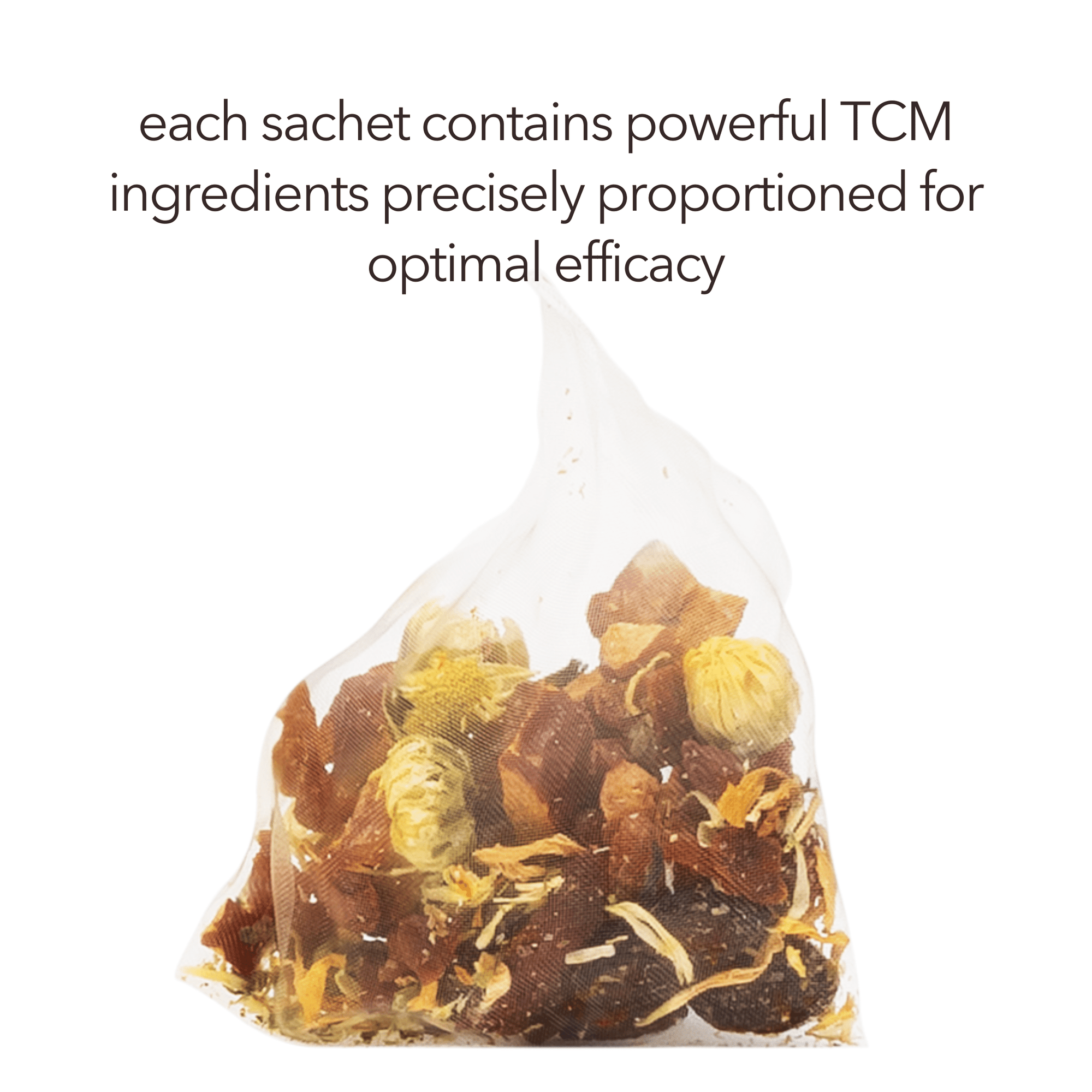
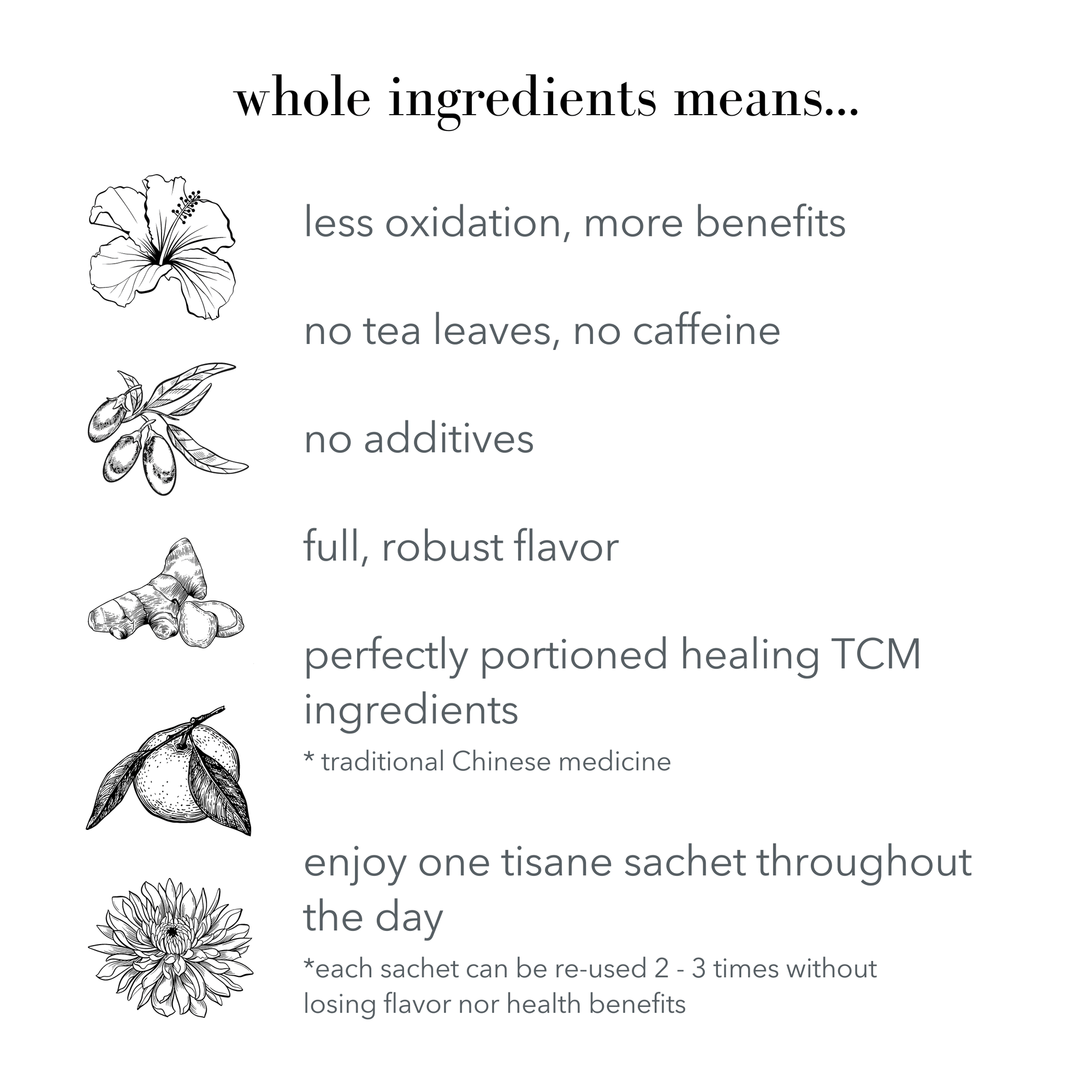
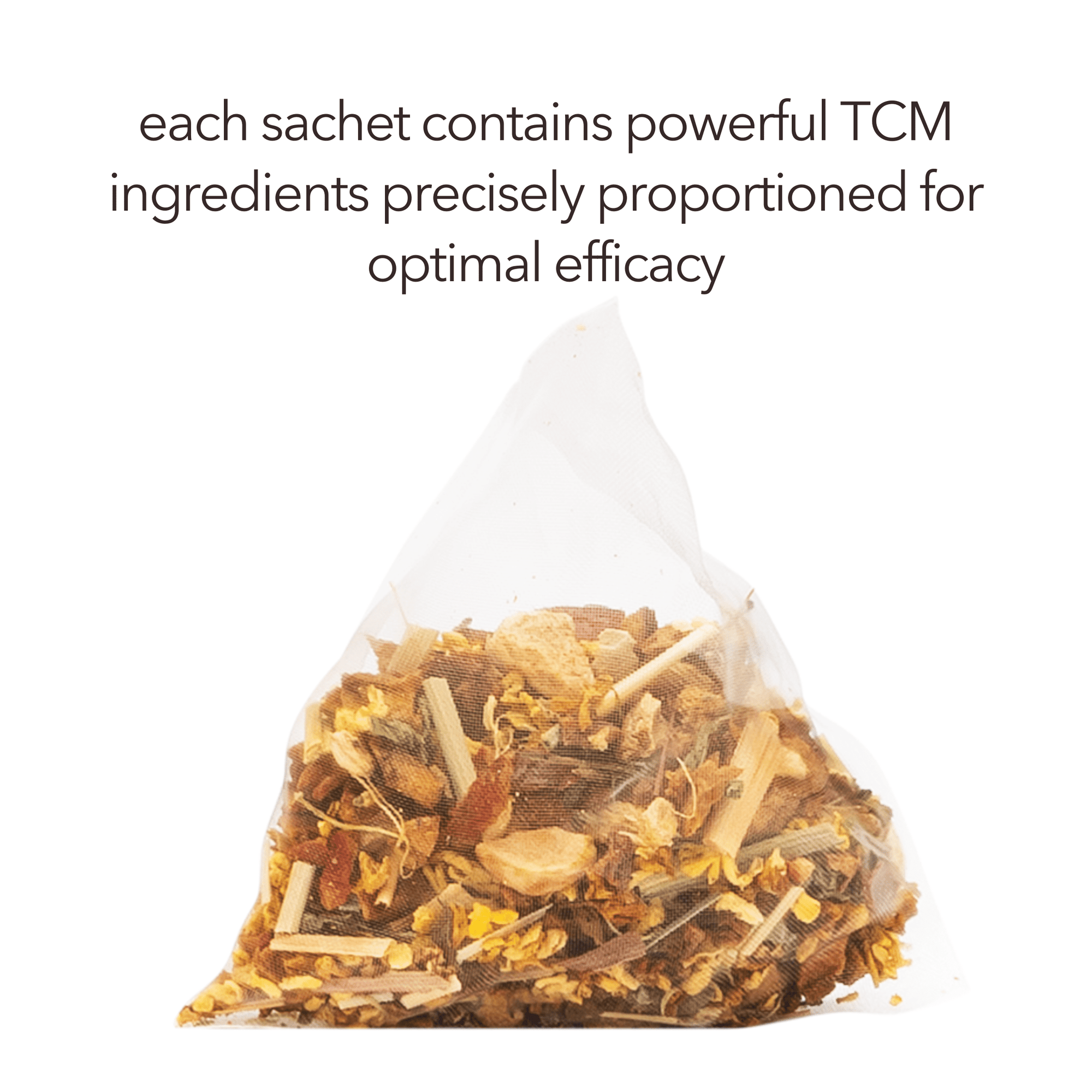
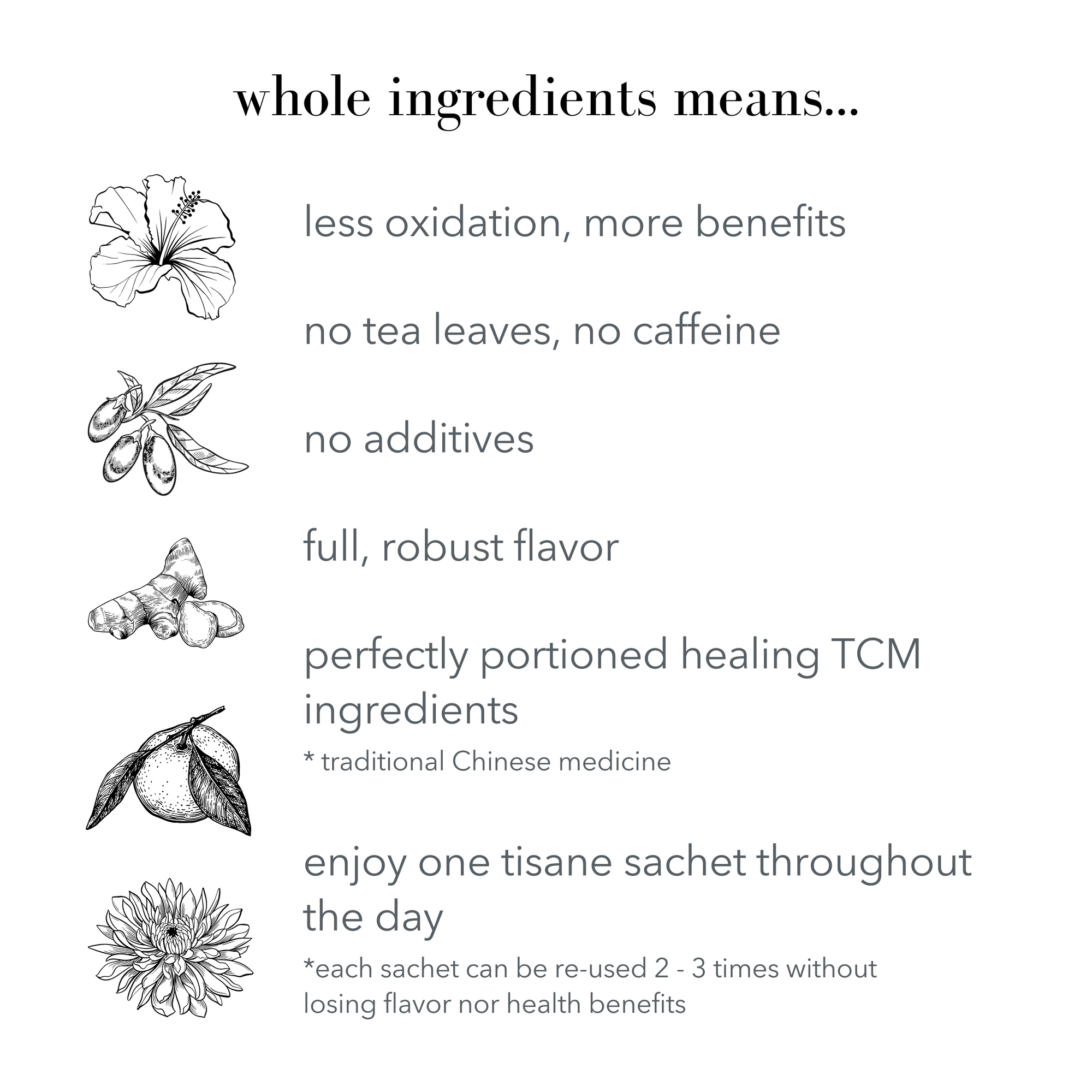
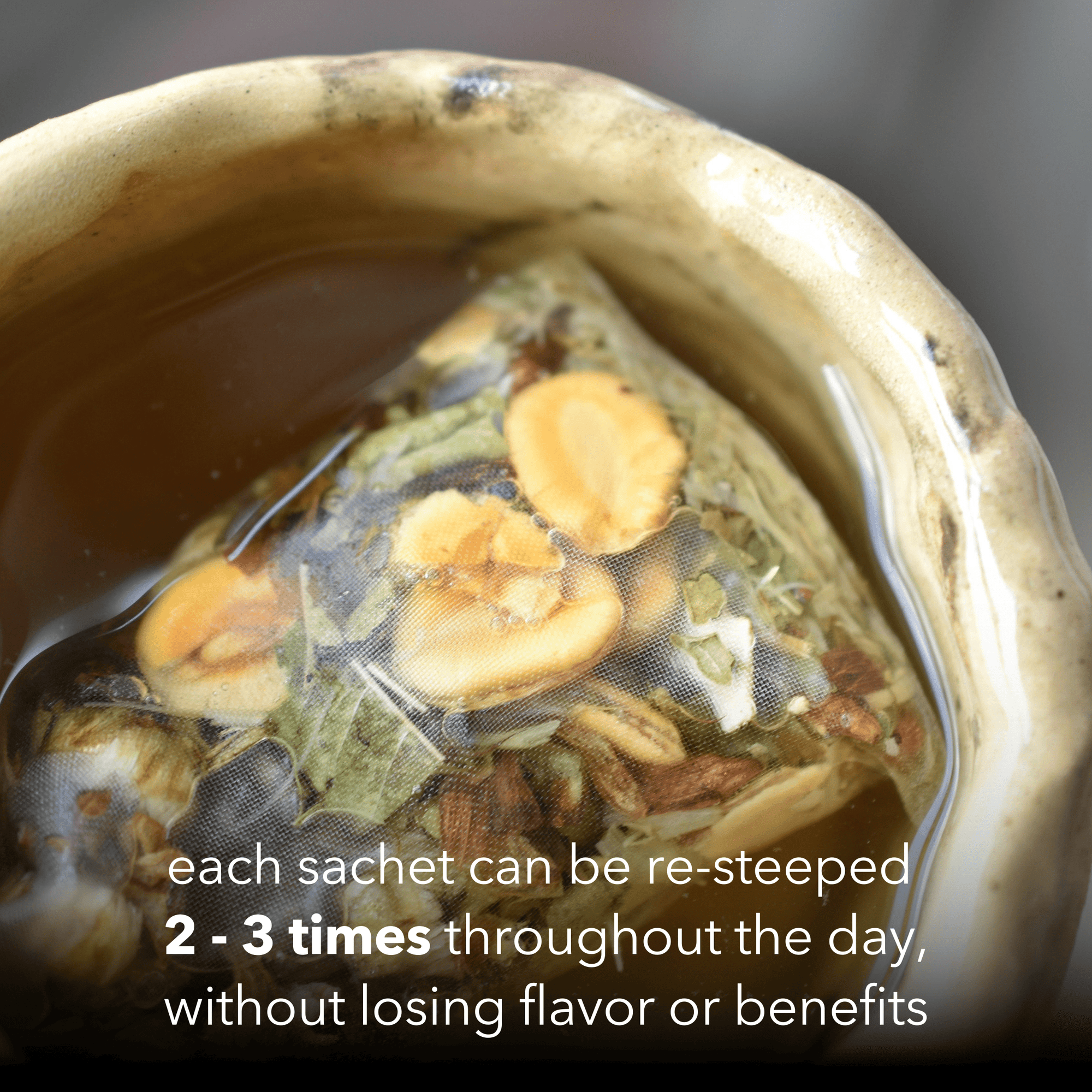
It helps to be clear about what whole flowers mean here. A tisane made from whole chrysanthemum heads and whole berries is a different object from the fannings and dust that fill most tea bags. You can see the ingredients, they re-steep two or three times, and the cup is cleaner and more floral on the first pass before it turns honeyed as the longan comes forward. If you have only ever had chrysanthemum from a supermarket bag, the whole-flower version is worth meeting on its own terms.

What a Cup Realistically Does on a Screen Day
Set expectations honestly. This is a tisane, not a medicine, and the FDA has not evaluated it to treat any eye condition. What it offers is real but modest, and it works on two levels at once. The first is simple and physical: a warm, caffeine-free drink is fluid and a pause, and tired eyes on a long screen day are very often dry eyes attached to a person who has not blinked, looked away, or had water in two hours. The ritual of making and drinking the cup is itself a screen break, which is one of the few things that reliably helps eye strain.
The second level is the tradition: a cooling, eye-directed pairing taken as a daily habit, the way you would use any supportive herb, for steadiness over time rather than a single dramatic effect. People who run warm in the evenings, spend long hours on screens, or carry a low background tension that never quite releases tend to find it a closer fit than a mild chamomile. None of that replaces the basics. It sits alongside them.
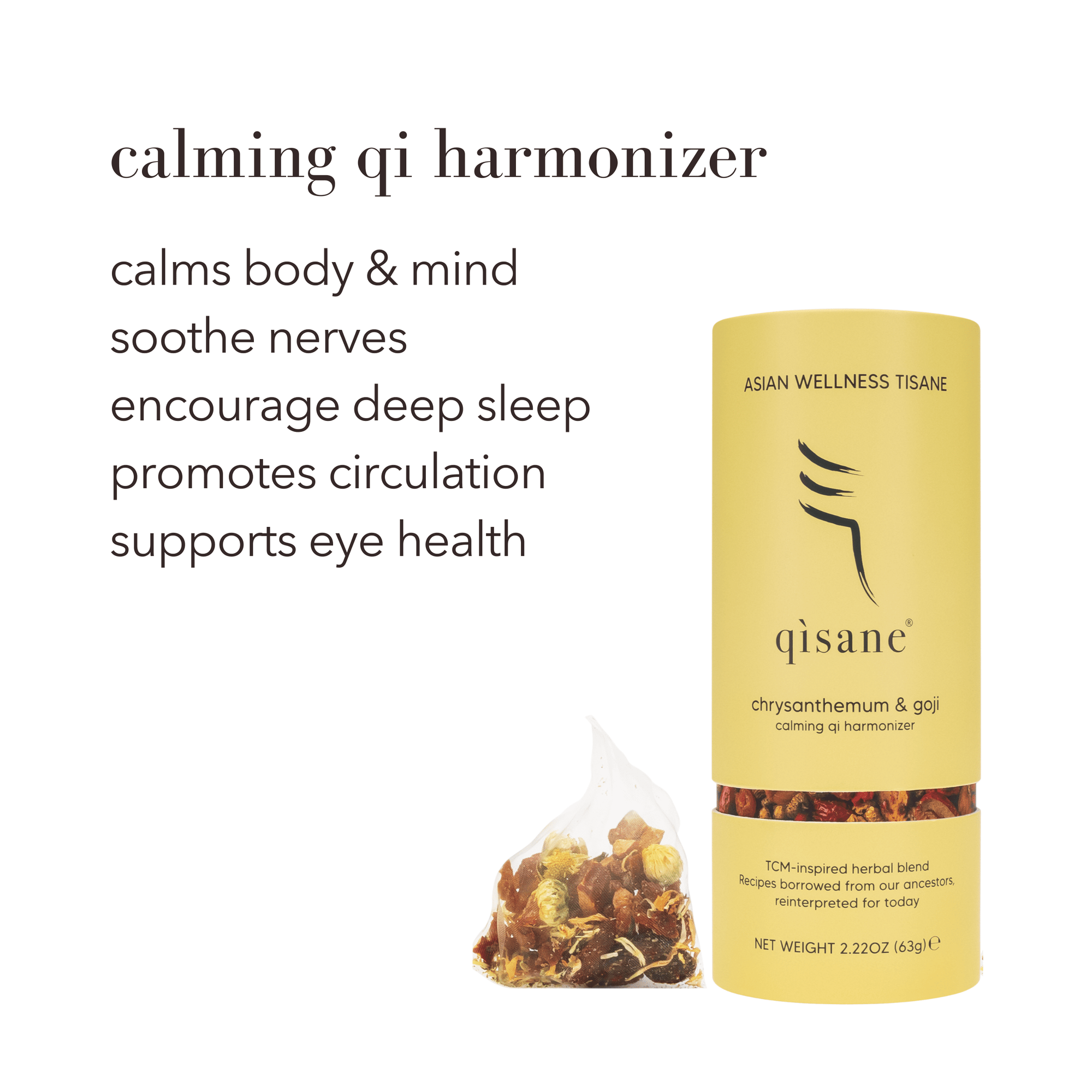
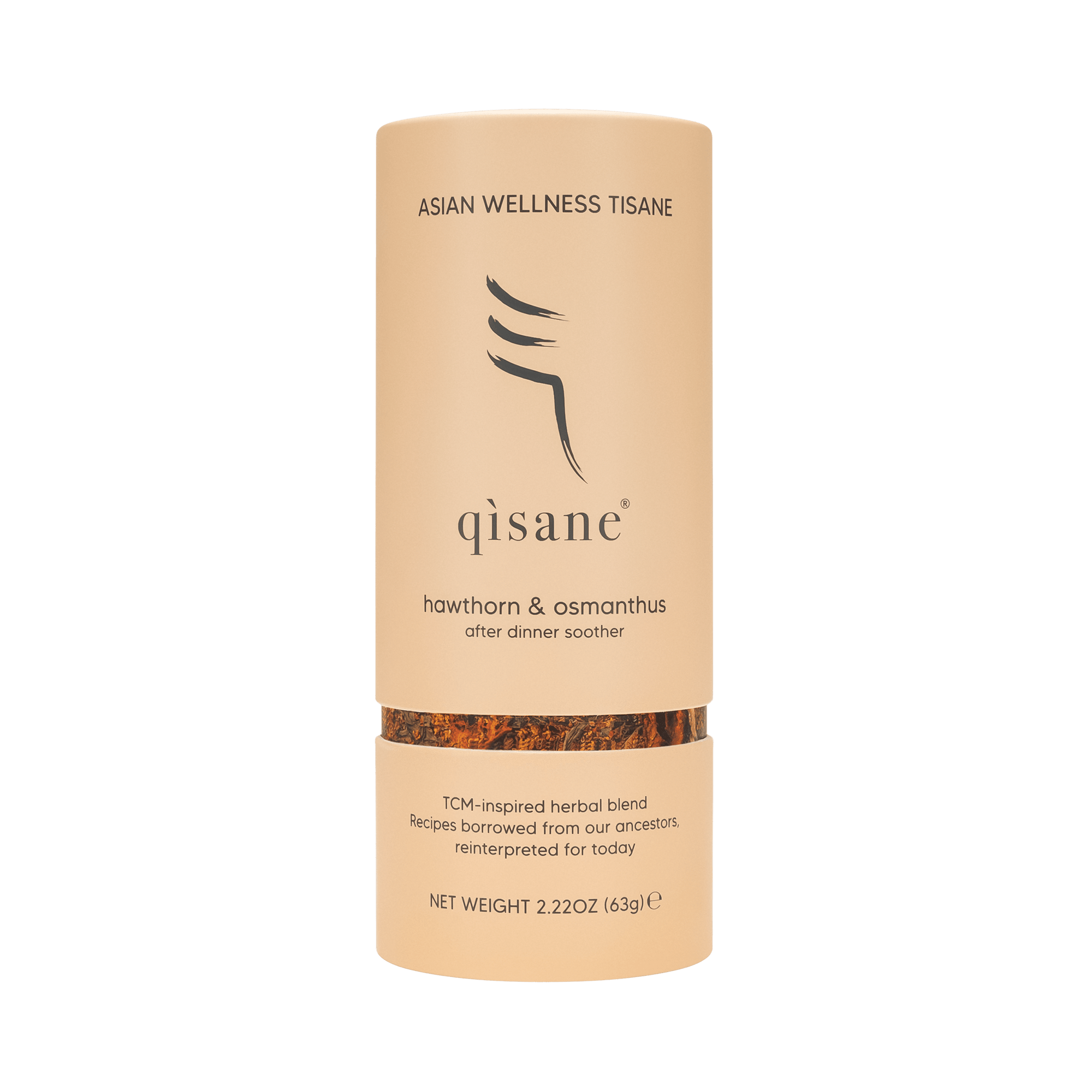
A golden, gently sweet floral tisane of whole chrysanthemum flowers, goji berries, jujube dates, and longans. Caffeine-free. Each sachet re-steeps two to three times. $18.99.
Best for screen-heavy days and warm evenings, when you want an eye-soothing ritual you can carry from mid-afternoon into the night without affecting sleep.
Tea, Eye Drops, or a Screen Break: How They Compare
| Approach | What it does | Best for | Limits |
|---|---|---|---|
| Chrysanthemum & goji tisane | Warm fluid, a built-in pause, a cooling eye-directed ritual | Daily wind-down from screens, warm evenings | Supportive, gradual, not a treatment |
| Lubricating eye drops | Immediate surface moisture | Acute dryness in the moment | Short-lived, does not change habits |
| The 20-20-20 screen break | Relaxes focusing muscles, prompts blinking | Preventing strain during work | Easy to forget without a cue |
The useful insight is that these are not rivals. A cup of chrysanthemum and goji is one of the better cues for the other two: the few minutes it takes to brew and sip is a natural moment to look out a window, and the warmth nudges you to slow down. The tea makes the free habits easier to keep.
How to Brew It for the Most Benefit
- Steep in water at 96 to 98 degrees Celsius for 6 to 7 minutes. Hot enough to open the whole flowers fully.
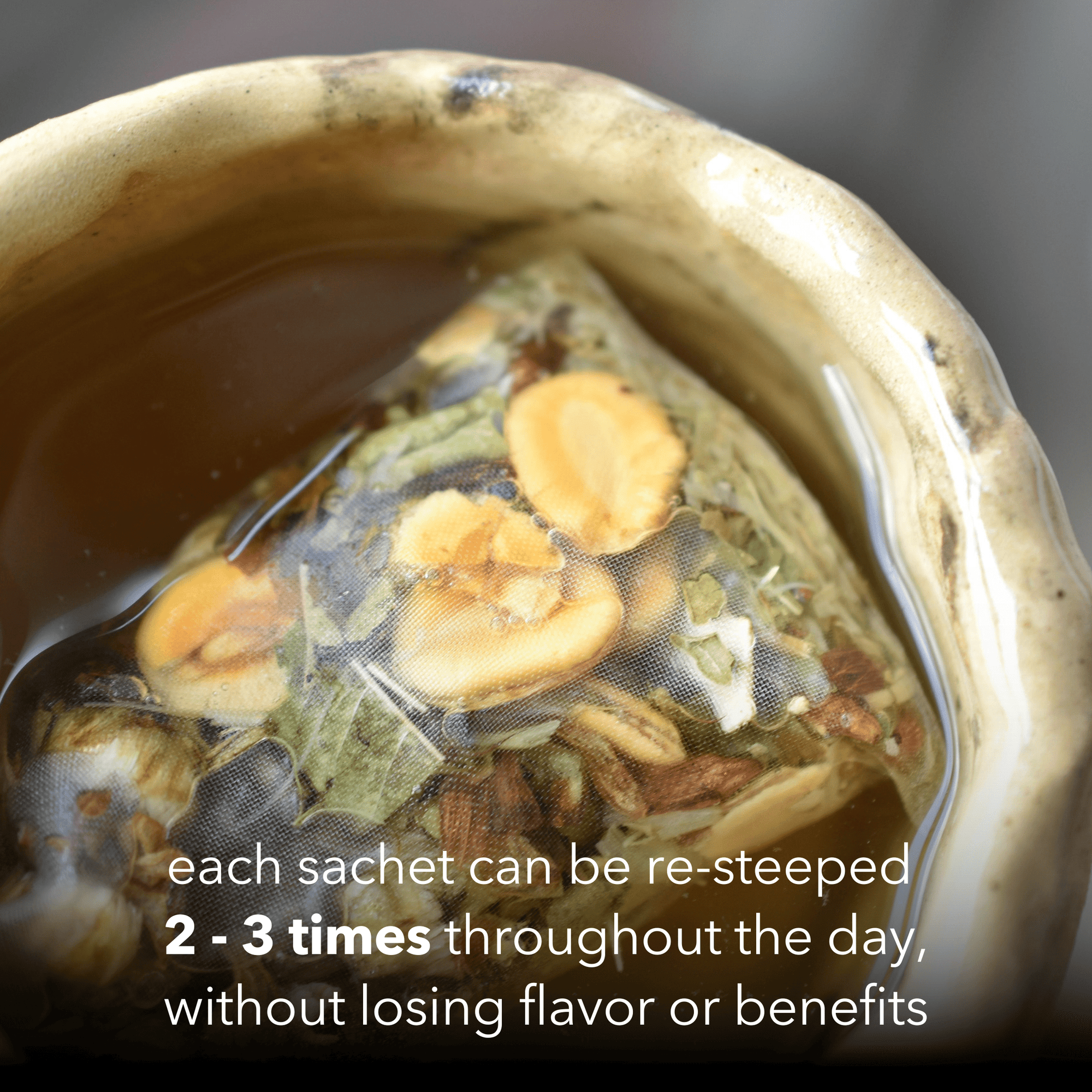
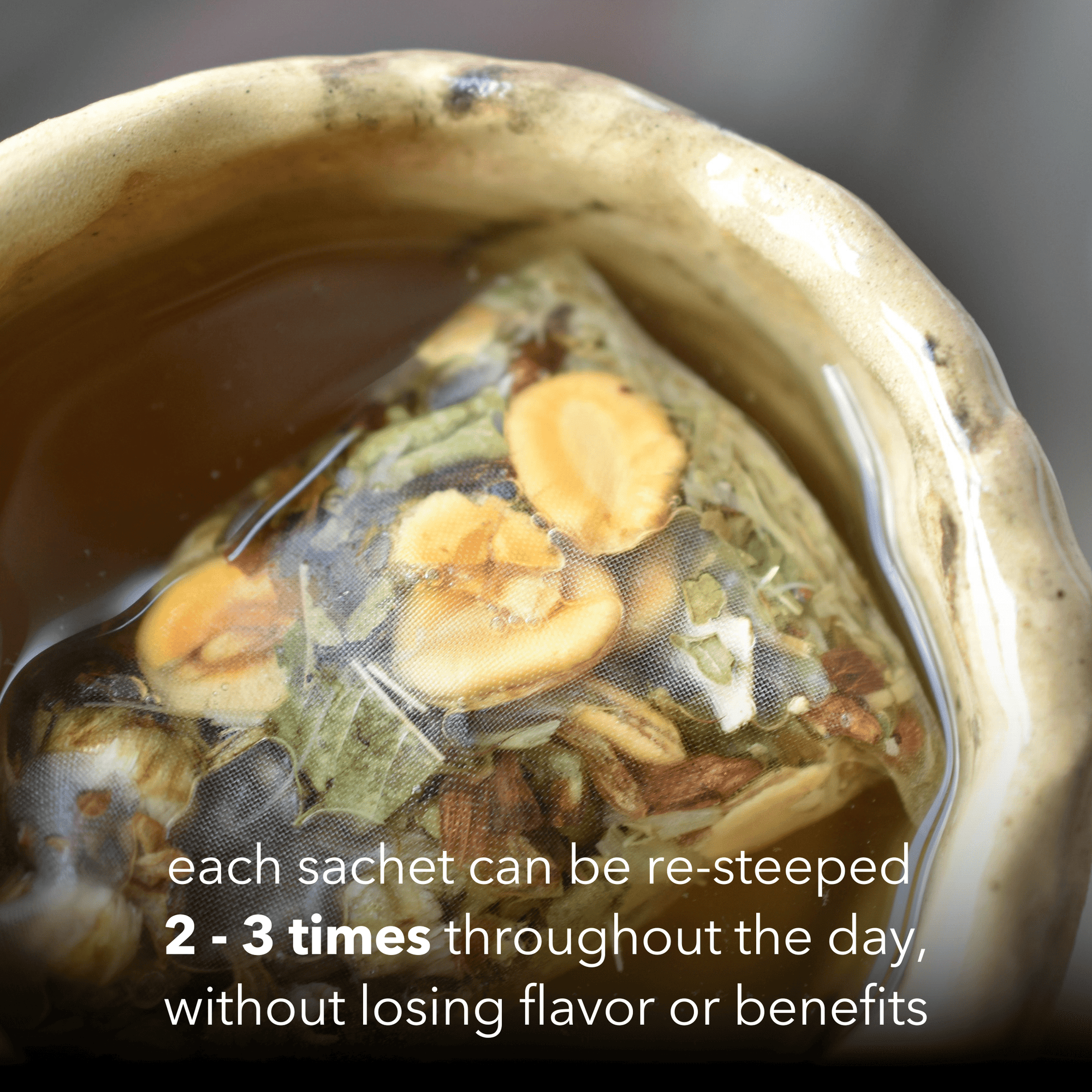
- Re-steep the same sachet two or three times. The first pass is clean and floral, later steeps turn warmer and honeyed as the longan releases.
- A practical rhythm: start the first steep in the mid-afternoon, especially after a long screen stretch, and take a later steep in the early evening as a deliberate wind-down.
- Drink it as a screen break, not at your desk. Stand up, look at something far away, and let the eyes rest while it cools.
- Leave it unsweetened first. If you want a touch of sweetness, a little monk fruit keeps it caffeine-free and sugar-free.
This pairing has a long history as an evening ritual as much as an eye one, and the calm and the eye comfort are two sides of the same cooling idea. We wrote about the wind-down side in our guide to chrysanthemum and goji for sleep and relaxation, and the wider tradition in our overview of Traditional Chinese Medicine teas. If the screen day is more about a foggy mind than tired eyes, our note on herbal tea for focus and mental clarity is the better starting point. The same cooling, eye-directed thinking runs through how Qisane builds its eye-soothing tisanes, and you can read where a flower-and-berry tisane sits next to true tea in our piece on tisane versus tea.

Frequently Asked Questions
Is chrysanthemum goji tea actually good for your eyes?
In Traditional Chinese Medicine, chrysanthemum and goji is the classic pairing for tired, dry, or hot eyes, used for centuries to cool what the tradition calls liver heat and to brighten the eyes. As a modern drink it supports the eyes mainly by being a warm, caffeine-free fluid and a built-in screen break, both of which truly help eye strain. It is a supportive ritual, not a treatment for any eye condition.
Does it have caffeine?
No. It is a caffeine-free tisane made from flowers, berries, and fruit, with no tea leaf in it. That is why you can drink it through the afternoon and into the evening without it affecting your sleep.
Can I drink it every day?
Yes, it is suited to daily use, which is how supportive herbs work best. Many people keep a cup as a mid-afternoon screen break and a second steep as an early-evening wind-down. If you are pregnant, nursing, or taking medication, check with your clinician first, since goji can interact with some blood-thinning drugs.
How is this different from chamomile?
Chamomile is a mild, pleasant calming herb that works by gently settling the nervous system. Chrysanthemum and goji comes at things from the cooling, eye-directed side of Chinese herbalism instead. People who found chamomile pleasant but not quite effective often find this a closer fit, because it addresses a different picture: heat and dryness rather than simple restlessness.
When is the best time to drink it?
Mid-afternoon after a long screen stretch, and again in the early evening. The first steep is clean and floral, the later steeps are warmer and sweeter, so the rhythm fits a wind-down that starts at your desk and ends on the sofa.
Will it fix dry eyes on its own?
No, and nothing in a cup should be expected to. Dry, strained eyes respond best to the basics: regular screen breaks, blinking, water, and reasonable air and light. The tea supports those habits and makes them easier to keep, rather than replacing them. Persistent eye pain, redness, or vision changes are reasons to see an eye-care professional.
How many times can I re-steep one sachet?
Two to three times. The flavour shifts across steeps, so you get a clean floral cup first and a honeyed one later from the same sachet, which makes a single sachet stretch across an afternoon.
Related Reading
- When to drink herbal tea for sleep
- Why you can steep a tisane multiple times
- Why am I always tired even when I sleep enough
These statements have not been evaluated by the Food and Drug Administration. This product is not intended to diagnose, treat, cure, or prevent any disease. The traditional uses described here come from Traditional Chinese Medicine and are shared for general education, not as medical advice. If you have persistent eye discomfort, vision changes, or a medical condition, or if you are pregnant, nursing, or taking medication, consult a qualified healthcare professional. Prices and product details are current at publication and should be confirmed on the product page.