

There is a specific kind of tired that does not lead to sleep. The kind where your body is spent but your mind keeps going, replaying the day, running through tomorrow, unable to settle. If you have felt that, you already know why so many people are reaching for something other than chamomile.
Chrysanthemum tea has been drunk in China for over a thousand years as an evening wind-down. Not because it is a sedative, but because in traditional Chinese medicine, the goal was never to force the body into sleep. It was to remove what was getting in the way of it.
What Makes Chrysanthemum Different from Other Calming Teas
Most Western herbal teas that promise relaxation are built around sedative herbs: valerian, passionflower, skullcap. These work by suppressing nervous system activity. They are blunt tools, and for some people they work well.
Chinese herbal medicine approaches the same problem from a different direction. In TCM, difficulty sleeping or feeling restless in the evenings is often understood as excess heat in the body, particularly in the liver and heart meridians. That internal heat has nothing to do with body temperature in the clinical sense. It is a way of describing a state of agitation: a nervous system that is overstimulated, a mind that cannot stop, a body that feels wired even when it is exhausted.
Chrysanthemum flowers are classified as a yin food, meaning they are cooling and moistening by nature. Drinking a cup in the evening is understood not as forcing rest, but as helping the body return to a state of balance where rest can happen on its own.
This is a genuinely different framing, and it resonates with people who have tried chamomile or lavender teas and found them either ineffective or too heavy-handed.
TCM Calming Teas vs Western Herbal Teas: What Is Actually Different
The difference between a Western calming tea and a Chinese herbal one is not just a matter of ingredients. It is a different theory of why the body struggles to rest, and a different idea about what to do about it.
Western calming teas, including chamomile, valerian root, passionflower, and skullcap, generally work by reducing nervous system activity. Chamomile contains apigenin, a compound that binds to the same receptors as certain anti-anxiety medications. Valerian is stronger and more sedative, often described as working similarly to a mild sleep aid. Passionflower and skullcap follow the same basic logic: quiet the nervous system, and sleep follows. These are effective for many people, particularly for the kind of restlessness that is driven by tension or anxiety. They are also well-studied, widely available, and familiar. The main limitation is that they treat every form of restlessness the same way, by turning down the volume.
TCM calming teas do not start from that premise. Rather than asking what to suppress, they ask what is out of balance. Chrysanthemum, goji, jujube, and longan are not sedatives. None of them bind to GABA receptors or blunt the nervous system. What they do instead is nourish the underlying conditions that make rest difficult: depleted yin, insufficient blood, and the excess internal heat that those deficiencies produce. It is a slower and more indirect approach, and it works best when the issue is not acute anxiety but that low-grade, chronic wired-but-tired quality that does not have a clean Western diagnosis.
In terms of taste, the difference is just as clear. Western calming teas tend toward the herbal and medicinal: valerian is famously earthy, chamomile is mild and slightly grassy, skullcap is bitter. TCM blends made from whole flowers, fruits, and dates tend to be sweeter and more layered. The chrysanthemum and goji combination is floral, gently sweet from the longan and jujube, and genuinely pleasant to drink in a way that does not require convincing yourself it is good for you.
Neither tradition is better in all cases. If you need something fast-acting or you are dealing with pronounced anxiety, valerian or passionflower may be more directly effective. If what you are experiencing is more like a body that cannot let go of the day, that runs warm, that stays alert past the point of wanting to, TCM's approach to calming tends to be a better fit. It meets the problem where it actually is.
The Four Ingredients in qìsane's Chrysanthemum and Goji Tisane
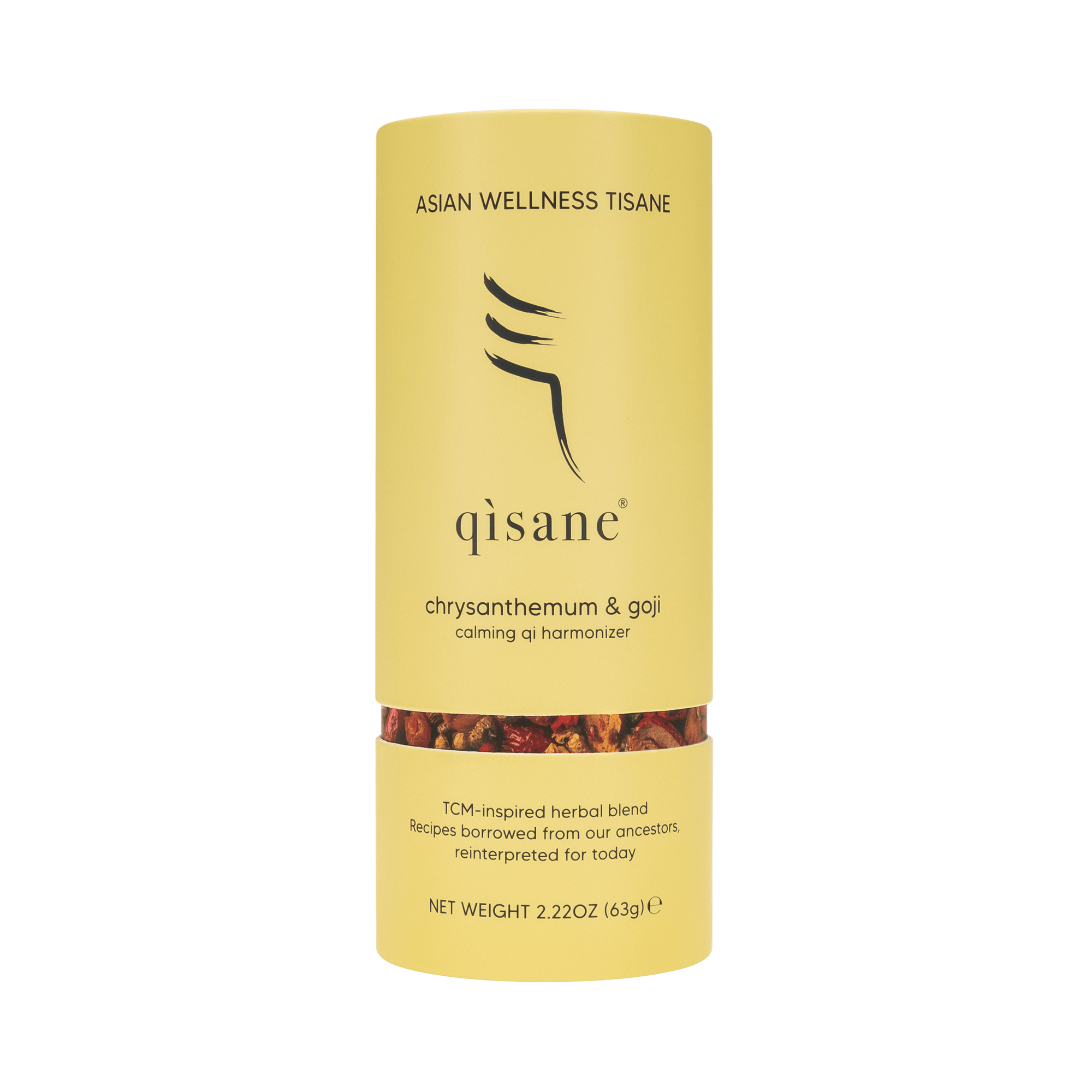
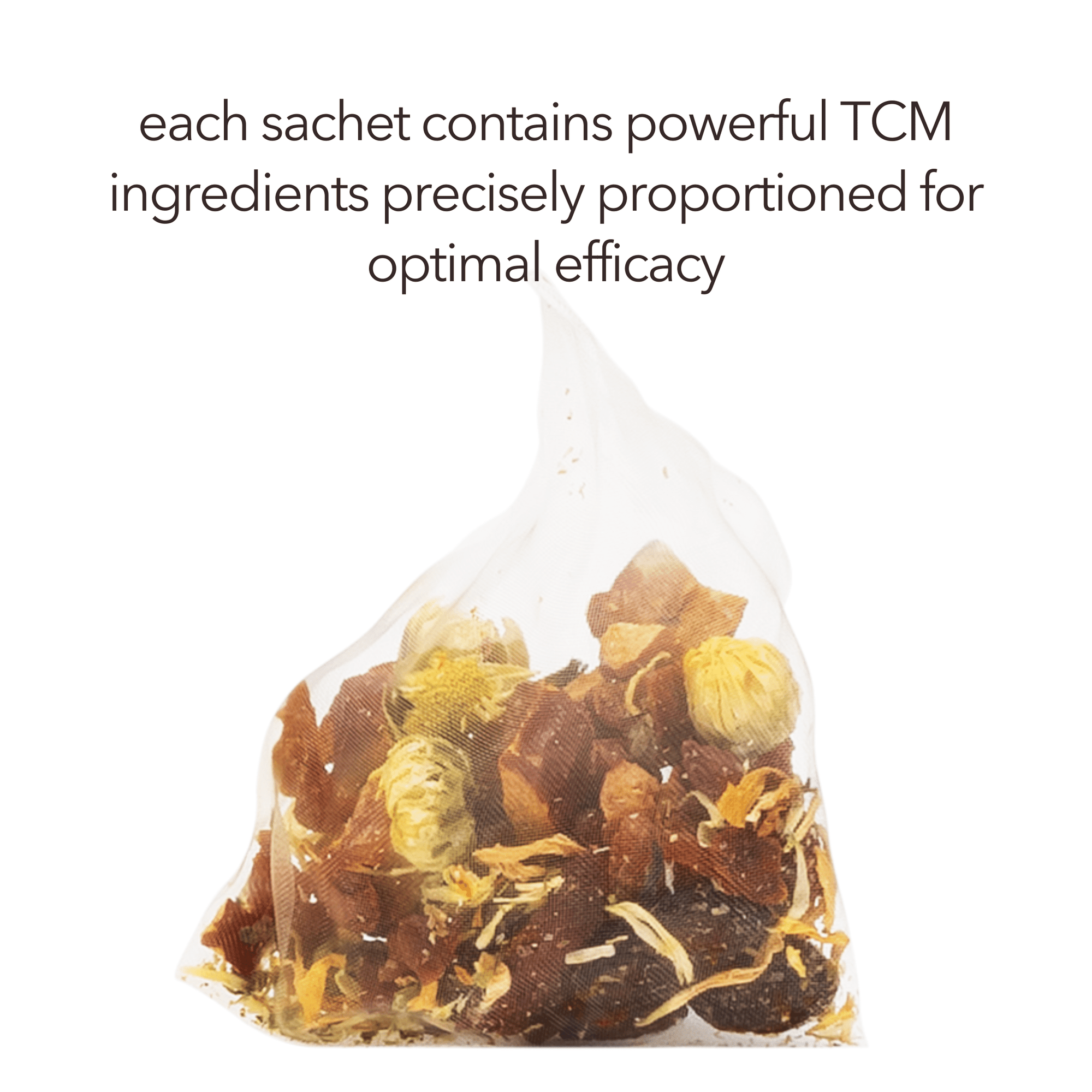
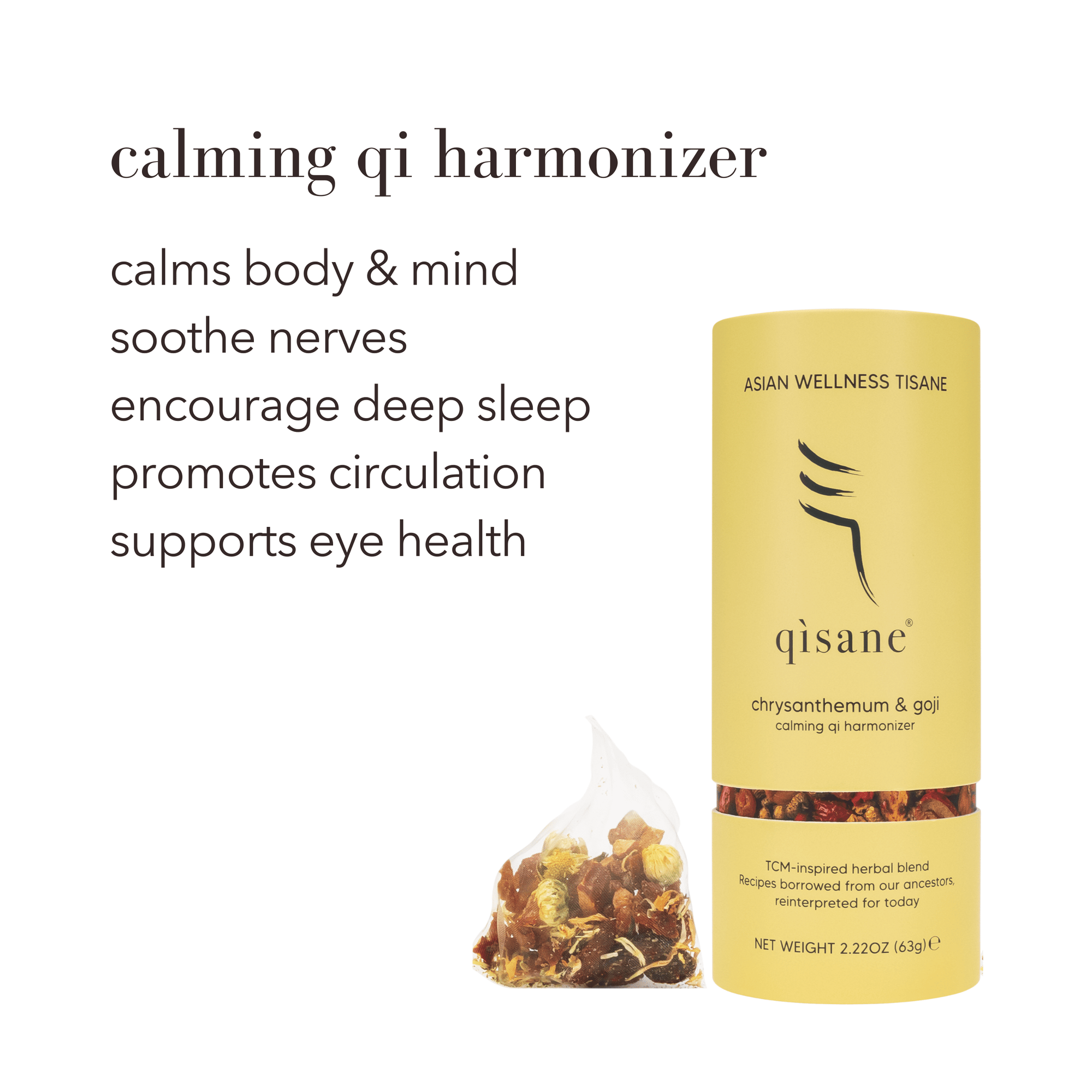
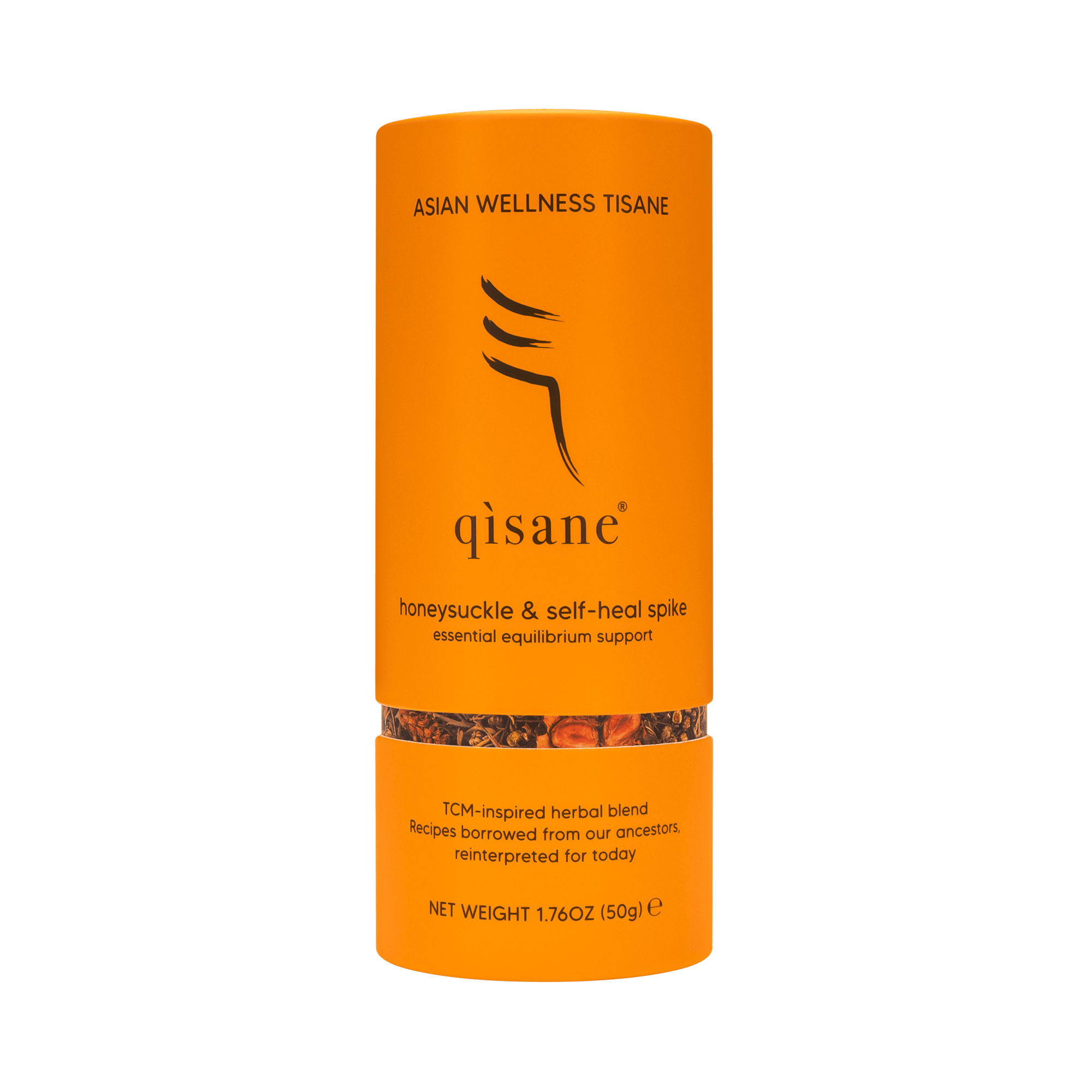
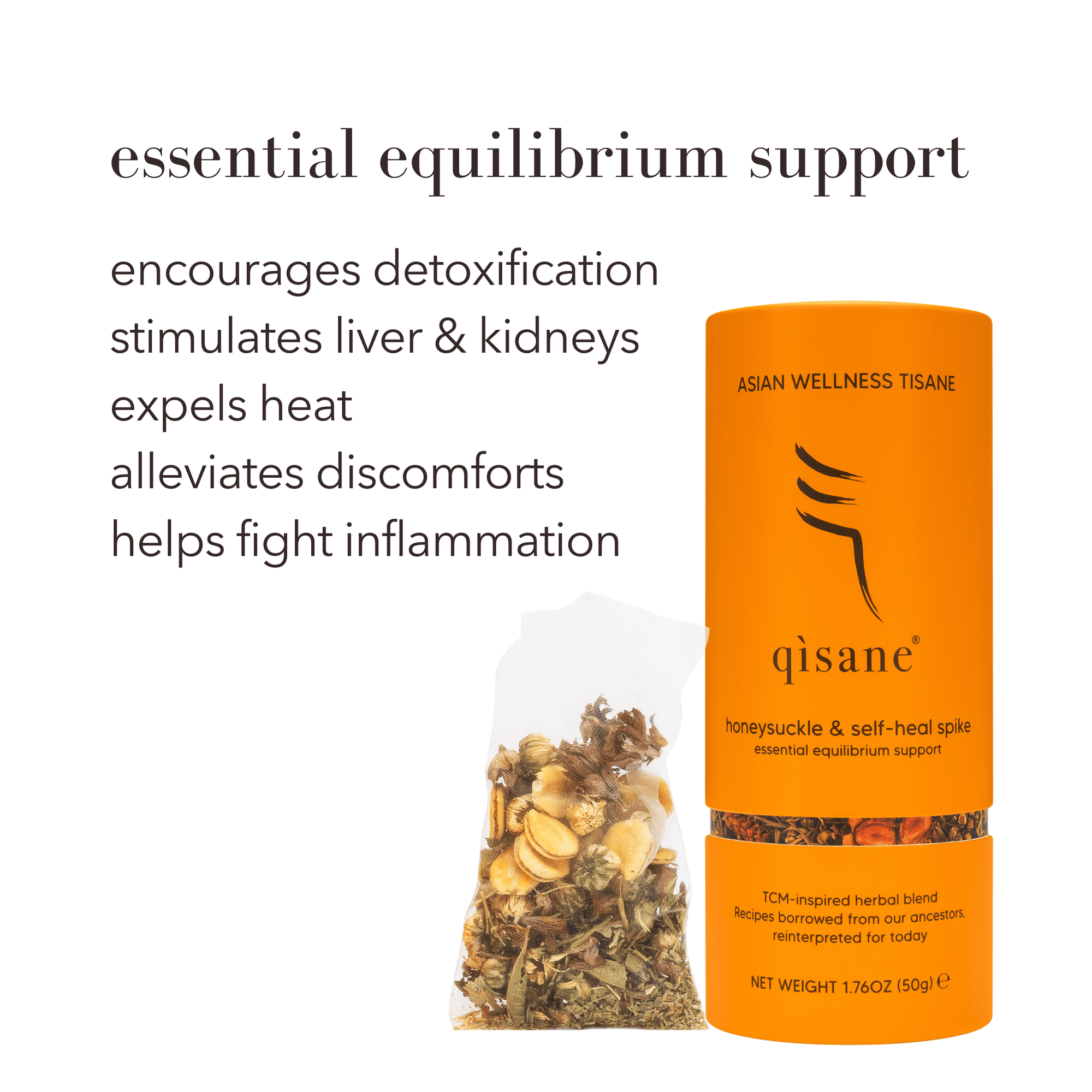
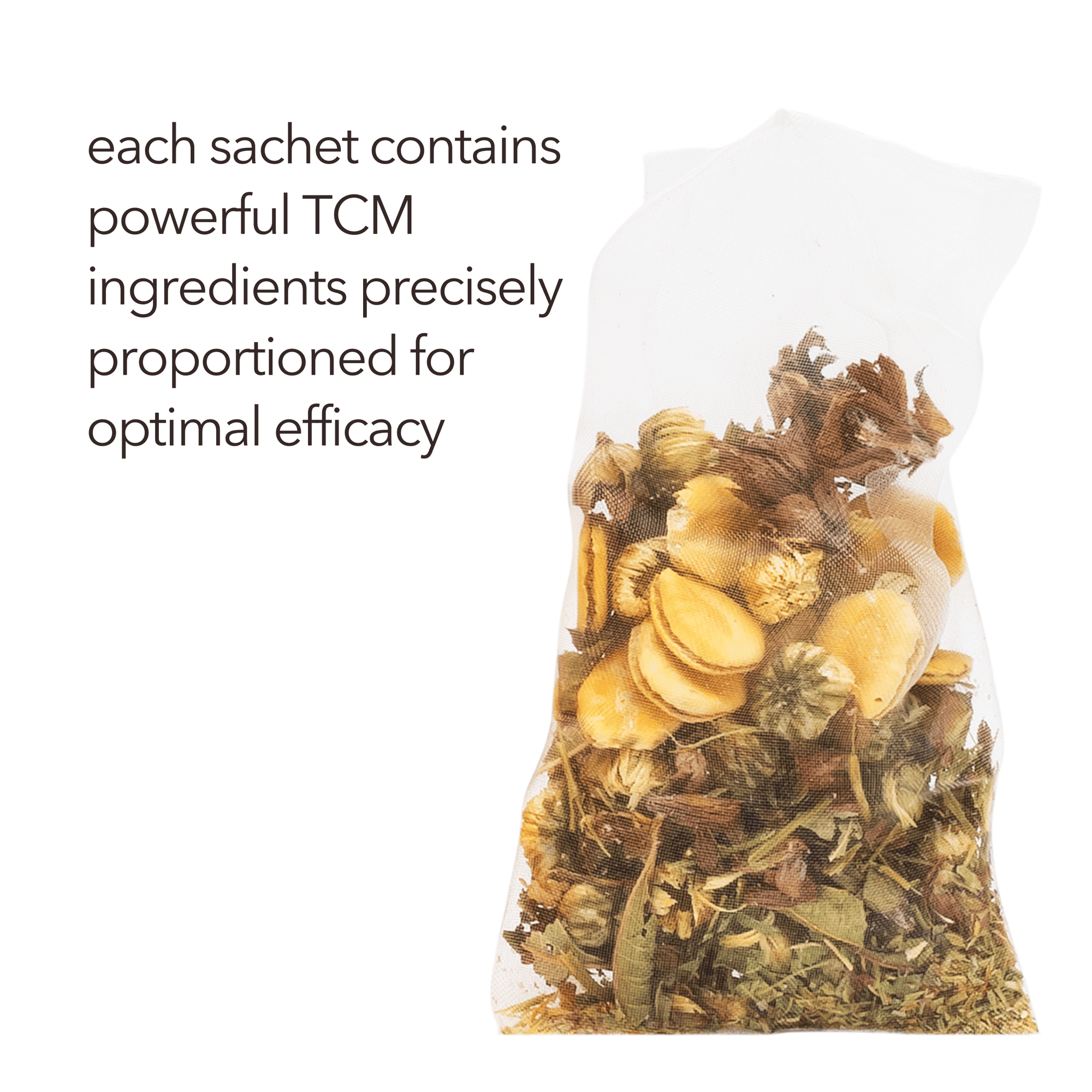
qìsane's version of this tea combines four whole ingredients, each with a distinct role in TCM and a flavor contribution that makes the cup genuinely worth drinking.
Chrysanthemum flowers are the anchor. They are sweet and slightly bitter, with a clean floral quality that does not taste perfumed or soapy. In TCM, they are used to clear heat, calm the liver, and support the eyes after long periods of close work or screen time. That last point is why chrysanthemum tea is such a common drink in East Asian office culture. It is not just an evening tea. It is a mid-afternoon reset for people who have been staring at screens.
Organic goji berries bring sweetness and depth. Their role in this blend is nourishing rather than calming. Goji berries are considered a tonic in TCM, supporting the liver and kidney yin that can become depleted by chronic stress, poor sleep, and overwork. When the body is nourished, it calms more easily.
Jujube dates are the part of this blend that surprises people most. Jujubes are not dates in the Western sense. They are a small red fruit with a flavor somewhere between apple and caramel. In TCM, they are used specifically to calm the mind and nourish the blood, and they are one of the most common herbs in classical formulas for anxiety and insomnia. Sour jujube seed, a different preparation of the same plant, has become one of the most searched Chinese herbs for sleep in recent years. The date itself shares that calming quality in a gentler, food-grade form.
Longans are perhaps the least known ingredient to non-Chinese audiences. They are a small tropical fruit with a translucent white flesh and a flavor that is floral and honey-like. In TCM, they are used to nourish heart blood and calm the shen, a concept roughly equivalent to the spirit or the emotional mind. Longan is a traditional ingredient in evening tonics and nourishing desserts throughout China, Hong Kong, and Southeast Asia. It is the ingredient that gives this blend its quiet sweetness and its particular emotional warmth.
Together, these four ingredients address what TCM would call the root cause of restlessness: insufficient yin, depletion, and internal heat, rather than simply putting a lid on the nervous system.
Who This Tea is For
This is not a tea that will knock you out. If you are looking for something with that kind of pharmaceutical effect, this is not it.
What chrysanthemum and goji does is create conditions for rest. People who find it most useful tend to share certain patterns.
They feel mentally active and alert even when they want to sleep. They run warm, notice heat in their face or chest in the evenings, or feel that familiar restless, keyed-up quality that makes it hard to wind down. They spend a lot of time on screens or in demanding cognitive work. They are not necessarily anxious in a clinical sense, but they carry a low-level tension that does not fully release at the end of the day.
Many of them have tried chamomile and found it pleasantly mild but not particularly effective. The chrysanthemum and goji blend tends to work better for this profile not because it is stronger, but because it is better matched to what is actually happening in the body.
How to Drink It for Best Results
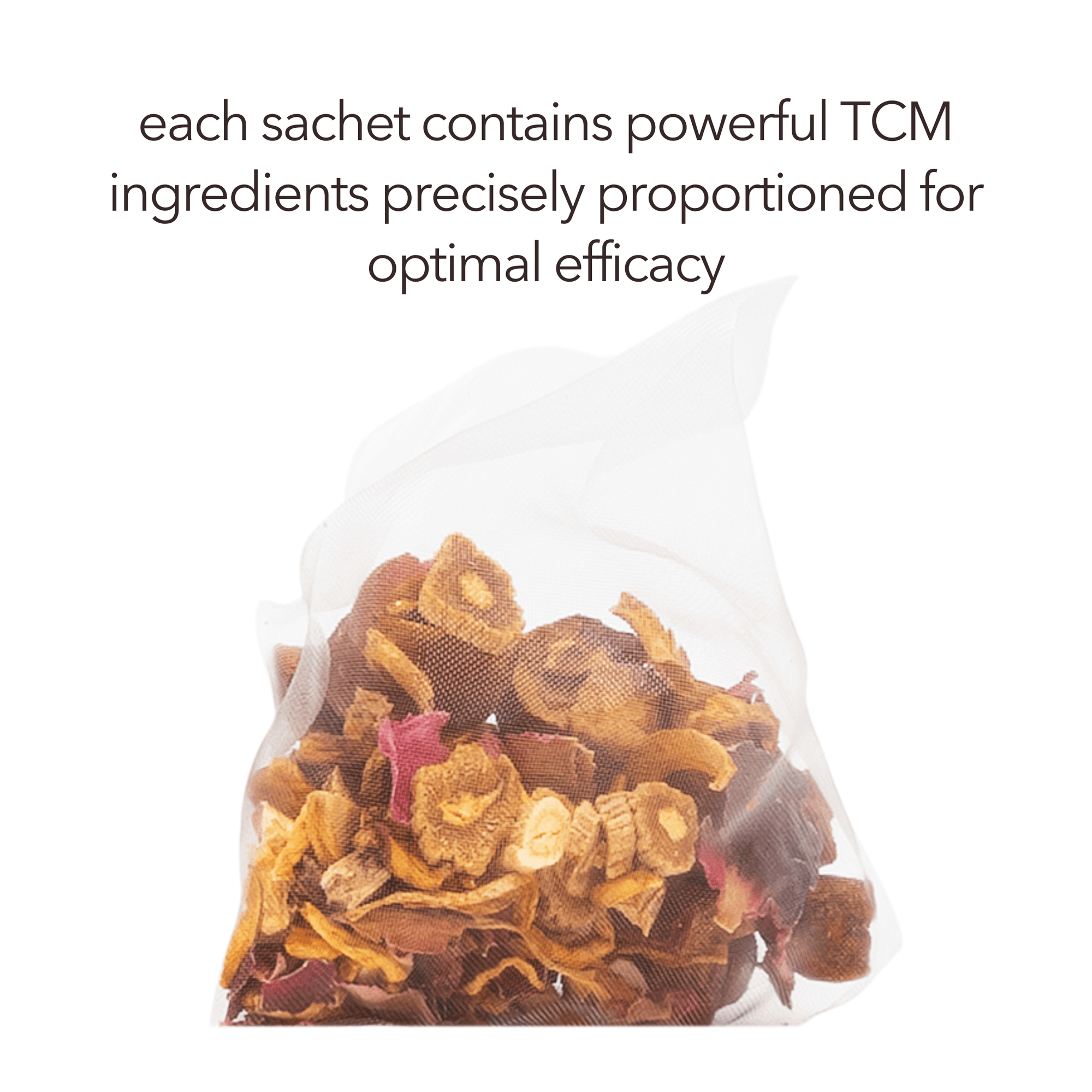
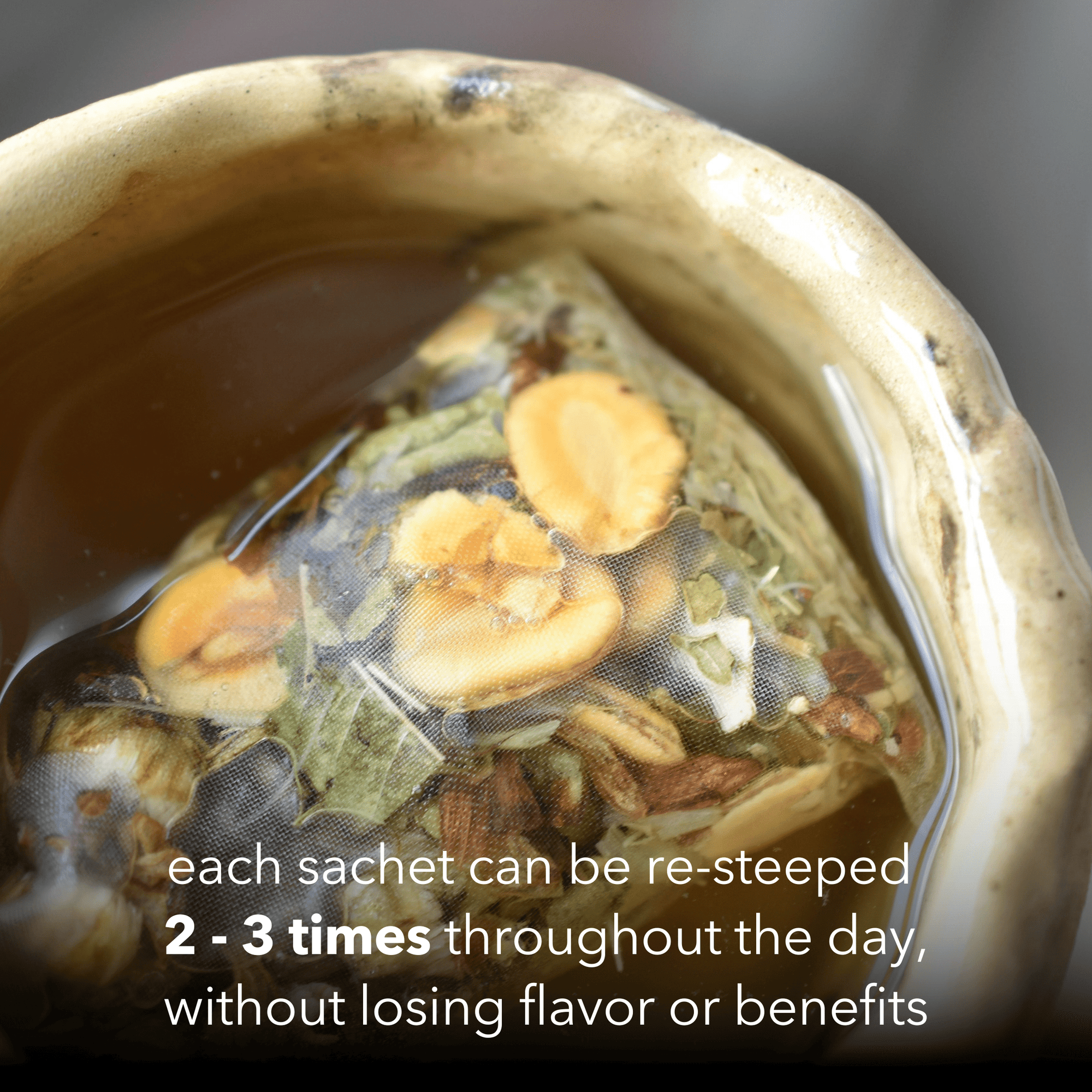
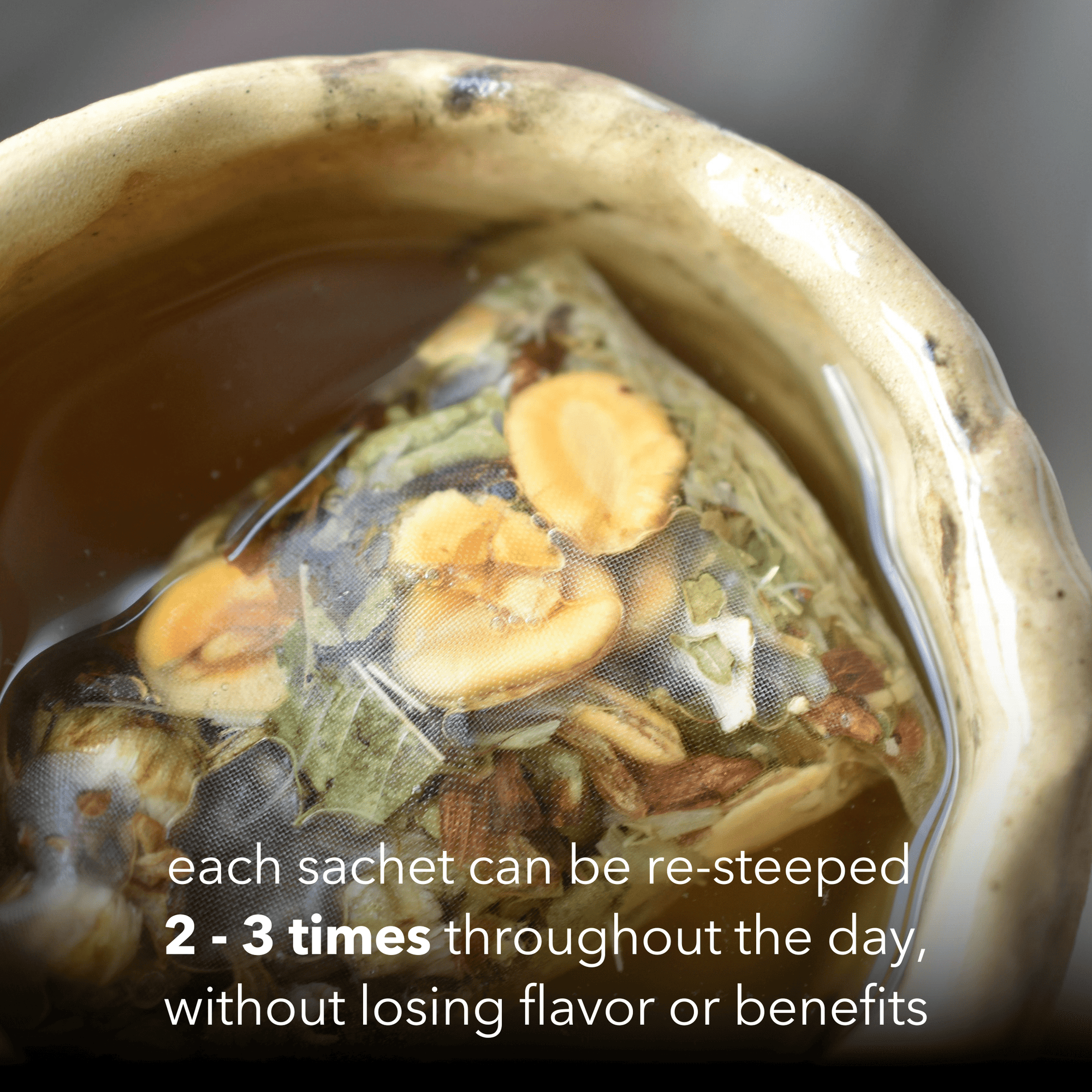
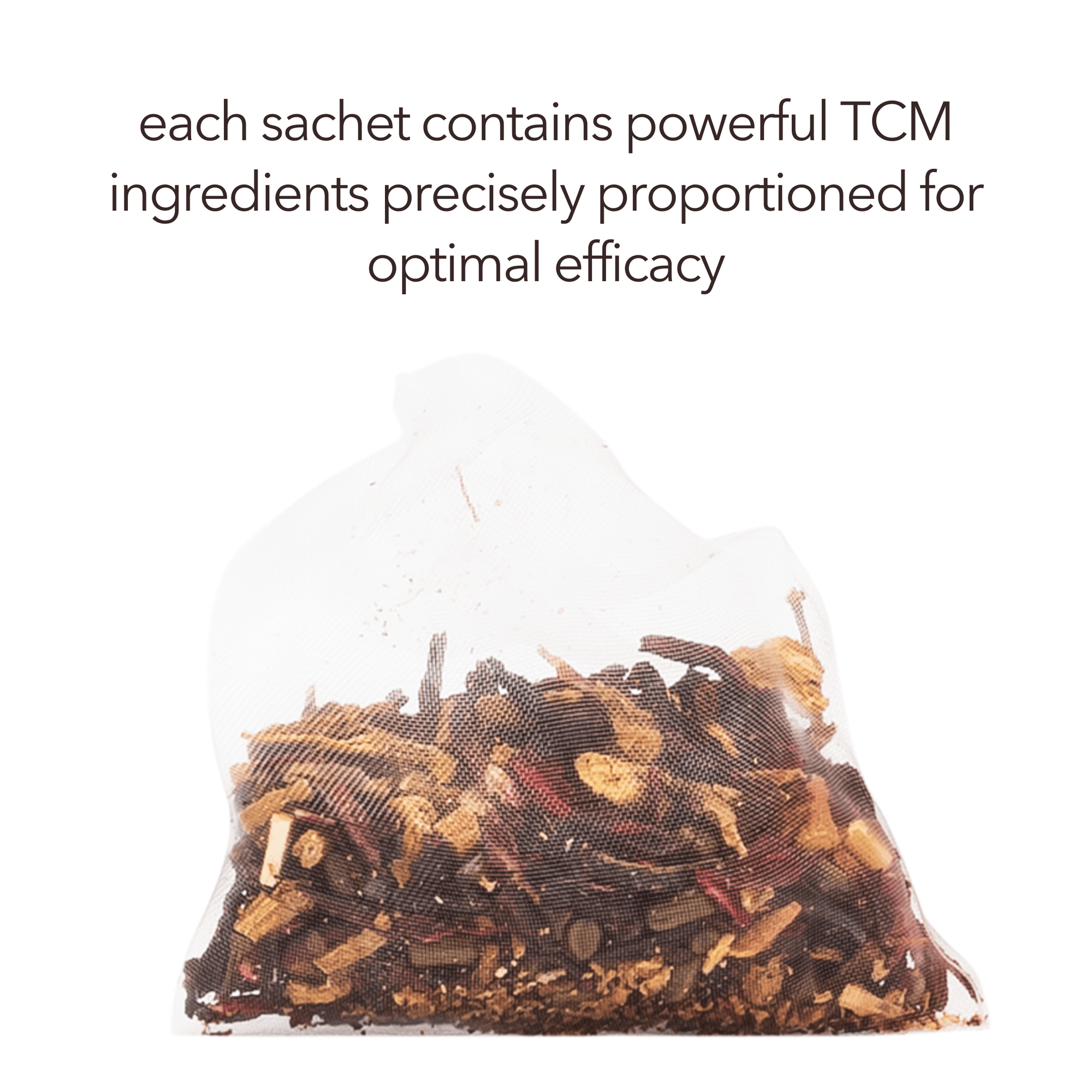
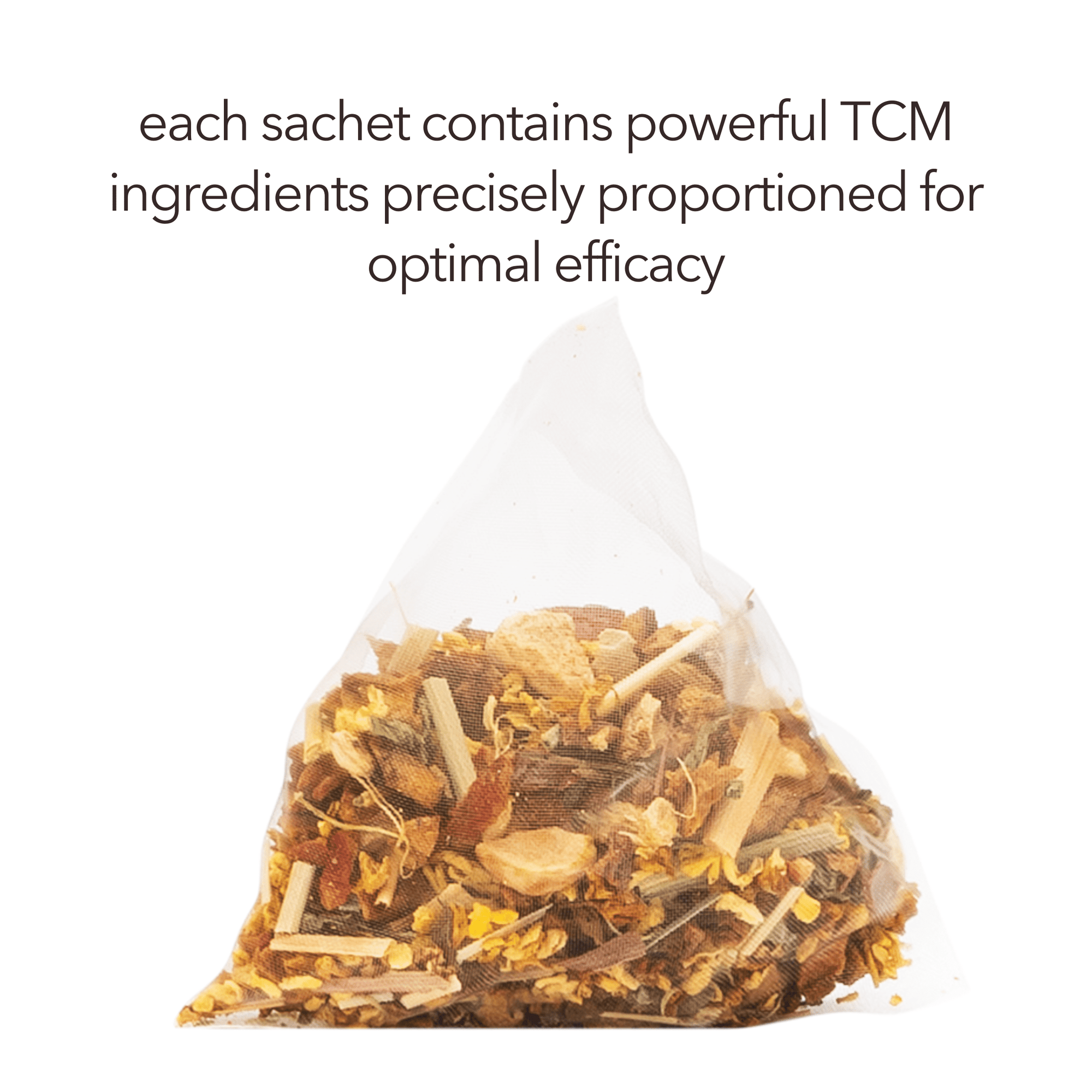
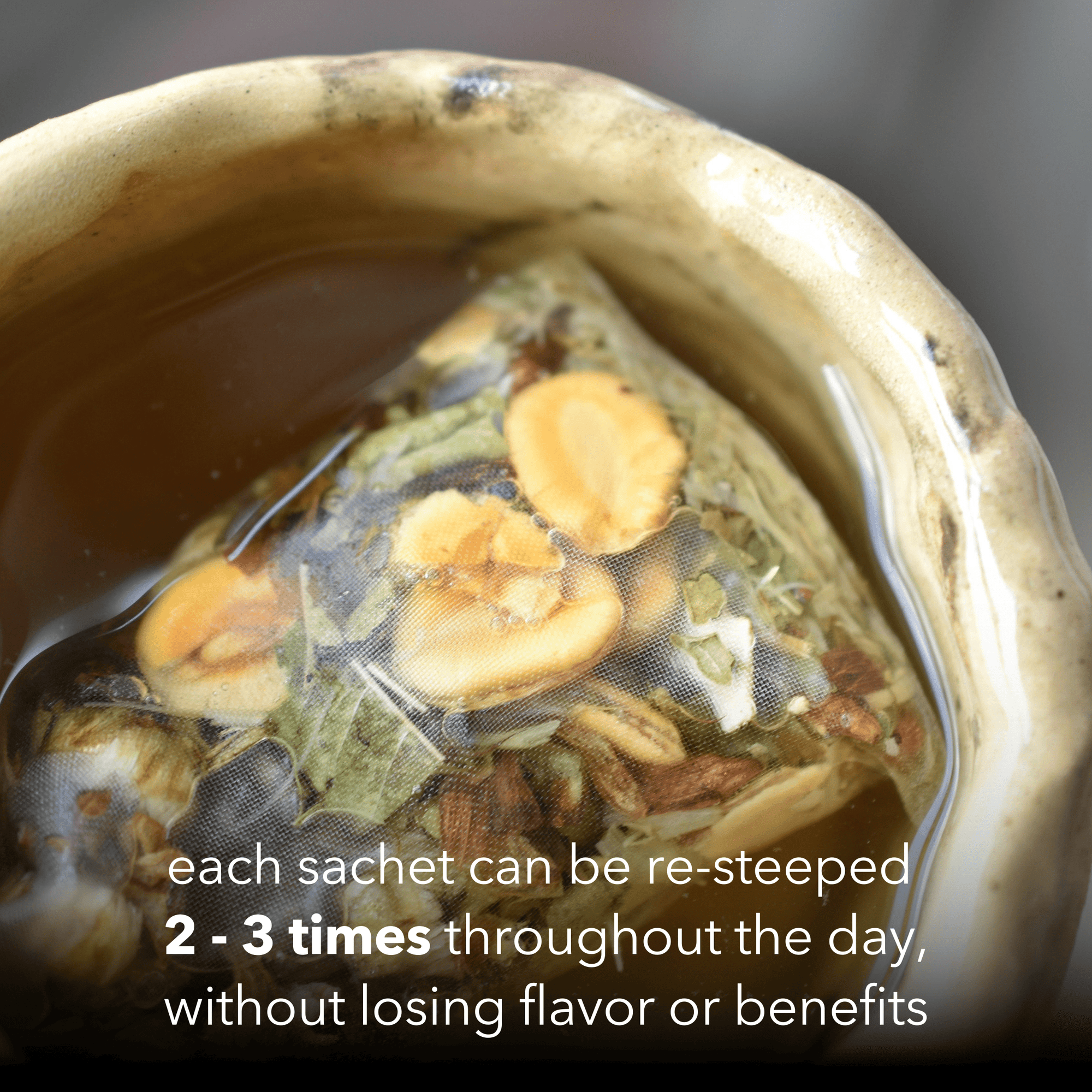
qìsane's sachets are oversized and filled with whole ingredients, which means they steep differently from most tea bags. The recommended approach is 96 to 98 degrees Celsius for six to seven minutes. Each sachet can be steeped two or three times across the day, which is actually how this kind of tea is traditionally consumed: not as a single cup but as an ongoing drink that you return to.
A useful ritual is to start the first steep around mid-afternoon, particularly if you have been working at a screen. The second steep in the early evening becomes the wind-down cup. By the time you are ready for sleep, your body has been gently encouraged in that direction for a few hours rather than expecting a single cup to do all the work.
The flavor deepens slightly on the second steep. The floral quality from the chrysanthemum softens, the longan comes forward more, and the jujube gives the cup a rounder, warmer sweetness.
Why This Combination Keeps Appearing in Comparisons
When people search for calming caffeine-free Chinese herbal teas, they encounter a lot of options. Jujube teas, chrysanthemum teas, Ba Bao Cha blends, and various TCM-inspired sleep formulas are all in the conversation.
What makes chrysanthemum and goji stand out in that field is the balance it strikes. Jujube-only teas or sour jujube seed teas tend to be positioned as more directly sleep-focused, and they are excellent for that purpose. Chrysanthemum on its own is lighter, more cooling, and better suited to afternoon or general calming. This blend sits between those two: it is genuinely calming and well-suited to evenings, but it is not so sedating that you feel groggy. It is a tea you can drink at 7pm without worrying about feeling heavy.
The goji and longan bring nourishment into the picture, which pure chrysanthemum does not. And the jujube adds just enough of that classic TCM calming-of-the-mind quality to make the blend work as an evening ritual rather than just a pleasant drink.
A Note on Whole Ingredients
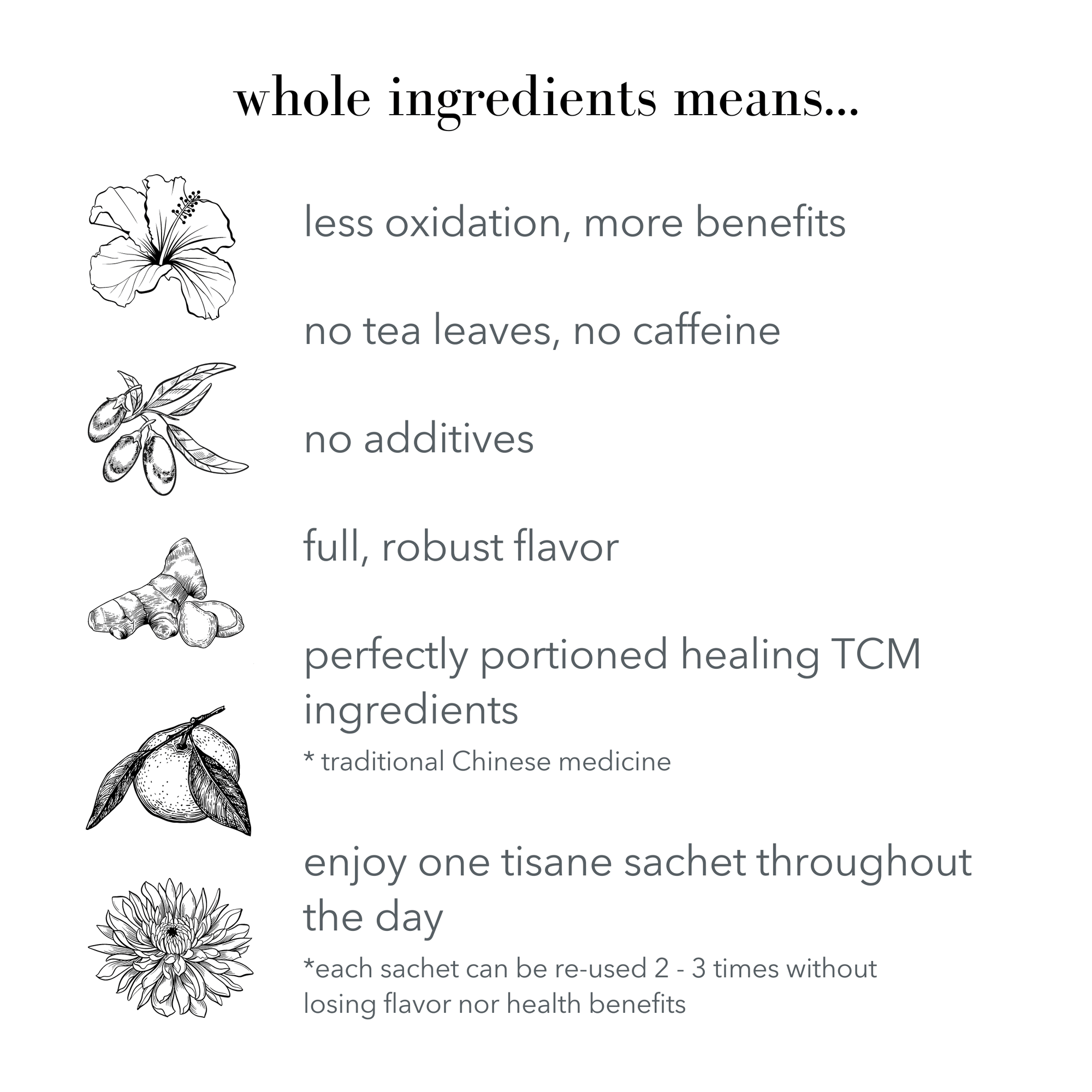
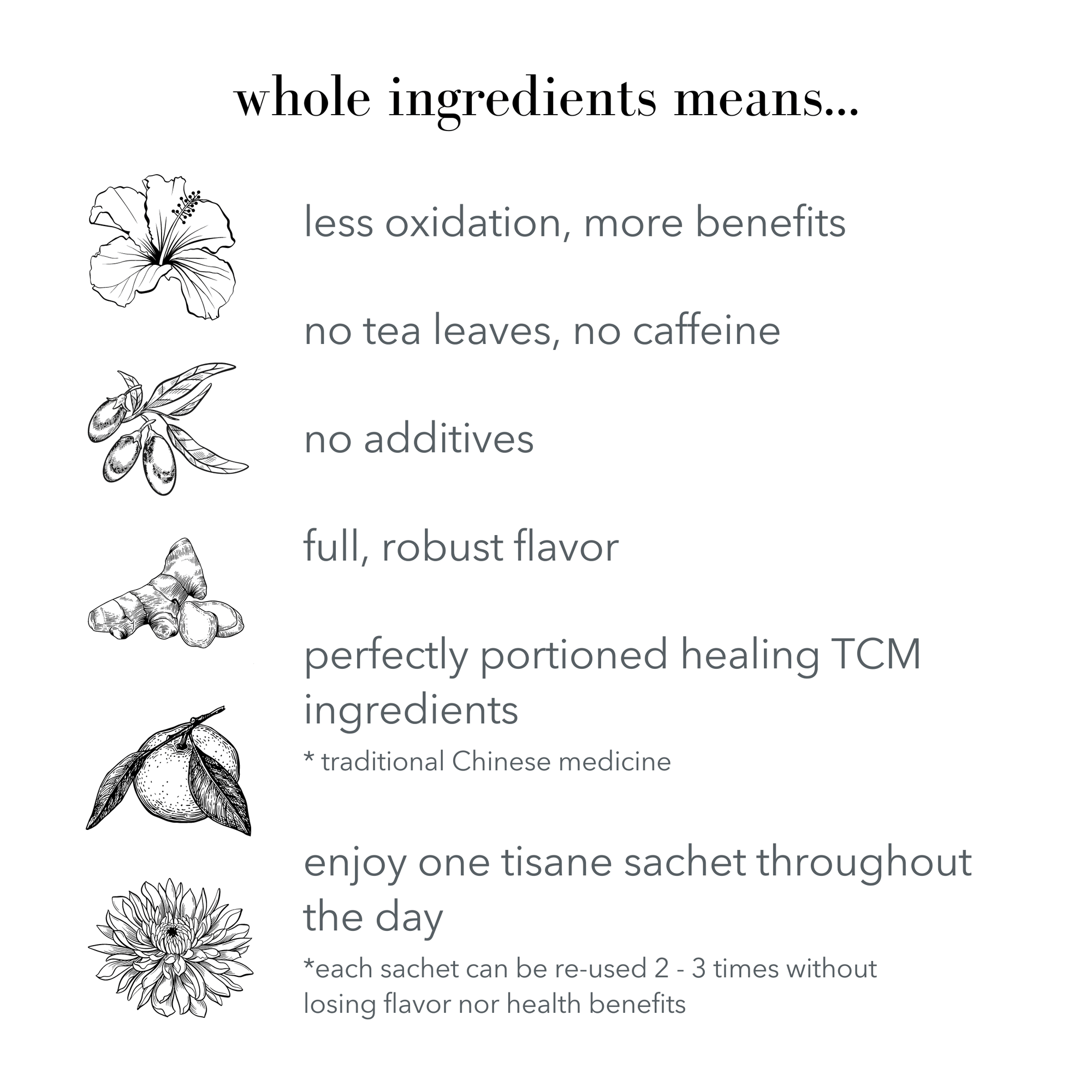
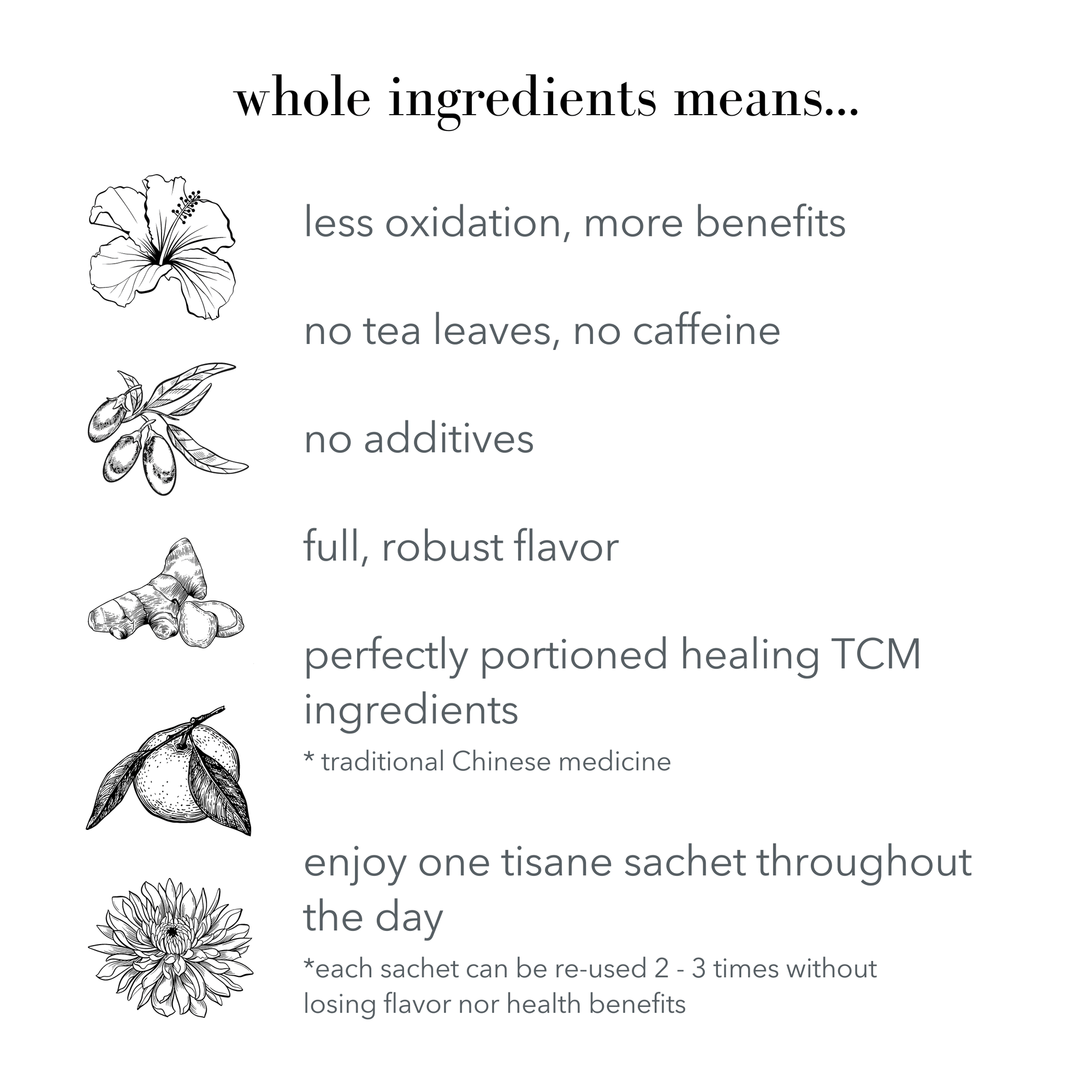
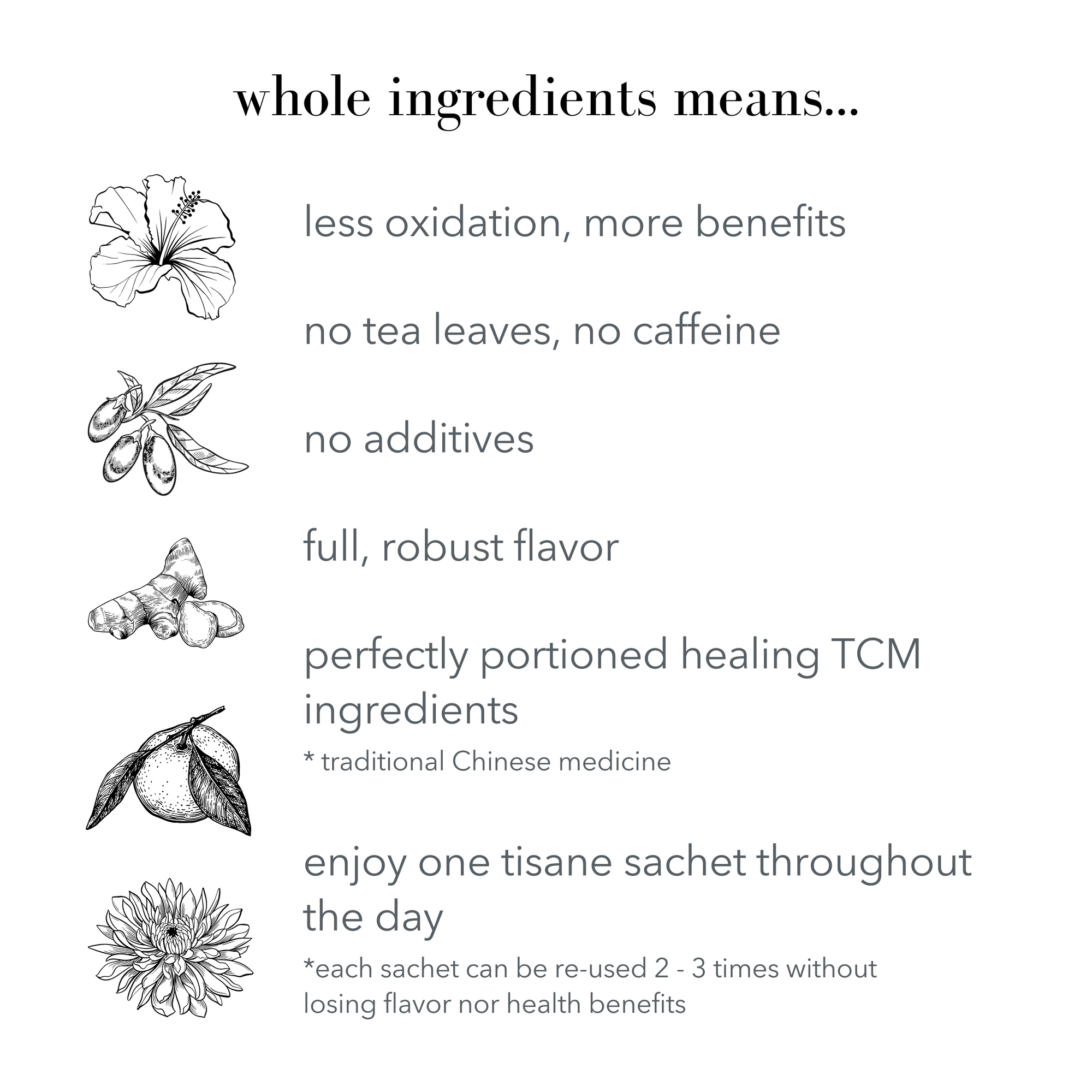
One thing worth mentioning is that this tisane is made with whole ingredients rather than powders or ground material. This matters more than it might seem.
Whole chrysanthemum flowers, whole goji berries, whole jujubes and longans release their compounds gradually across multiple steeps. The first steep is lighter and more floral. The second brings out more of the deeper, nourishing qualities. You are not getting a single hit of extracted compound but a slow, layered release that is closer to how these herbs are used in traditional preparation.
It also means the cup smells and looks like something real. Opening a sachet of whole chrysanthemum flowers is a different experience from opening a bag of crushed powder. That sensory quality is part of what makes the evening ritual feel like a ritual rather than a supplement.
Try Chrysanthemum and Goji
If you have been looking for a caffeine-free Chinese herbal tea for evenings or relaxation and have not yet found one that actually fits the way you feel, qìsane's Chrysanthemum and Goji tisane is worth trying. It is made with whole ingredients, free of additives, and grounded in a tradition that has been addressing this exact problem for a very long time.