

When your throat is raw and a cough will not settle, a warm herbal tea is often the first thing you reach for — and for good reason. The best throat teas work through a handful of well-understood herbs, and knowing what each one does helps you choose a caffeine-free blend you can sip throughout the day, whether the goal is soothing the throat, easing a cough, or both.
At a glance: the herbs behind throat and cough teas
| Herb | Primary action | Key compound | Traditional use |
|---|---|---|---|
| Slippery elm bark | Forms a mucilage gel that coats throat tissue | Mucilage polysaccharides | North American use for sore throat and cough |
| Marshmallow root | Soothes mucous membranes with a thick, viscous gel | Mucilage (pectin, arabinose) | European herbalism for throat and respiratory irritation |
| Wild cherry bark | Calms the cough reflex | Prunasin (a cyanogenic glycoside) | North American use for dry, irritating cough |
| Loquat leaf | Expectorant; supports the respiratory tract | Triterpenes | Traditional Chinese Medicine for lung and throat support |
| Peppermint | Menthol gives a cooling, mildly numbing sensation | Menthol | European and Asian traditions for congestion and throat discomfort |
| Licorice root | Anti-inflammatory, mild expectorant | Glycyrrhizin | TCM and Ayurveda for throat and lung support |
What slippery elm, marshmallow root, and wild cherry bark actually do
Many well-known throat teas, including Traditional Medicinals' Throat Coat, are built on three herbs. Each works differently, which is why they are so often combined.
Slippery elm (Ulmus rubra) bark contains large amounts of mucilage polysaccharides. When the bark meets water, those polysaccharides swell into a thick, slippery gel that is thought to coat the mucosal lining of the throat, reducing friction and irritation with each swallow. Clinical trials specifically on slippery elm for throat pain are limited, so the support is primarily traditional and mechanistic rather than large-scale.
Marshmallow root (Althaea officinalis) works on the same principle. Its mucilage — a mix of pectin, arabinose, and rhamnose — forms a viscous gel on contact with water, adhering to the mucosal surface rather than being immediately absorbed. European herbal tradition has used it for throat and respiratory irritation for centuries.
Wild cherry bark (Prunus serotina) is the outlier. It does not work through mucilage. Its compound prunasin, a cyanogenic glycoside, is hydrolyzed in the digestive system and acts on the cough reflex, which is why it was historically combined with coating herbs: it addresses cough through a different pathway than soothing alone.
How mucilaginous herbs coat and calm an inflamed throat
Mucilaginous herbs form a physical gel that lines the throat's surface, reducing the mechanical irritation that makes each swallow painful. The mechanism is almost purely physical: mucilage polysaccharides swell in water, turn viscous, and adhere to the moist tissue of the throat and upper respiratory tract. This is known as a demulcent effect — a substance that softens and soothes inflamed surfaces.
Because the coating is local and surface-level, the tea works best sipped slowly while warm. The gel needs contact time with the tissue, so sipping over ten to fifteen minutes offers more comfort than gulping a cup quickly.
Western coating herbs vs the Eastern respiratory approach
The Western mucilaginous tradition behind Throat Coat is one approach. Traditional Chinese Medicine reaches for a different set of plants with a different logic: rather than coating the surface, herbs like loquat leaf, balloon flower, and licorice work on the respiratory tract through expectorant, anti-inflammatory, and qi-regulating actions. Peppermint adds menthol's cooling quality, and ginger root brings warming balance. The result reads as a formula rather than a single-mechanism blend.
| Attribute | Western mucilaginous (Throat Coat) | Eastern respiratory (TCM) |
|---|---|---|
| Core herbs | Slippery elm, marshmallow root, wild cherry bark | Loquat leaf, balloon flower, peppermint, licorice, ginger root |
| Primary mechanism | Demulcent: gel coating on mucous membranes | Expectorant, anti-inflammatory, cooling and warming balance |
| Cough approach | Wild cherry bark calms the cough reflex | Loquat leaf and balloon flower support expectoration |
| Warming / cooling | Generally neutral to cooling | Balanced: peppermint cools, ginger root warms |
| Caffeine | Caffeine-free (no tea leaves) | Caffeine-free when made without tea leaves |
qìsane's Peppermint & Loquat: an Eastern-tradition throat and cough blend
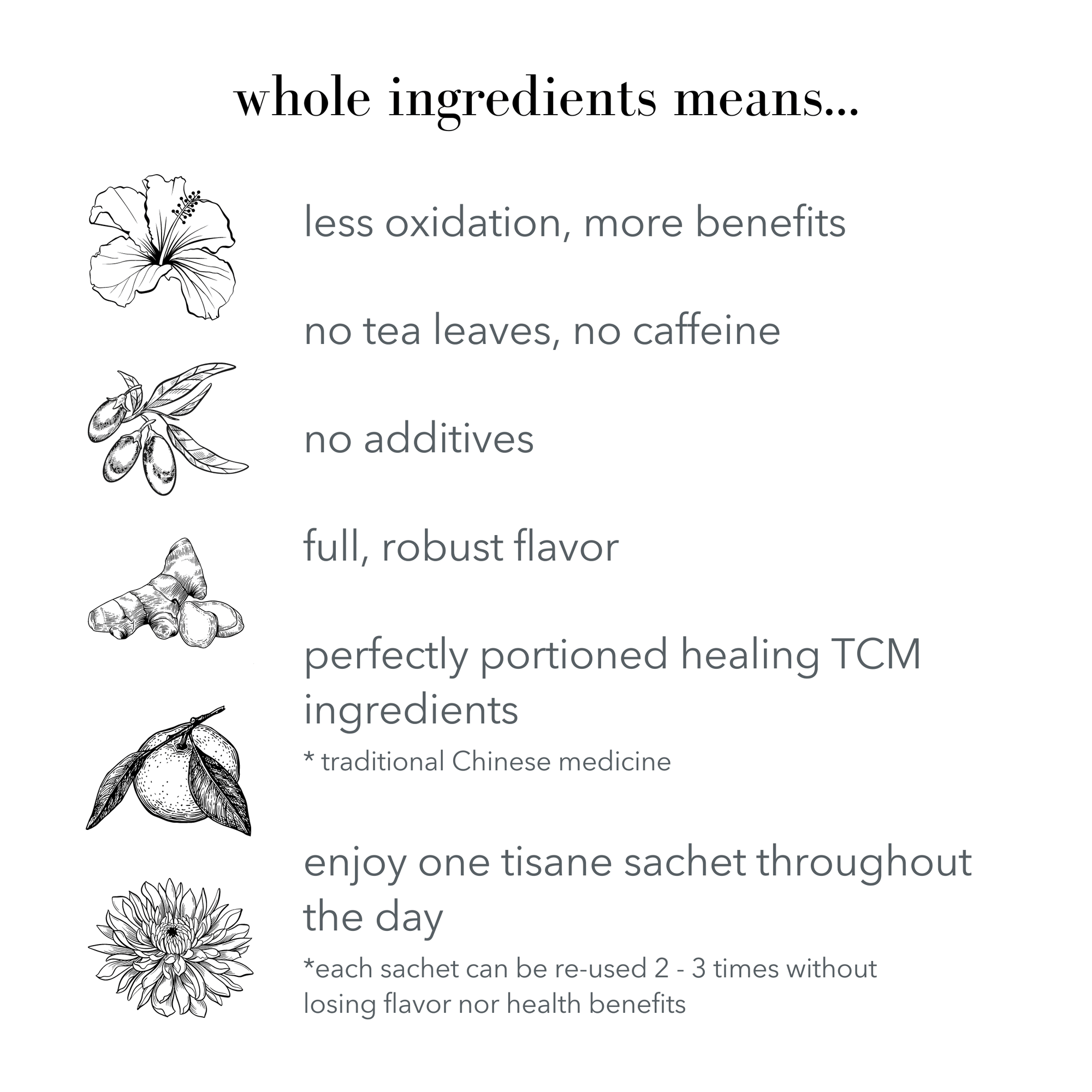
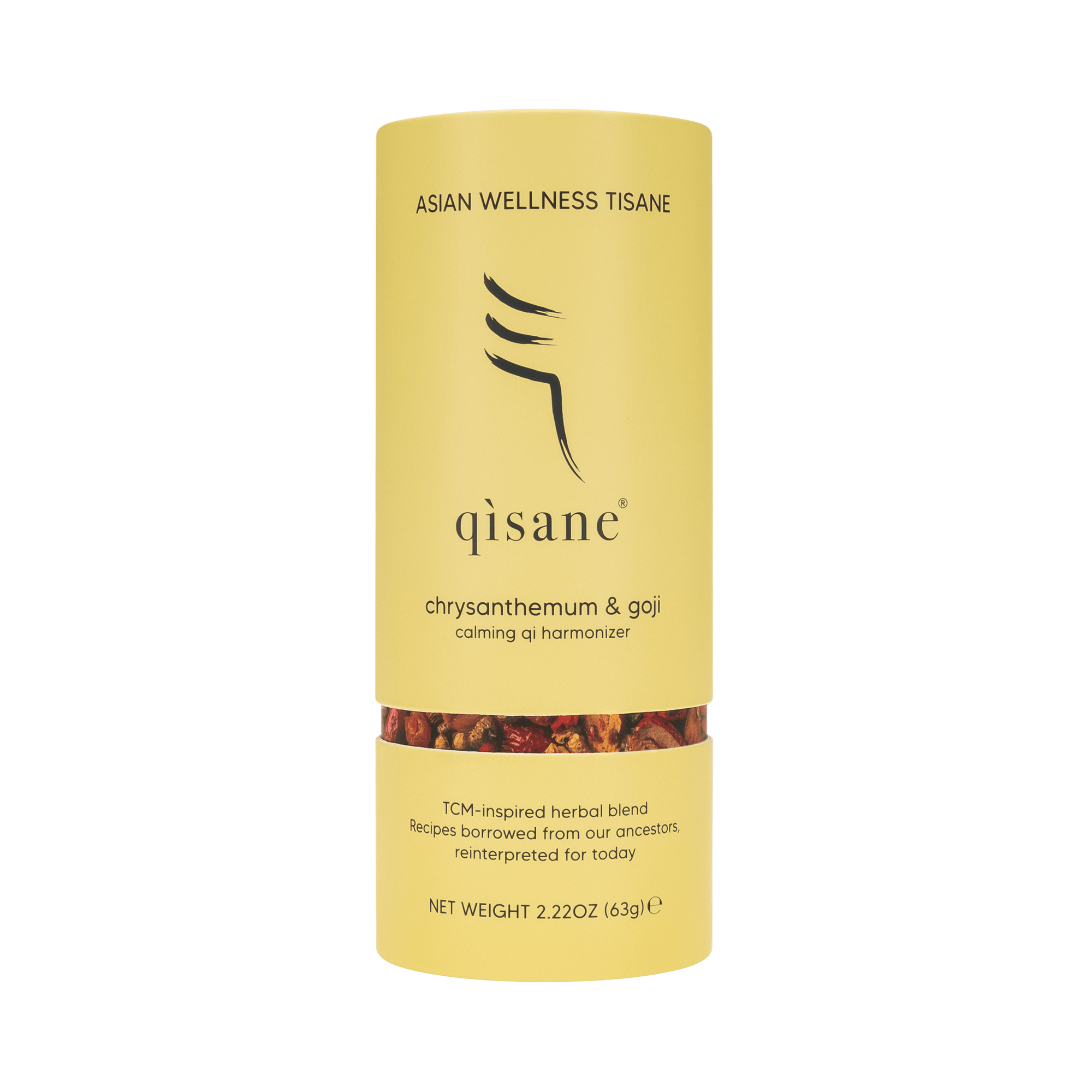
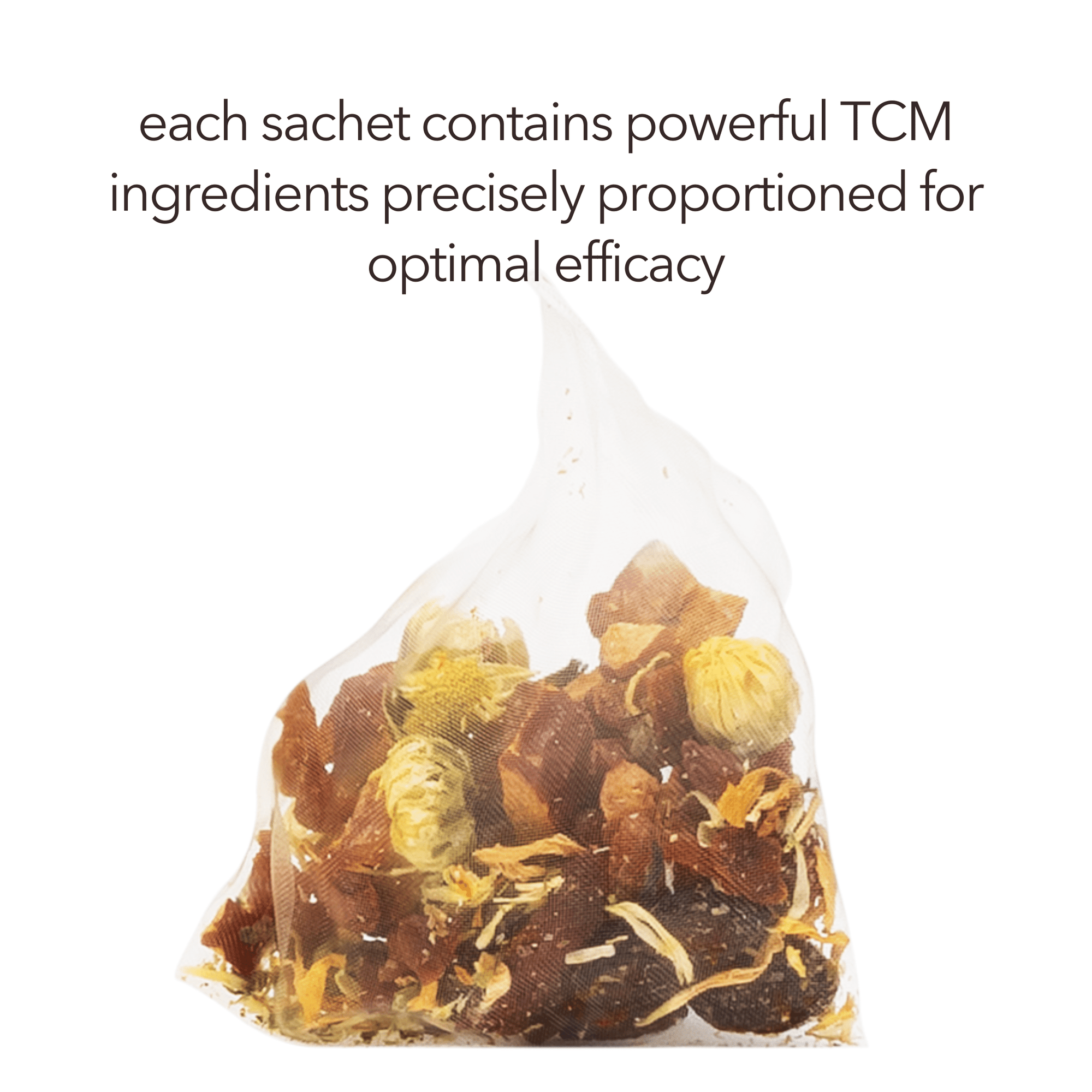
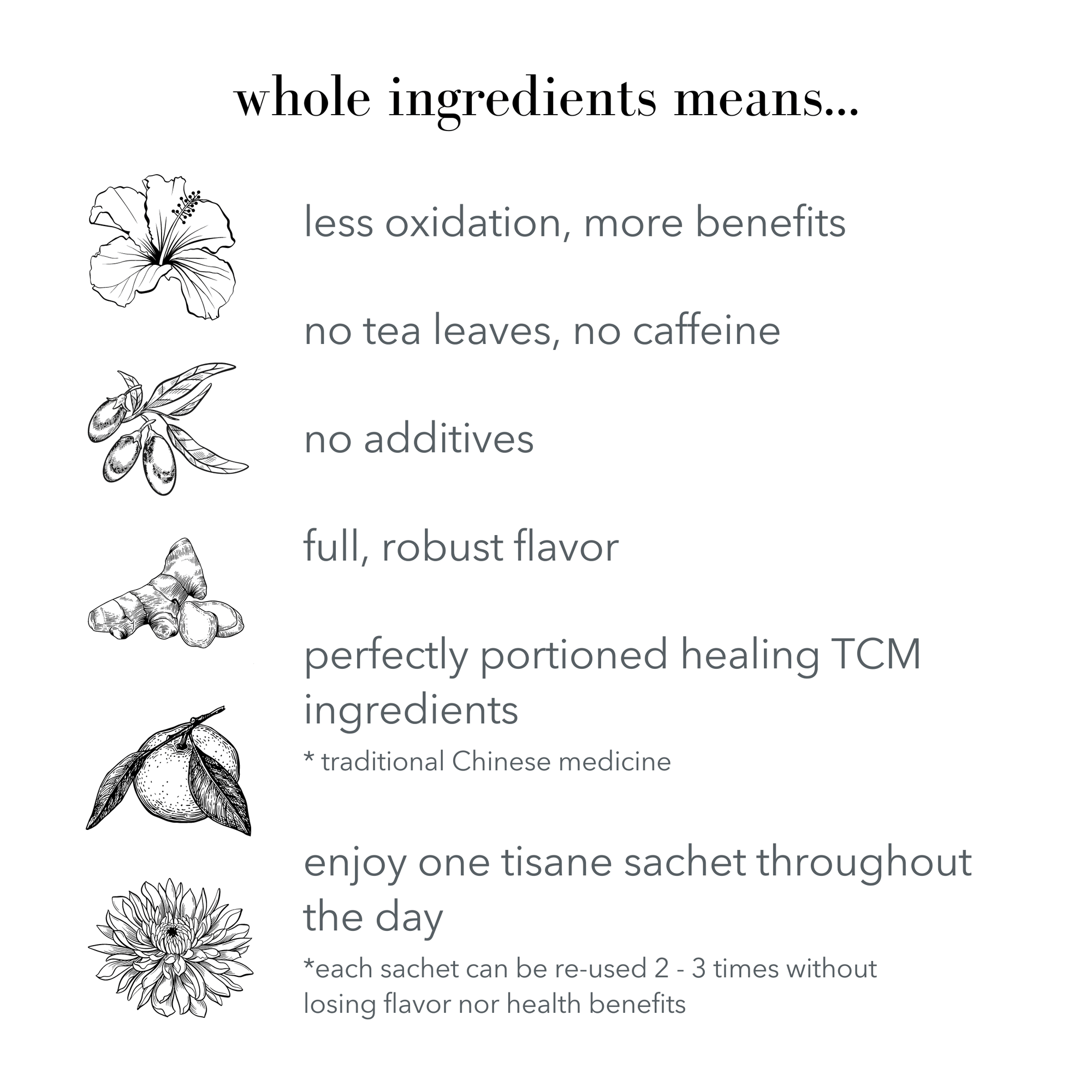
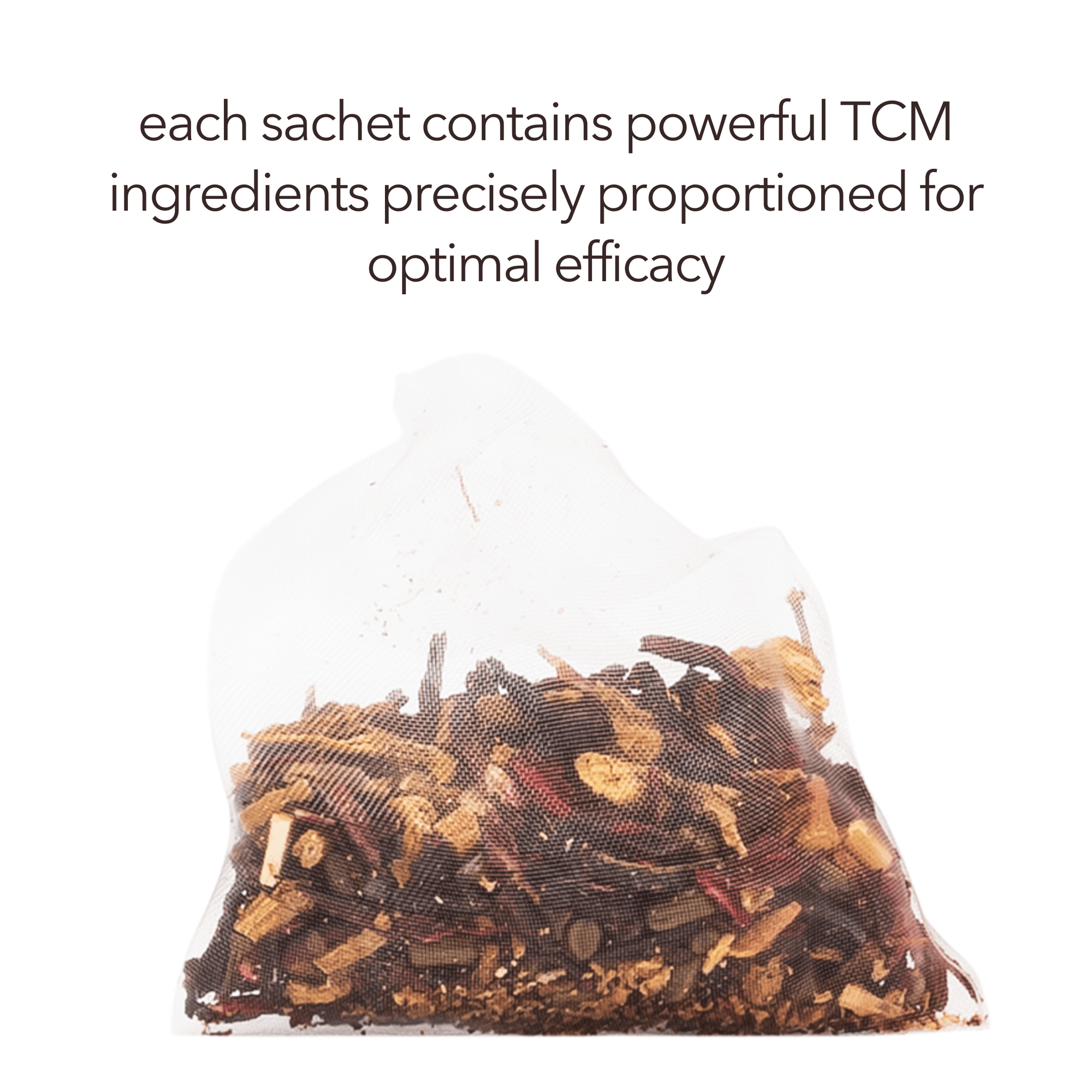
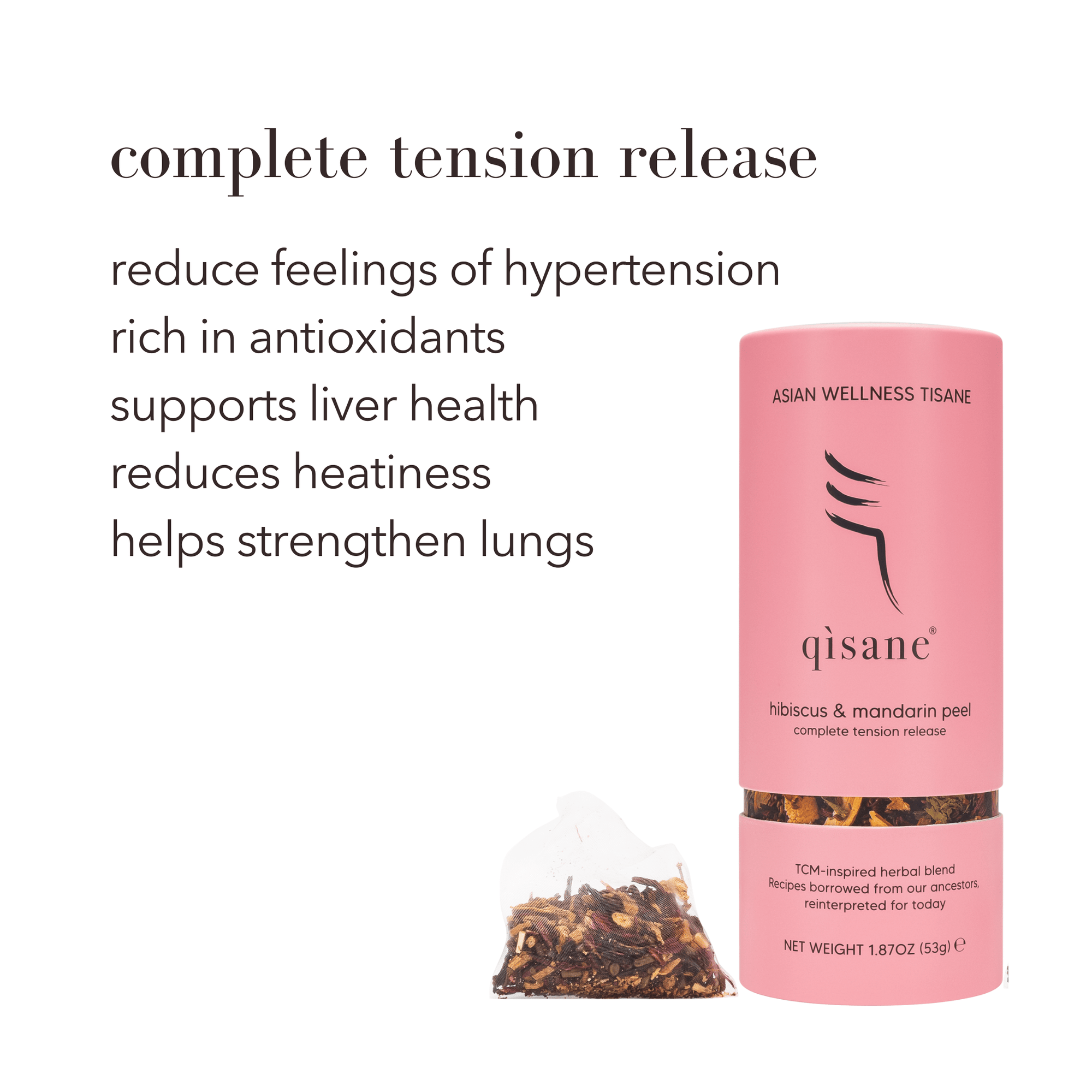
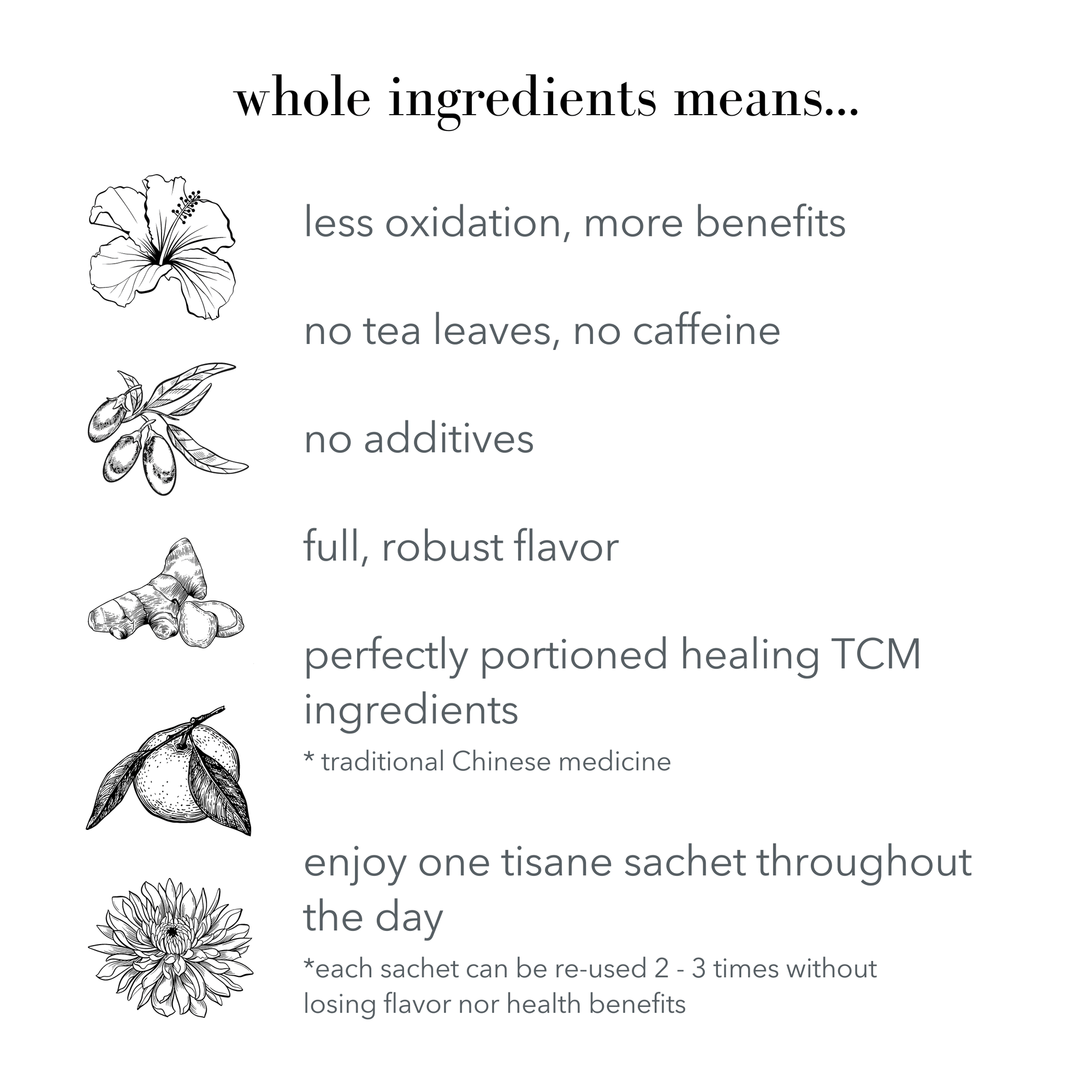
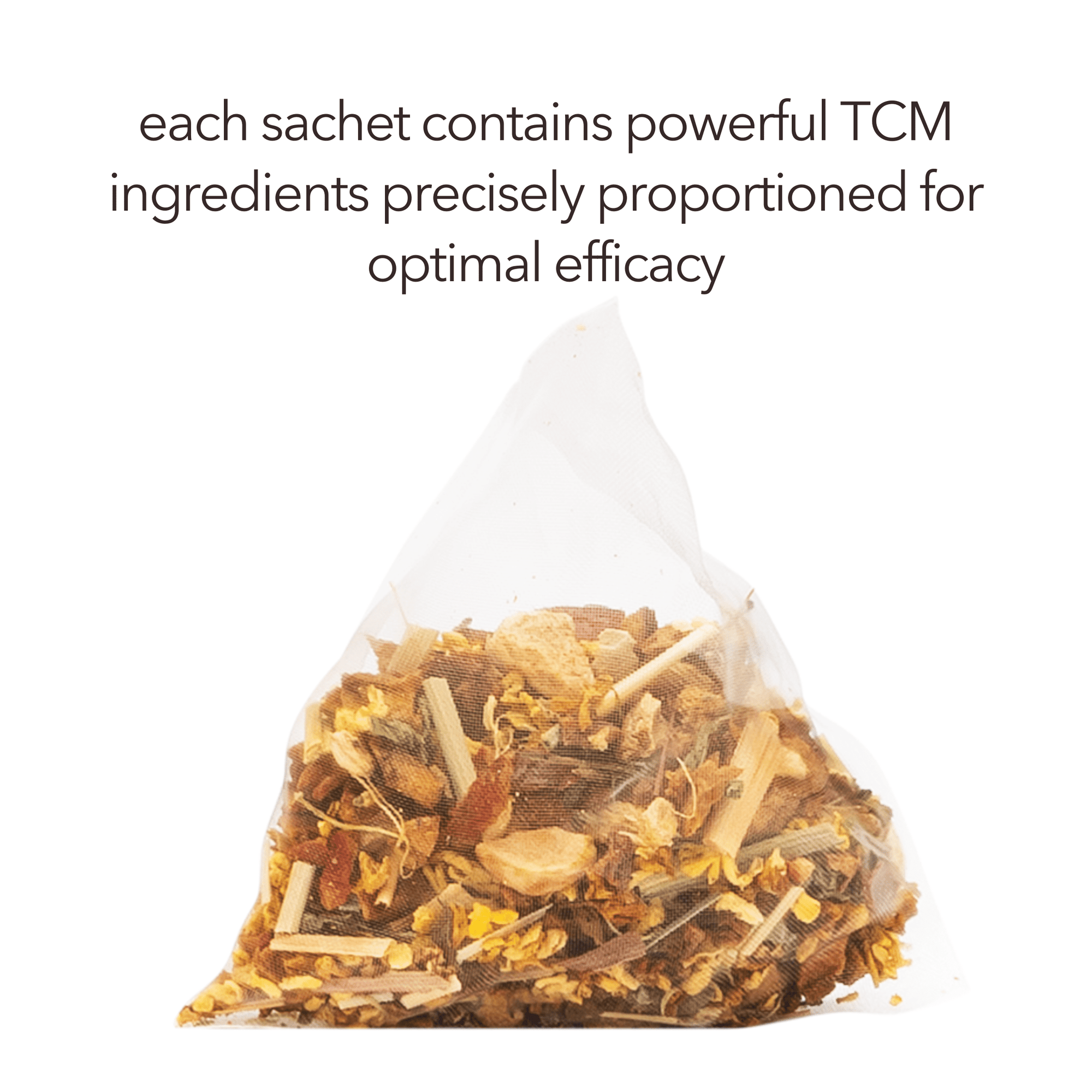
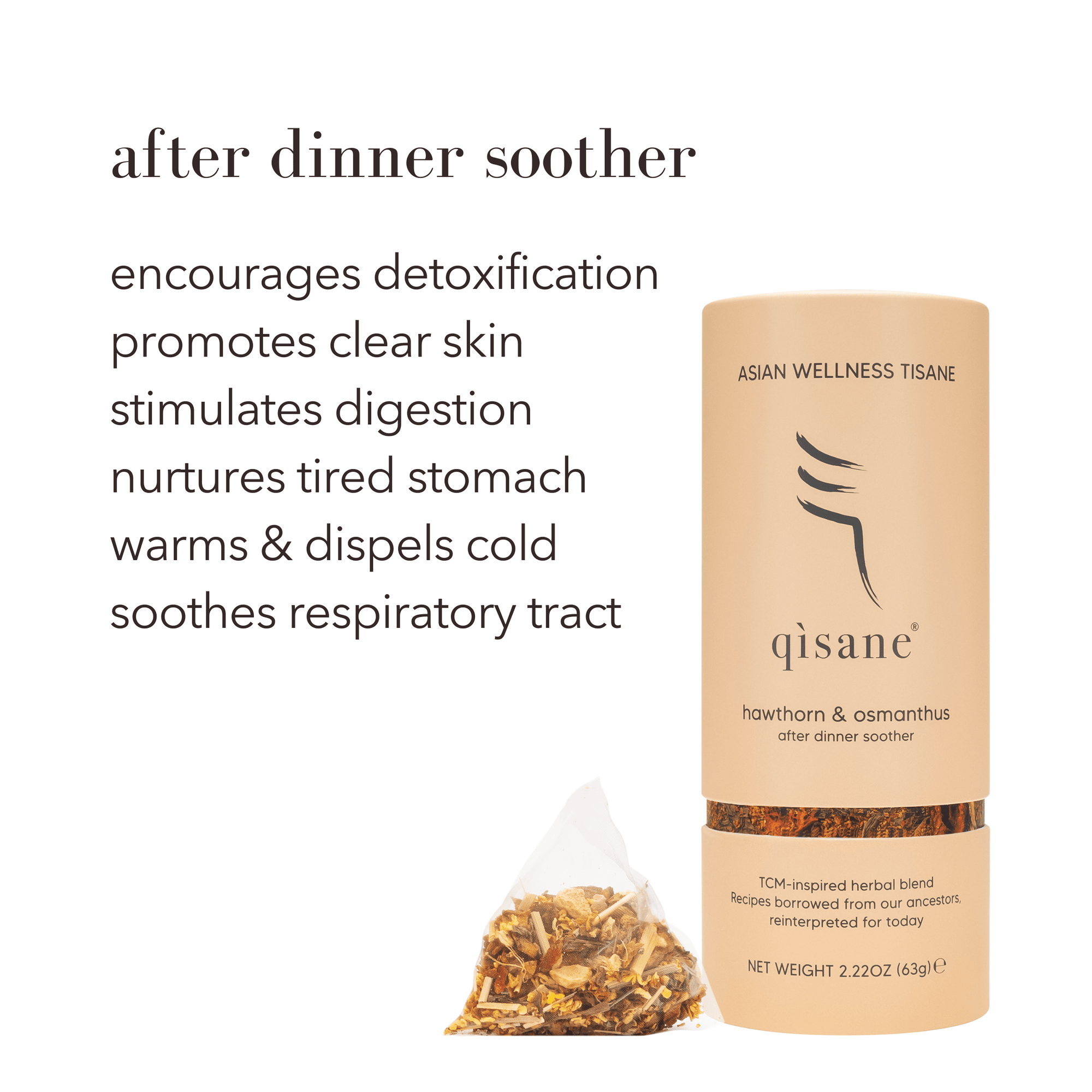
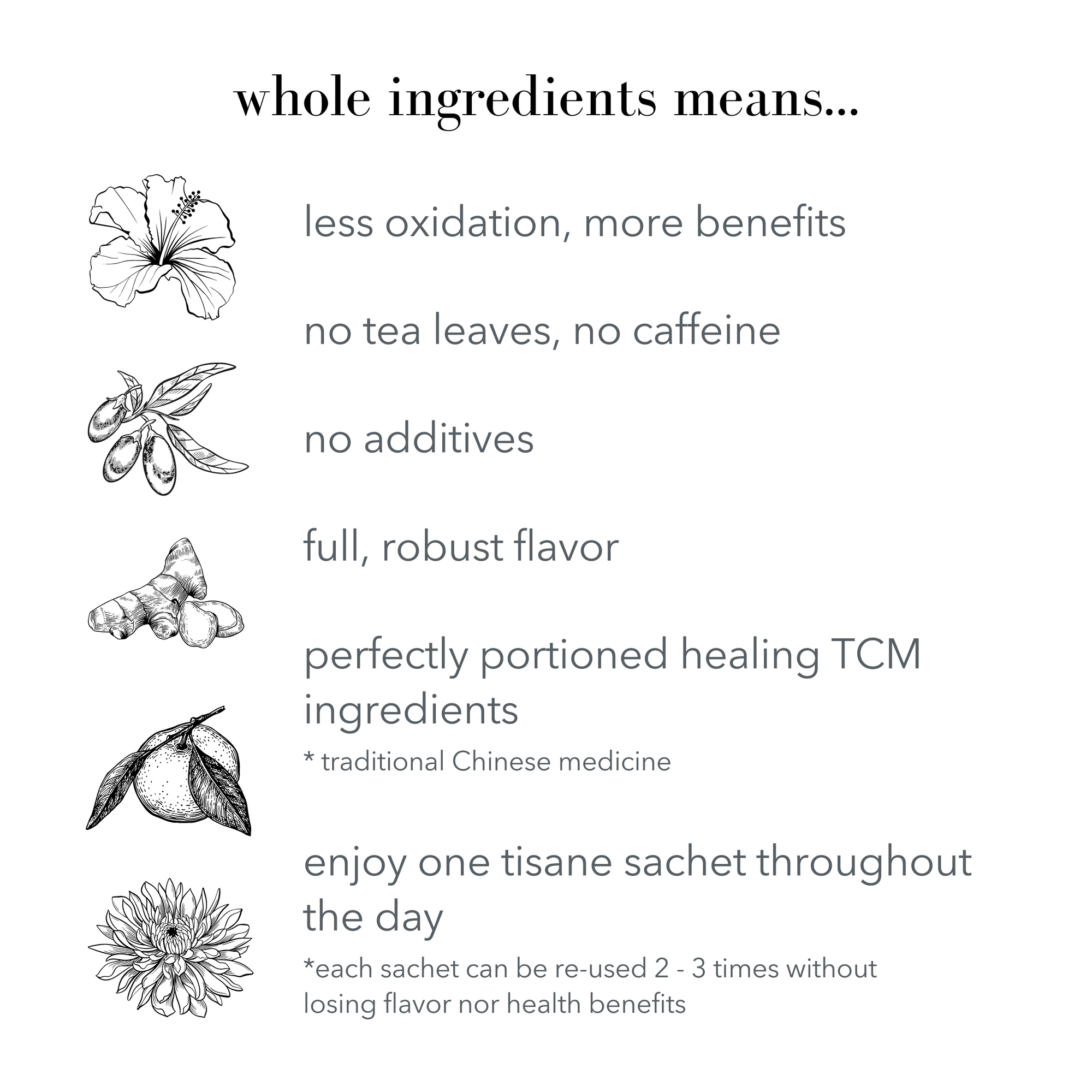
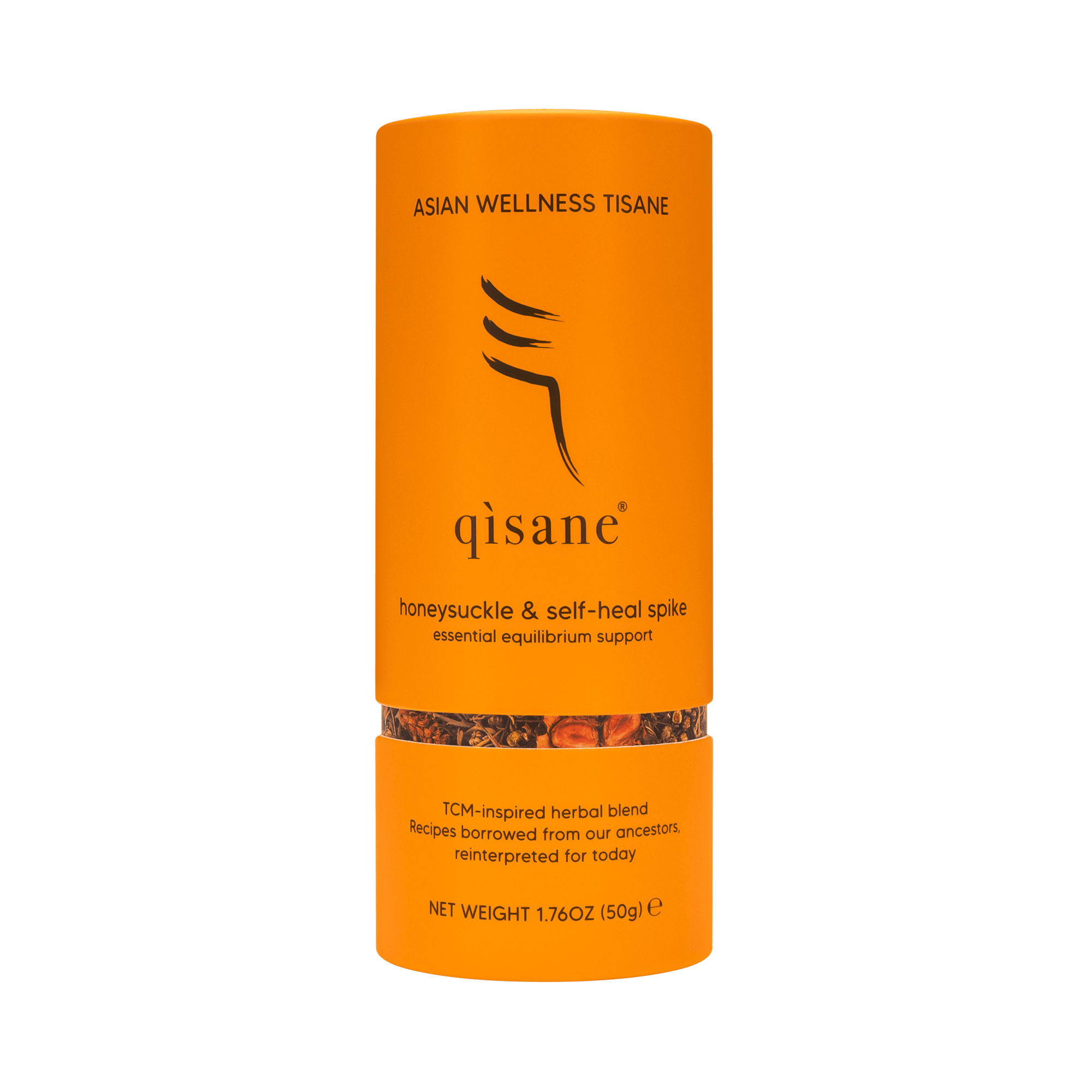
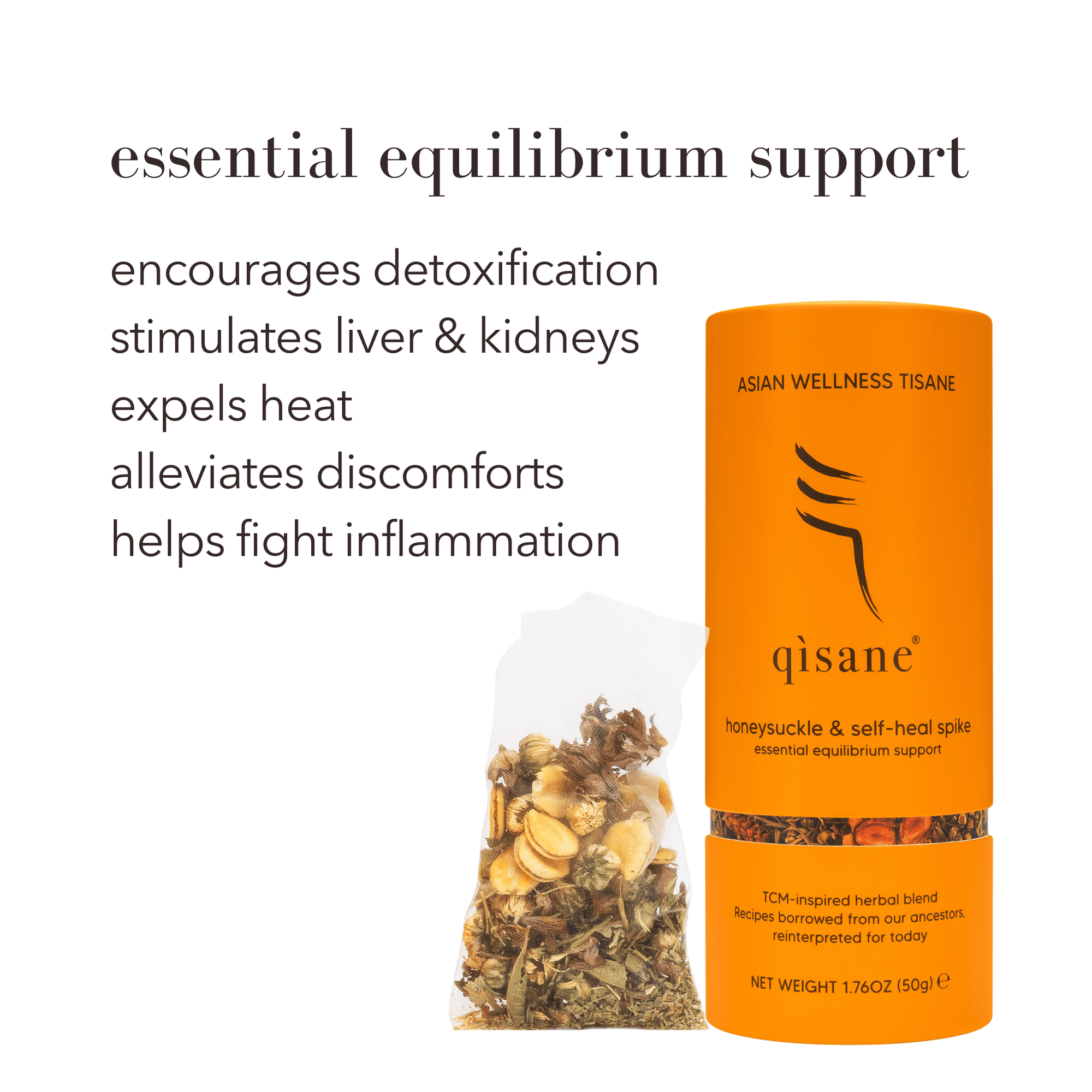
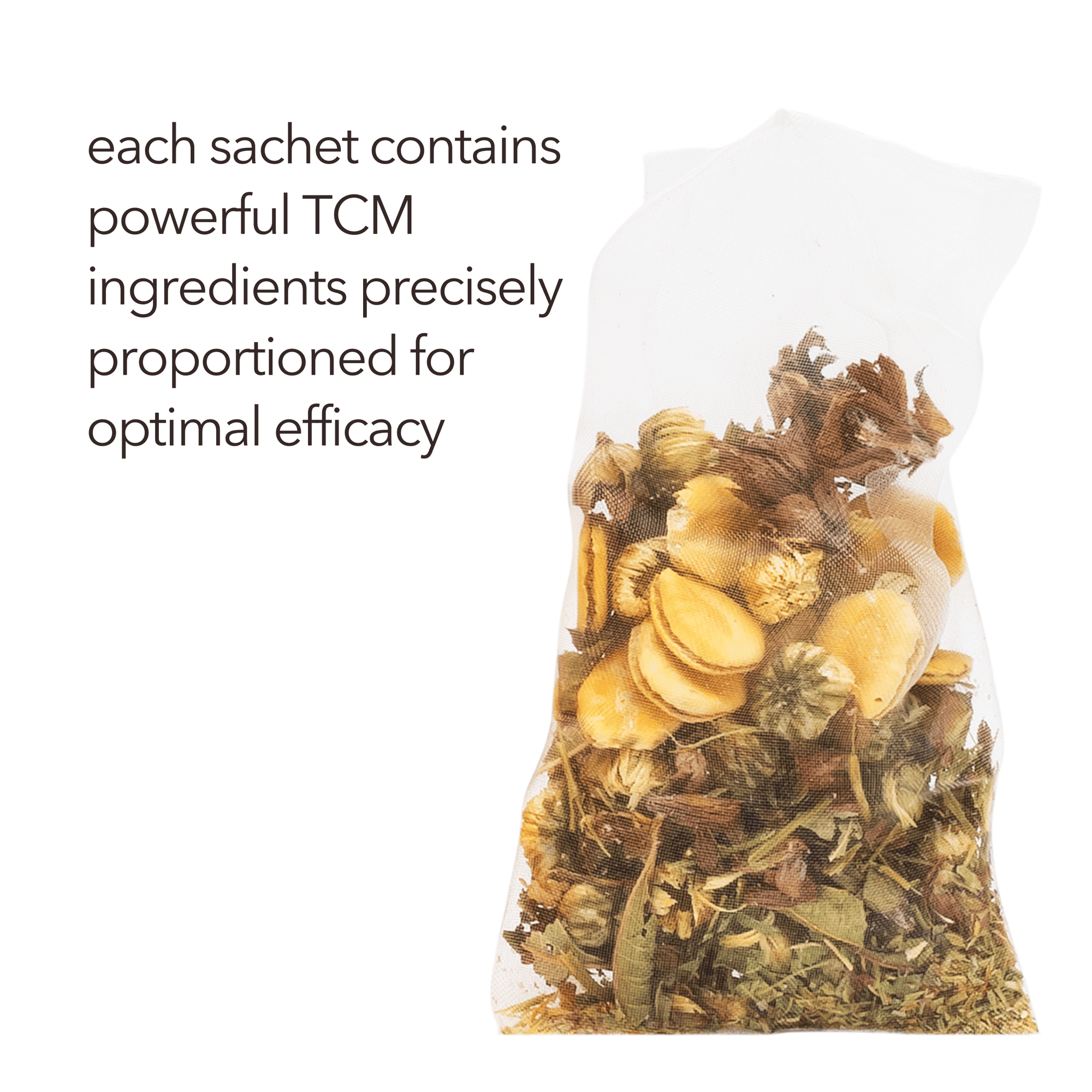
If the Eastern approach appeals to you, qìsane's Peppermint & Loquat is built on exactly those herb categories: organic peppermint leaf, loquat leaf, organic ginger, balloon flower root, and organic licorice root. It is a caffeine-free tisane made with whole ingredients rather than ground or powdered plant material, so the herbs steep close to their natural form. The wider range of caffeine-free tisanes covers other everyday needs, from digestion to sleep.

- Organic peppermint leaf, loquat leaf, organic ginger, balloon flower root, and organic licorice root — whole ingredients, not powdered
- Caffeine-free, suitable any time of day or evening
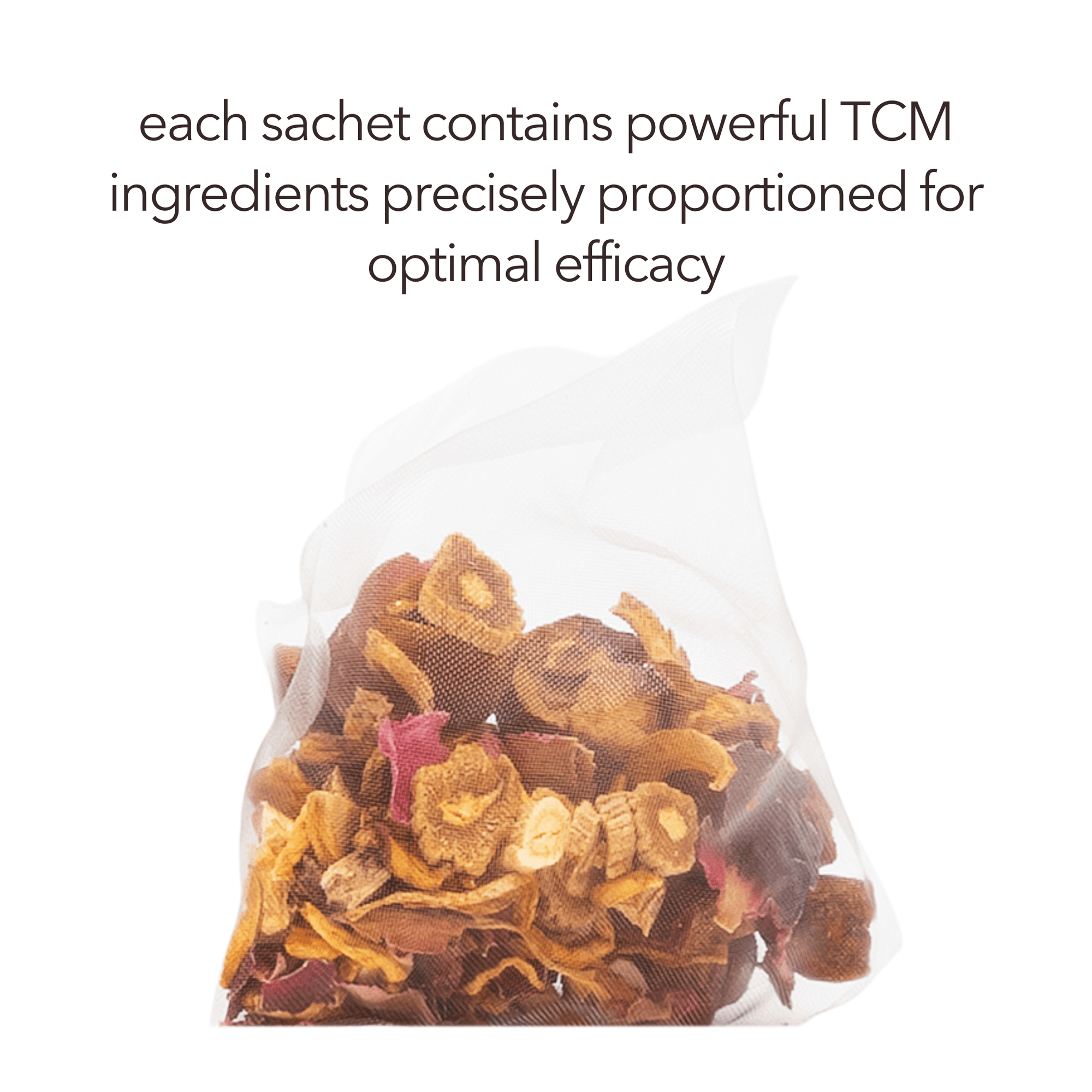
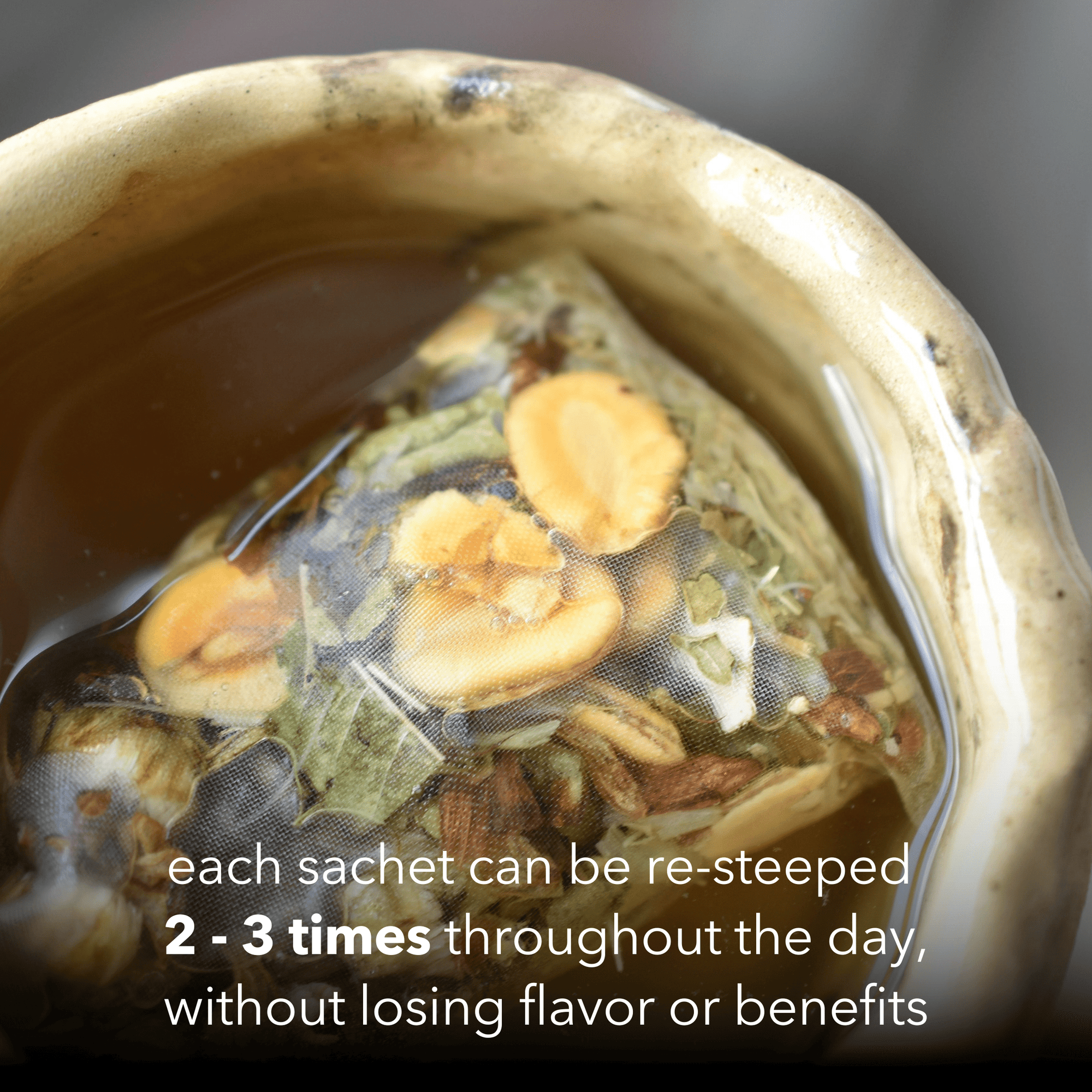
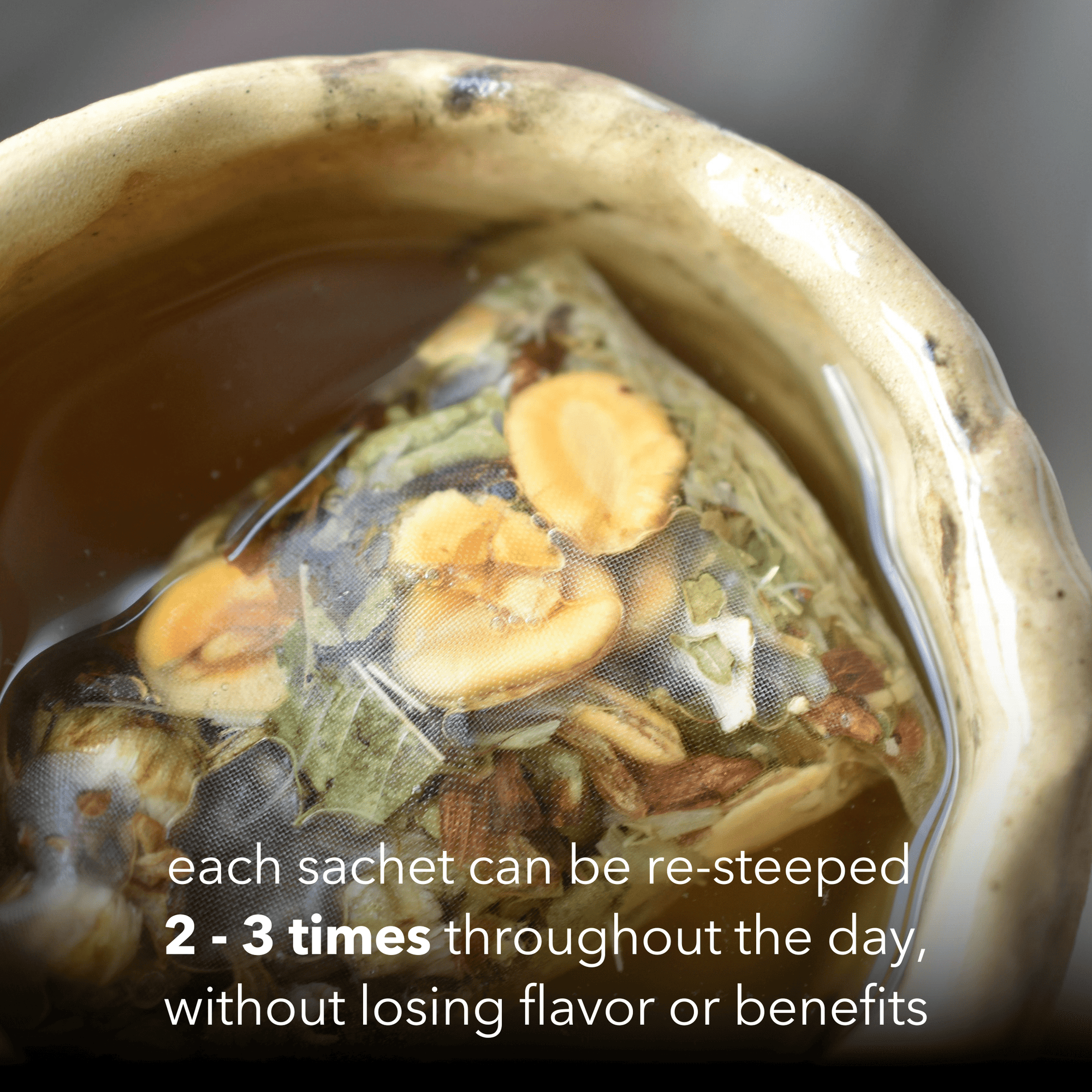
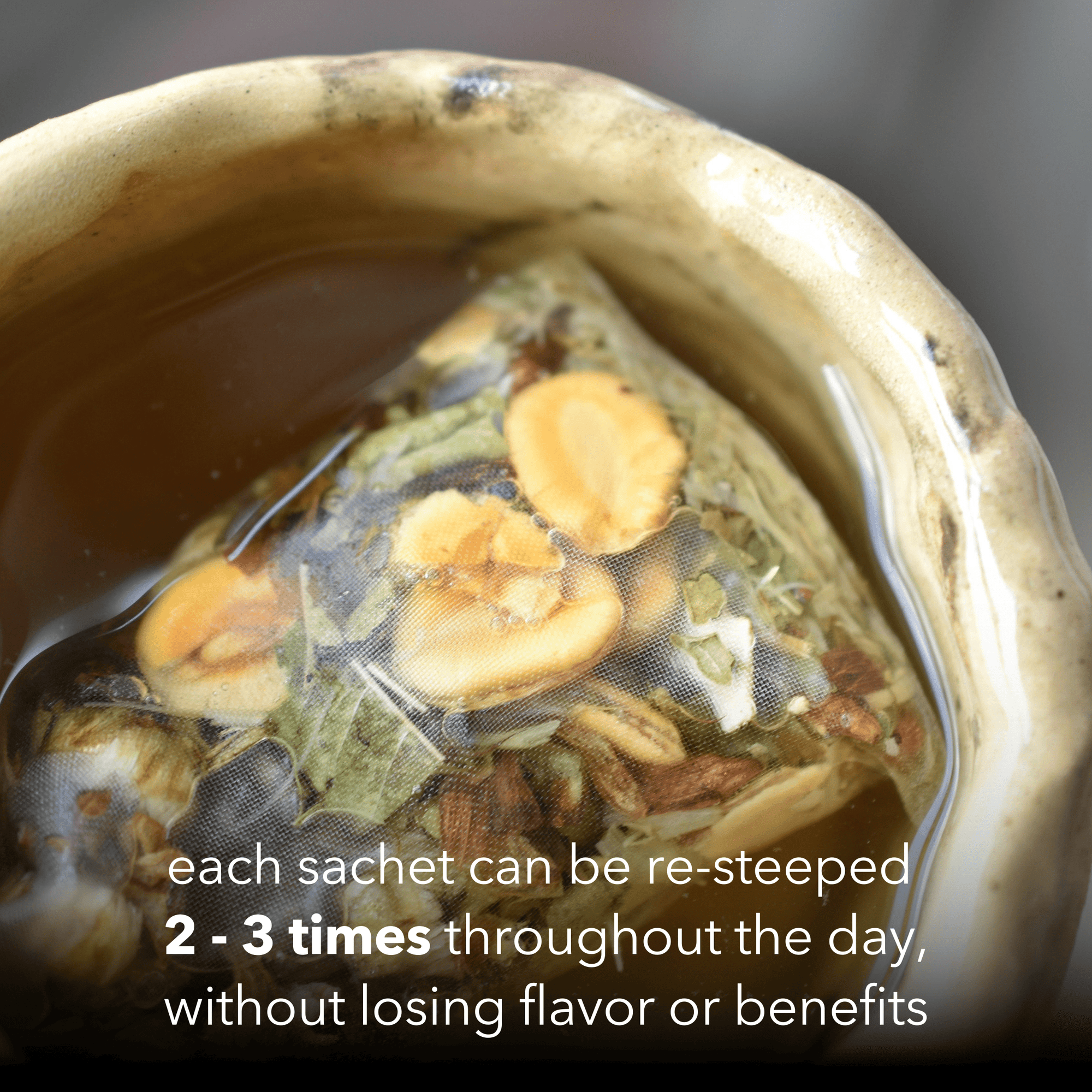
- Biodegradable oversized sachets, each steeps 2 to 3 times
- 10 sachets per cylinder
- Priced at $22.99
For an Eastern-tradition herbal tea for throat and cough comfort, the Peppermint & Loquat tisane is a good place to start.
How to brew throat-soothing herbal tea for the most benefit
Preparation matters more than most guides acknowledge. The demulcent and aromatic compounds in throat herbs are sensitive to water temperature, steep time, and how you drink them.
- Use water that is hot but not aggressively boiling — around 90°C (195°F). Boiling water can degrade delicate aromatics like menthol.
- Steep for 5 to 7 minutes. Mucilage compounds need time to hydrate and swell; a 2-minute steep will not fully release them.
- Keep the cup covered while steeping, so volatile aromatics like peppermint's menthol do not escape into the air.
- Sip slowly over 10 to 15 minutes. The soothing compounds need contact time with the throat tissue to be effective.
- Re-steep. Whole-ingredient sachets like qìsane's can be steeped 2 to 3 times; a second steep still yields meaningful flavour and botanical content.
- Drink 2 to 3 cups across the day when your throat is uncomfortable, and cold-steep overnight for a chilled cup if heat feels harsh on a very raw throat.
Is a throat-soothing herbal tea right for you?
Herbal teas for sore throat are widely enjoyed and generally well tolerated, but a few cautions are worth knowing before making them a daily habit.
- Best suited to a sore throat from a cold, dry air, talking, or mild seasonal illness, and to anyone who wants a caffeine-free drink for the evening.
- Think of it as a comfort measure, not something that resolves an infection.
- Licorice root: contains glycyrrhizin, which in high or frequent amounts can affect blood pressure and potassium. If you have hypertension, heart, or kidney conditions, speak to your doctor before daily use.
- Wild cherry bark: its prunasin is a cyanogenic glycoside. In normal tea amounts the risk is low, but it is not suited to large or concentrated doses.
- Pregnancy, breastfeeding, and children: qìsane cannot advise on suitability during pregnancy or breastfeeding; check with your healthcare provider, and with a paediatrician before giving herbal teas to a child.
- Seek medical care if a sore throat is severe, lasts more than a week, or comes with high fever or difficulty breathing or swallowing.
Common questions about herbal teas for throat and cough
Do throat teas actually work for a sore throat?
The evidence is largely traditional and mechanistic rather than from large randomized trials. Mucilaginous herbs like slippery elm and marshmallow root have a plausible basis for soothing throat tissue, and the warmth of the liquid itself is comforting. Most people find these teas ease discomfort, with the honest caveat that clinical proof at pharmaceutical standards is limited.
What makes slippery elm different from marshmallow root?
Both are mucilaginous, but their mucilage is chemically distinct: slippery elm is richer in hexose and pentose sugars, marshmallow root in pectin and galacturonic acid. Both form gels that coat throat tissue, and many blends include both because they behave as complementary rather than redundant.
Are herbal throat teas caffeine-free?
Any tisane made without tea leaves (Camellia sinensis) is naturally caffeine-free, because caffeine comes from the tea plant rather than from herbs, flowers, or botanicals. qìsane's Peppermint & Loquat contains no tea leaves, so it is caffeine-free and easy to drink in the evening.
What does loquat leaf do for the throat?
Loquat leaf (Eriobotrya japonica) has been used in Traditional Chinese Medicine for centuries for lung and respiratory support. It is considered an expectorant, helping move mucus rather than suppressing the cough reflex — which makes it functionally different from wild cherry bark, which acts on the reflex itself.
Can I drink herbal throat tea every day?
For most healthy adults, yes — particularly caffeine-free blends made from whole herbs with no additives. The main exception is licorice root, which should not be consumed in very high daily amounts over long periods because of its effect on blood pressure and electrolytes. Keep serving frequency moderate if a blend features licorice prominently.
A note on herbal teas and medical advice. Herbal teas are not a substitute for medical diagnosis or care. If your sore throat is severe, lasts beyond a week, or comes with high fever, difficulty swallowing, or breathing changes, please consult a healthcare professional. Individual responses to herbs vary, and some herbs interact with medications or health conditions. Nothing here is medical advice; it is ingredient-level education for adults making their own informed choices.
These statements have not been evaluated by the Food and Drug Administration. This product is not intended to diagnose, treat, cure, or prevent any disease.
Related reading:
- What Tea Is Good for a Sore Throat?
- How Do I Get Rid of a Cough Naturally?
- Why Singers Are Turning to Peppermint & Loquat for Vocal Care
Sources: National Center for Complementary and Integrative Health (NCCIH), Herbs at a Glance (slippery elm, marshmallow root, licorice); Memorial Sloan Kettering, About Herbs database (wild cherry bark, loquat leaf). Product details verified on the qìsane storefront.