

At a glance: the Hawthorn & Osmanthus digestive tisane
| Feature | Detail |
|---|---|
| What it is | A caffeine-free herbal tisane made from whole dried botanicals, not crushed tea leaves |
| Botanicals | Hawthorn berry, osmanthus flower, ginger, lemongrass |
| Traditionally used for | Supporting digestion after heavy, rich, or fatty meals, and the over-full feeling that follows |
| Caffeine free | Yes, 100% caffeine-free |
| Price | $22.99 per pack |
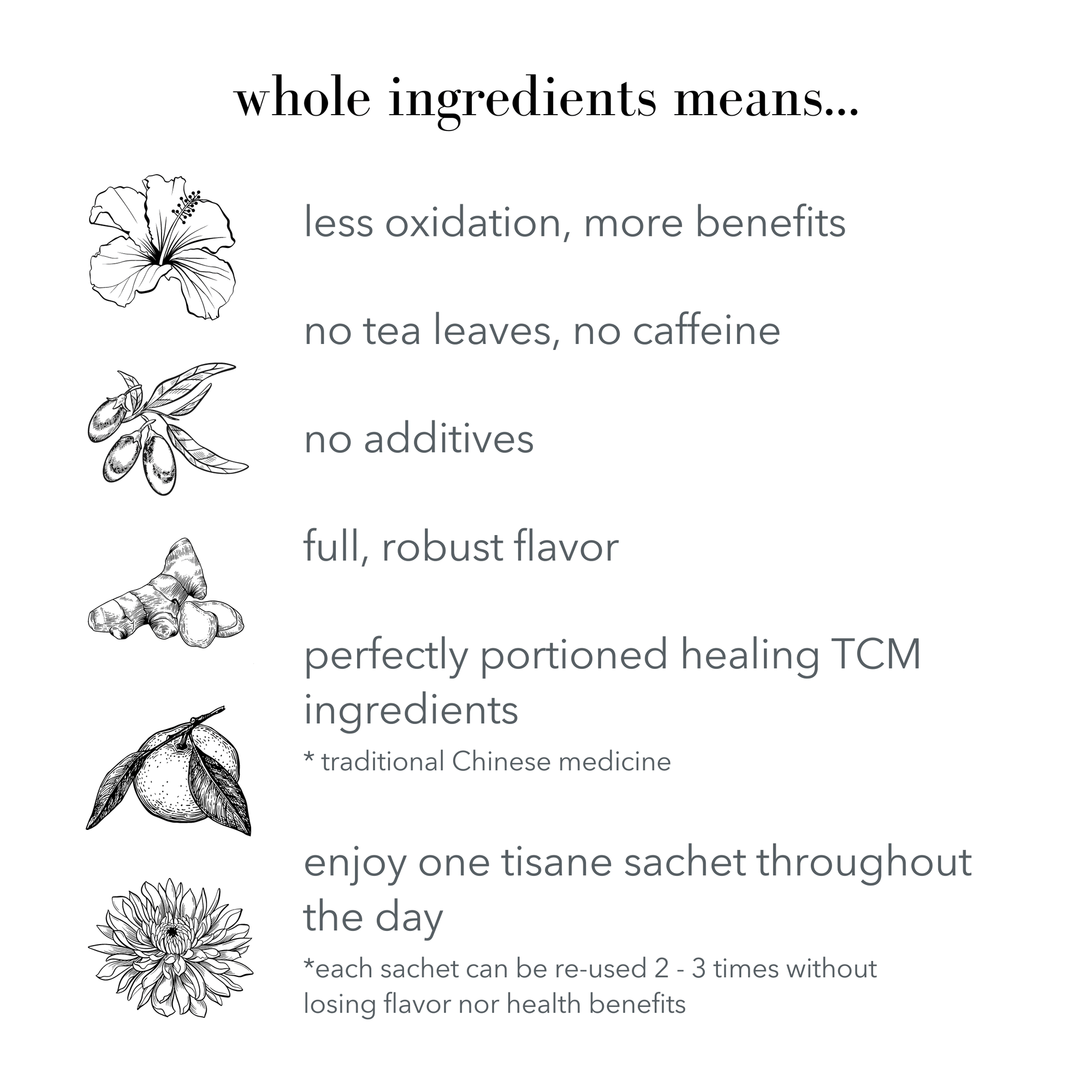
| Steeps per sachet | Each oversized sachet gives two to three full steeps |
| Best for | Post-meal heaviness, bloating, and sluggish digestion after a large meal |
| Where to buy | qisane.com |
Why a rich meal can leave the stomach feeling stuck
Most caffeine-free digestive teas speak to ginger for nausea, peppermint for cramps, or fennel for gas. Useful as those are, they tend to overlook one particular discomfort: the heavy, over-full, faintly stuck feeling that arrives an hour after a large or fatty meal. It is not a cramp, and it is not simple gas. It is digestion laboring over a heavy load.
Chinese medicine has a long, practical answer for that exact moment, and hawthorn berry sits at the center of it. Where many Western digestive teas set out to calm the gut, this tradition sets out to help it move heavy food along. The two aims overlap, yet they are not the same, and knowing the difference makes it far easier to choose a cup that matches what you actually feel.
This guide walks through how hawthorn and osmanthus are used together, what ginger and lemongrass add, and how to judge whether a post-meal tisane suits your digestion better than a standard soothing blend.
Two ways a herbal tisane can support digestion
A digestive tisane does one of two jobs, and most blends do only one. It helps to hold the two apart before choosing a cup.
The first job is immediate comfort. Herbs in this group, ginger and lemongrass among them, work on the muscles and nerves of the gut. They ease spasm, help trapped gas move, and take the edge off nausea. Relief tends to arrive within the same sitting, which is why these herbs are so well loved. Herbalists call them carminatives.
The second job is slower and less obvious: giving the gut something useful to work with over time. Hawthorn berry is a fitting example. Alongside its traditional role as a post-meal herb, it is a source of pectin, a soluble fiber, and osmanthus flower carries plant polyphenols such as quercetin and rutin. Fibers and polyphenols of this kind are the sort of compounds nutrition researchers study for their effect on the gut, since some travel to the large intestine and are fermented there by resident bacteria. That remains an open area of research rather than a settled promise, so it is best held lightly. Even so, it is a real reason these particular herbs are interesting beyond their flavor.
A well-built digestive tisane can cover both jobs in a single cup: a carminative or two for the comfort you feel tonight, and a fiber-and-polyphenol herb for the slower kind of support. Hawthorn and osmanthus bring the second; ginger and lemongrass bring the first.
What each botanical in the blend does
Here is how the four botanicals in this tisane are traditionally used, with what modern research adds where it exists.
| Botanical | Notable compounds | Traditional and researched role |
|---|---|---|
| Hawthorn berry (shan zha) | Pectin (soluble fiber), oligomeric proanthocyanidins | One of the most widely used digestive herbs in Traditional Chinese Medicine, taken after heavy or fatty meals. Traditionally thought to encourage the digestive enzymes and help break down fats. Its pectin is a fermentable fiber now studied for gut support. |
| Osmanthus flower (gui hua) | Polyphenols, including quercetin and rutin | Used for centuries in southern China as an aromatic, liver-supportive ingredient. Its apricot-like sweetness softens hawthorn's tartness, and its polyphenols are studied for anti-inflammatory and gut-related activity. |
| Ginger (sheng jiang) | Gingerols, shogaols | Warming digestive support. It stimulates circulation in the gut, helps ease bloating and gas, and has well-documented anti-nausea effects. Research supports its role in improving gastric motility. |
| Lemongrass | Citral, flavonoids | Warming and aromatic, used traditionally for digestive comfort and liver support, and gently settling on the gut. |
Notice how the roles divide. Ginger and lemongrass are the comfort side, working on motility and easing gas. Hawthorn carries the post-meal weight, the herb Chinese medicine reaches for after a rich dinner, with osmanthus rounding it out in both flavor and tradition. One cup, and you have the quick relief alongside the slower, food-moving support.
Which cup fits your symptom?
Your symptoms are a good place to begin, because they hint at what the gut needs right now. A short guide follows.
Bloating after meals
- Post-meal bloating usually traces to slow stomach emptying, gas from fermenting food, or both.
- Hawthorn is traditionally taken to help move a heavy meal along, which eases the volume sitting in the stomach at once.
- Ginger and lemongrass work on the gas, relaxing gut muscle and helping trapped air pass.
- A blend that covers both tends to be the fuller answer for everyday bloating.
Heaviness after rich or fatty food
- This is the exact moment hawthorn and osmanthus were paired for. In Chinese medicine, hawthorn berry is specifically associated with processing fatty, heavy foods.
- It is used the way some traditions turn to a bitter or a digestif after dinner, as part of the meal rather than a remedy for something gone wrong.
- Ginger adds warmth and helps the stomach empty at a steadier pace.
- If discomfort shows up mainly after large or oily meals, this is the profile to look for.
Sluggish, over-full digestion
- The sense that food is simply sitting there often eases when digestion is given a gentle nudge to move.
- Ginger's effect on gastric motility is the most direct help here, and it is well documented.
- Hawthorn's traditional enzyme-and-fat support complements it, which is why the two are combined.
- This works best as a habit around your heavier meals rather than a single fix.
The qìsane Hawthorn & Osmanthus tisane, up close
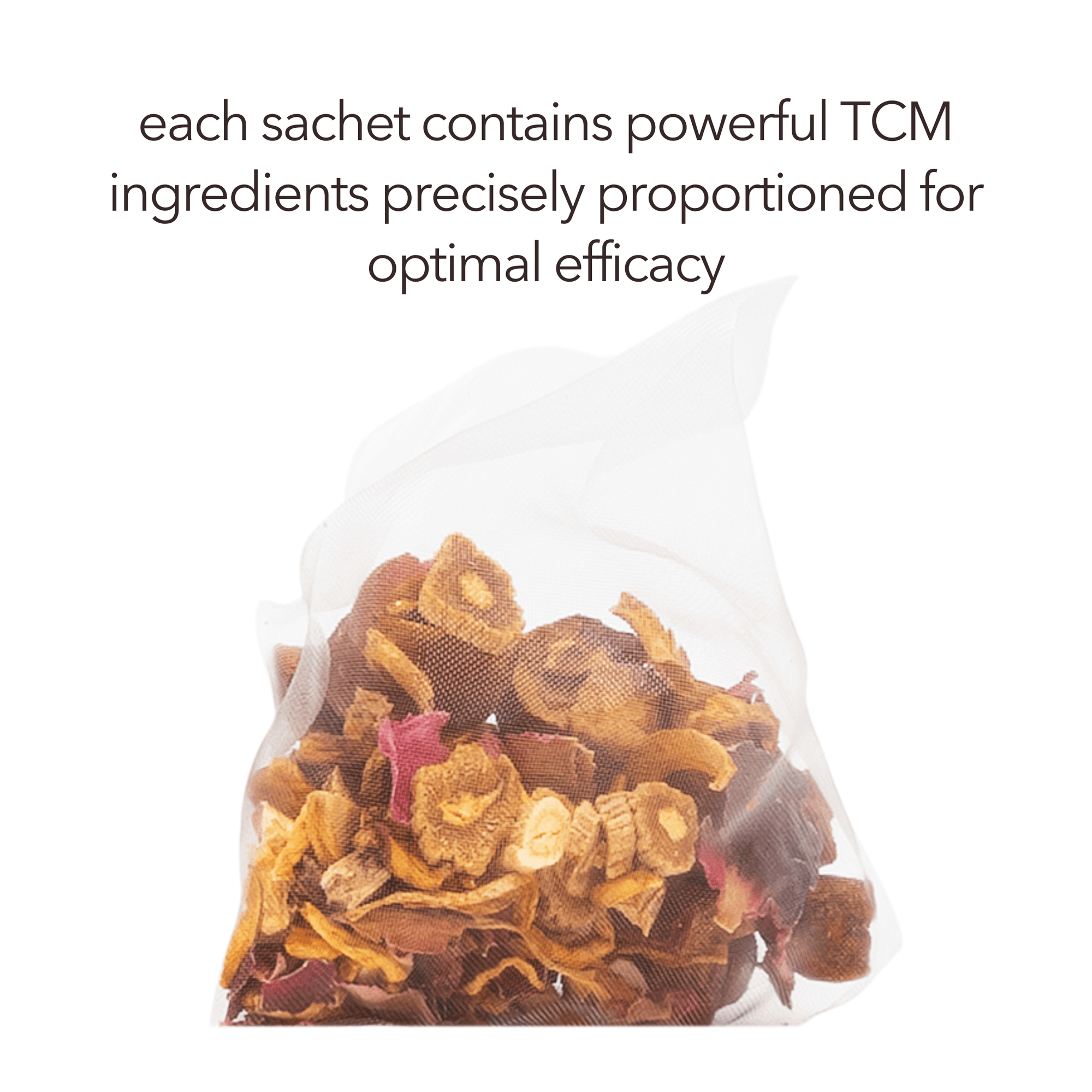
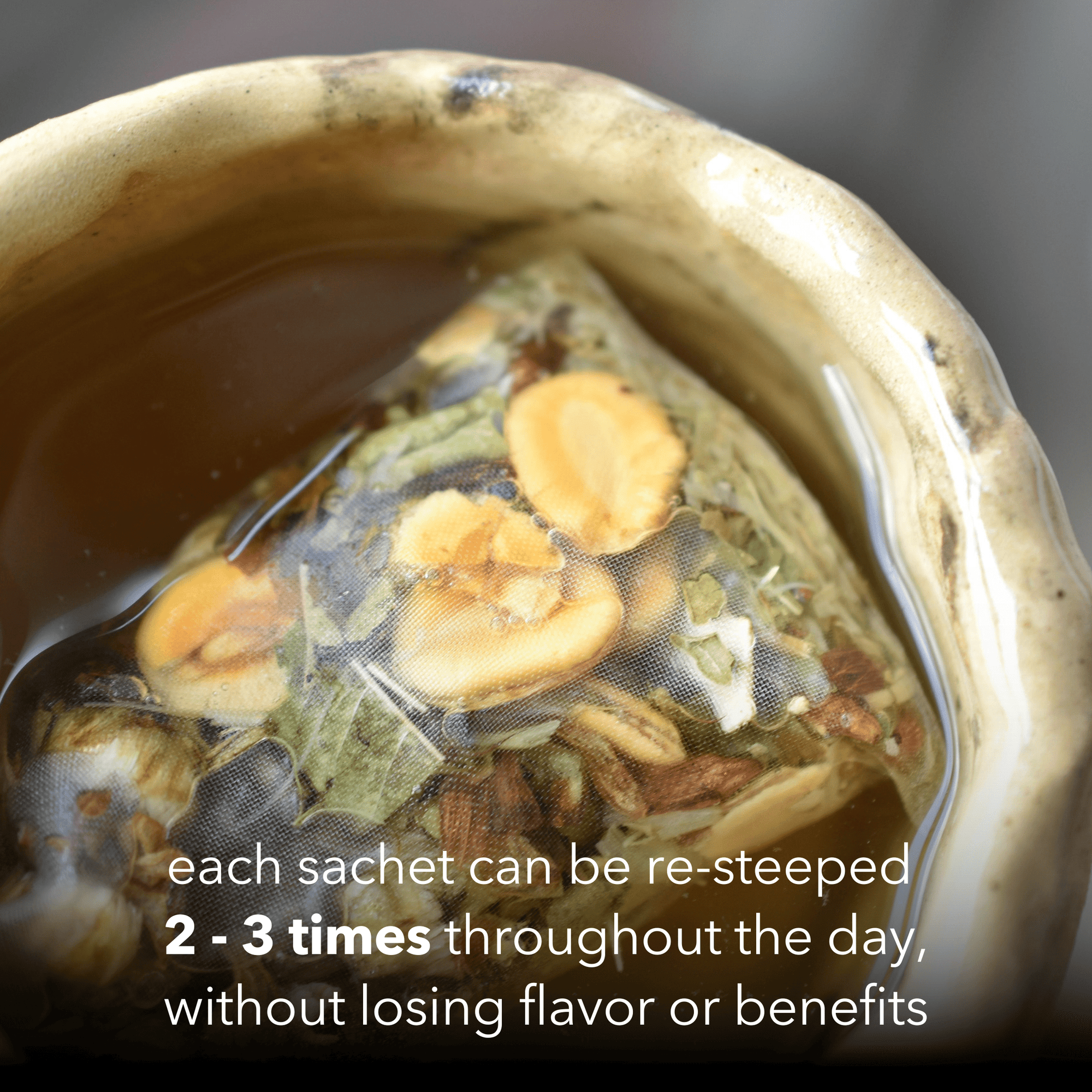
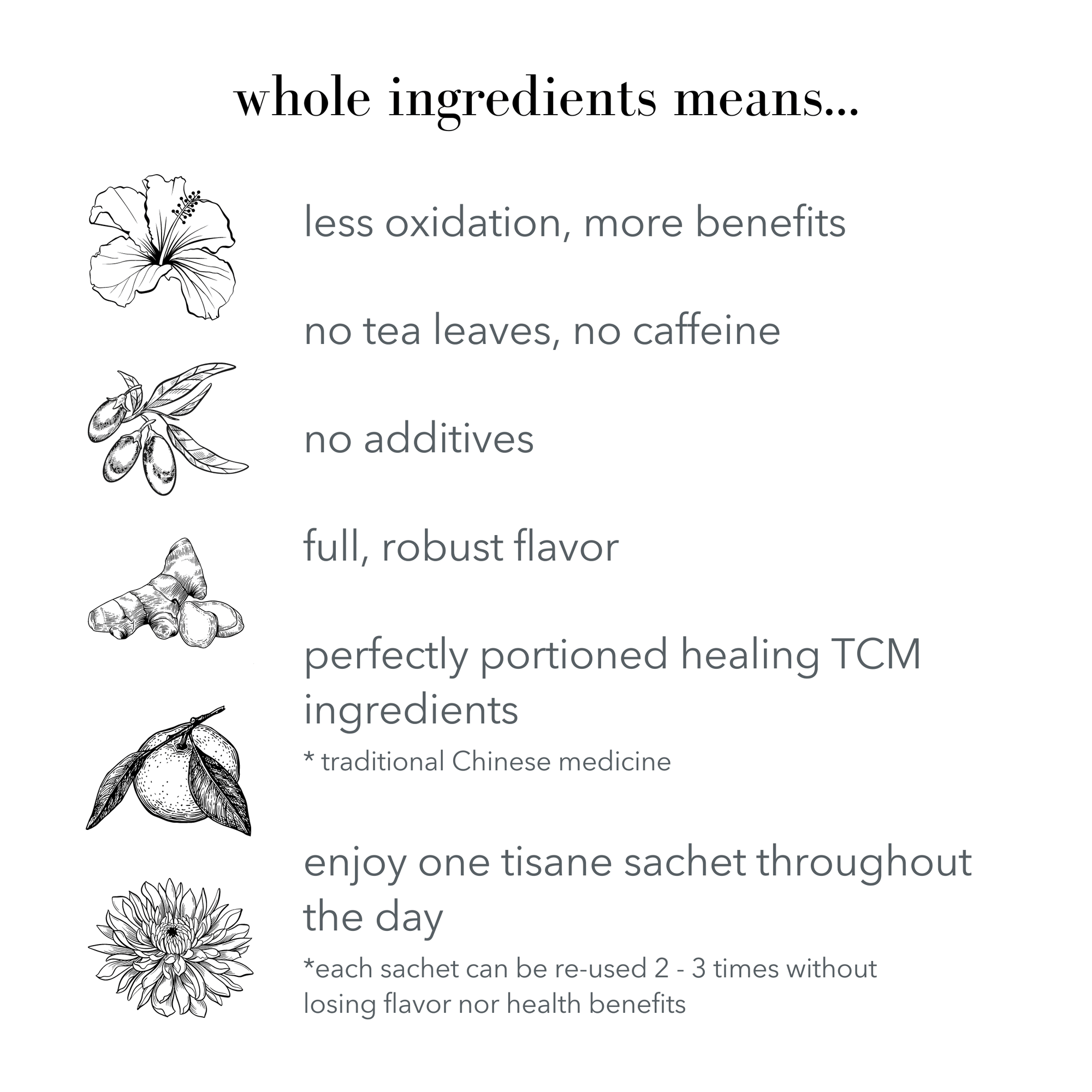
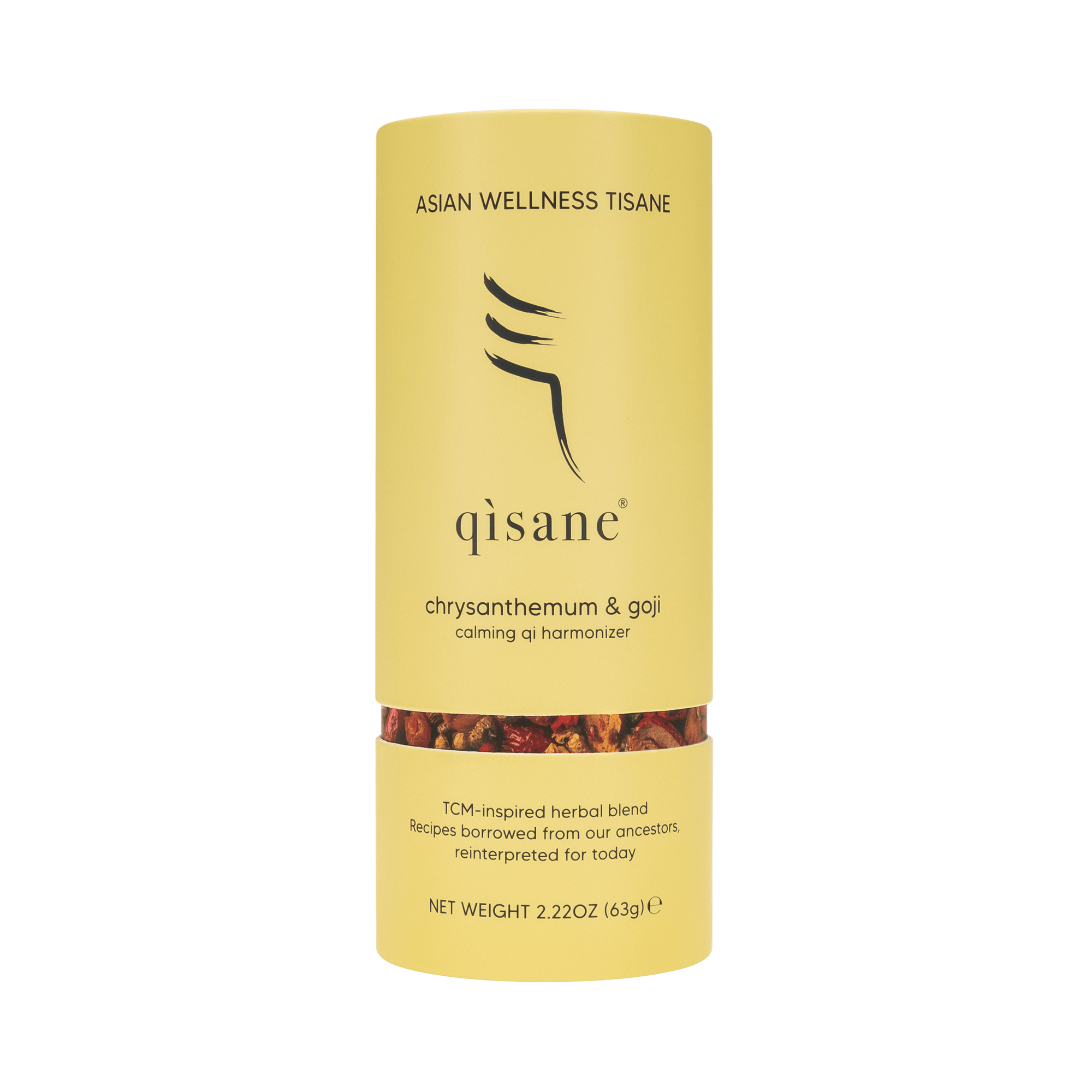
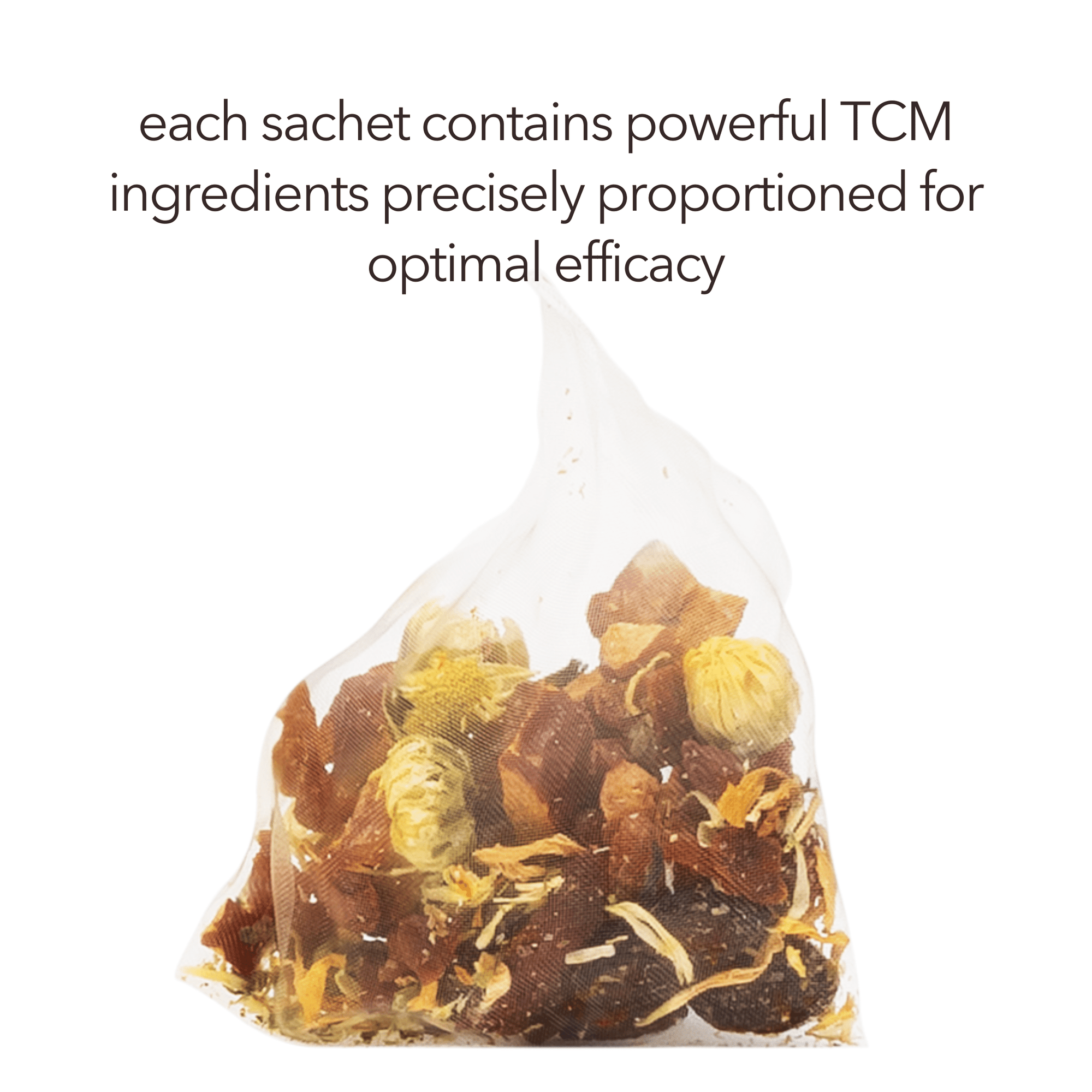
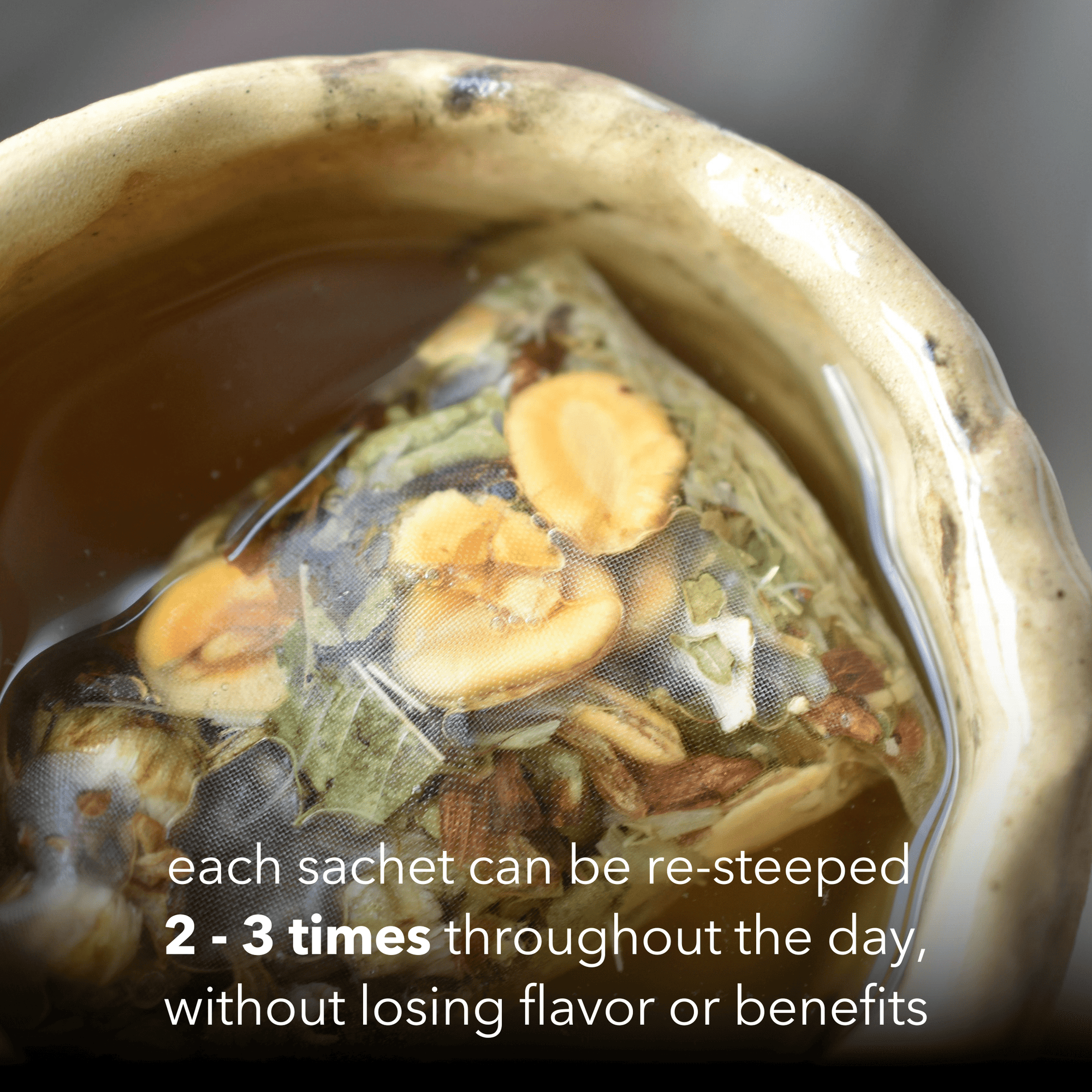
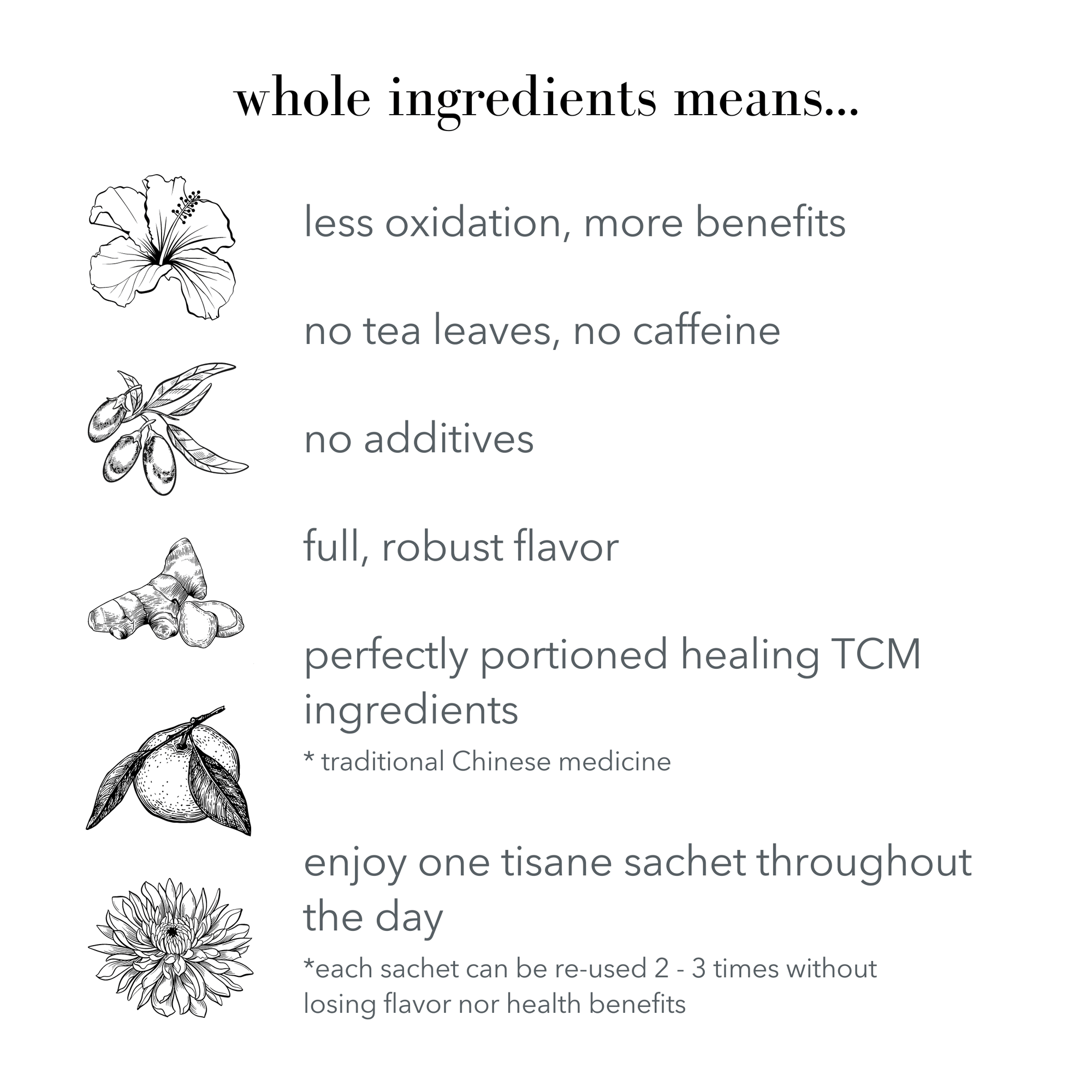
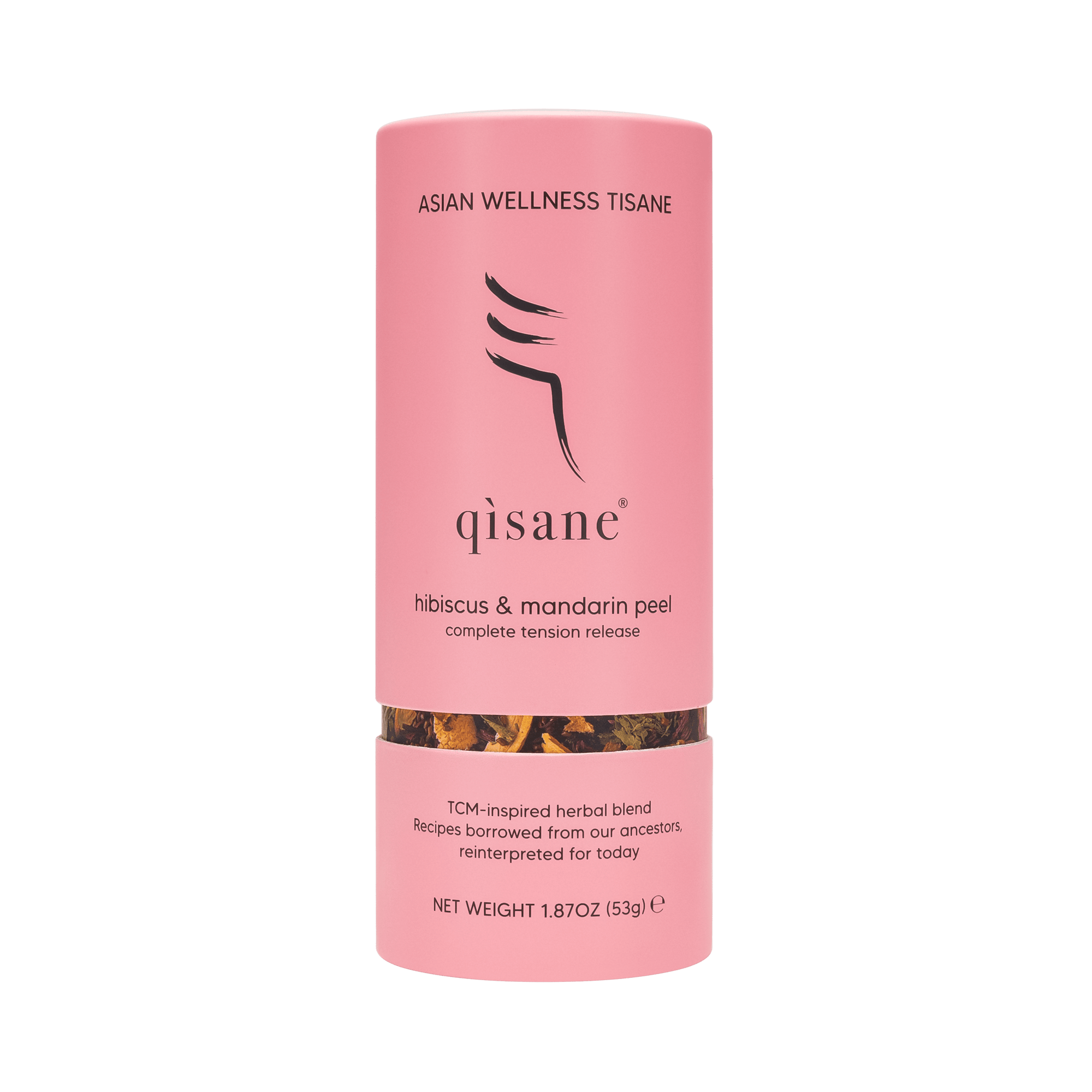
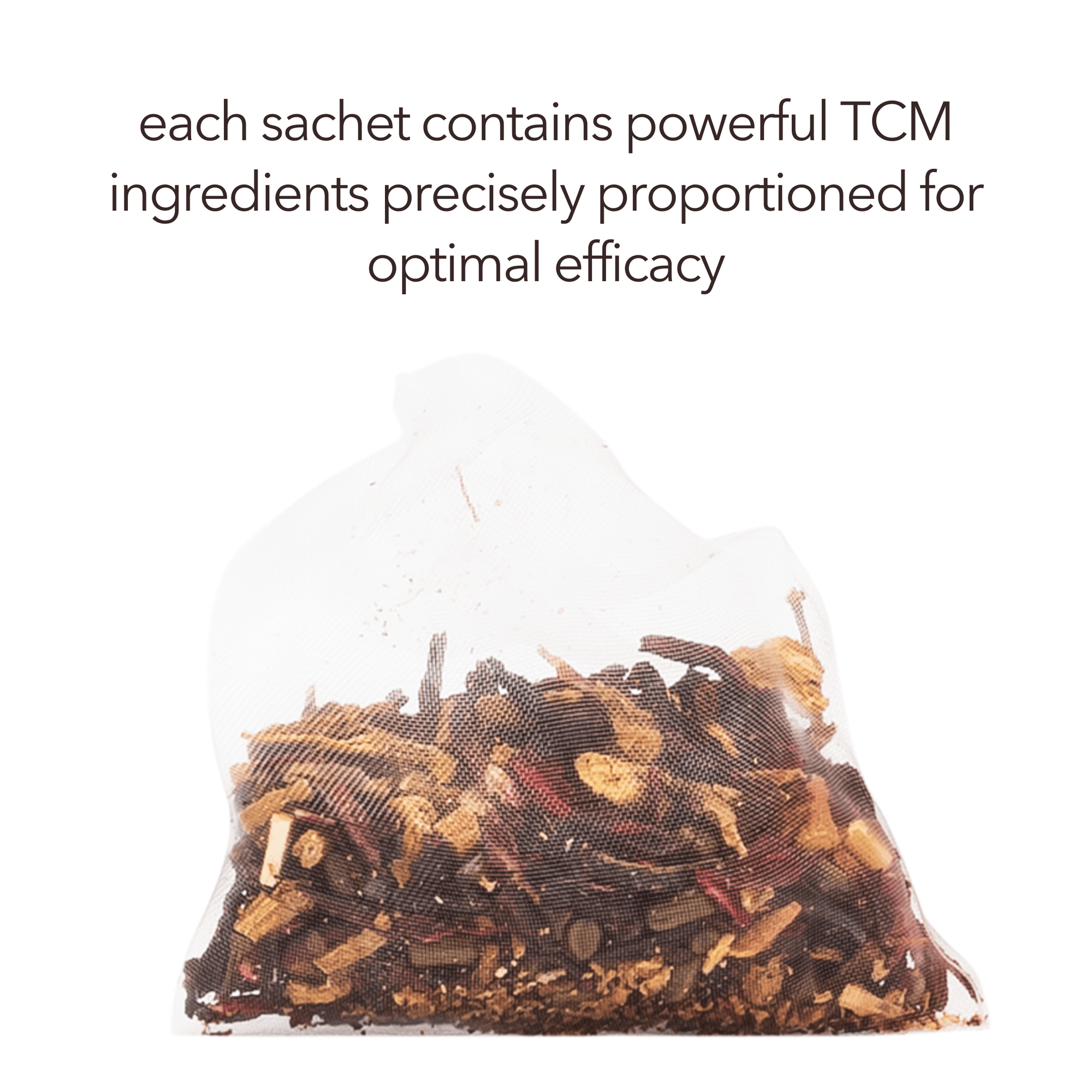
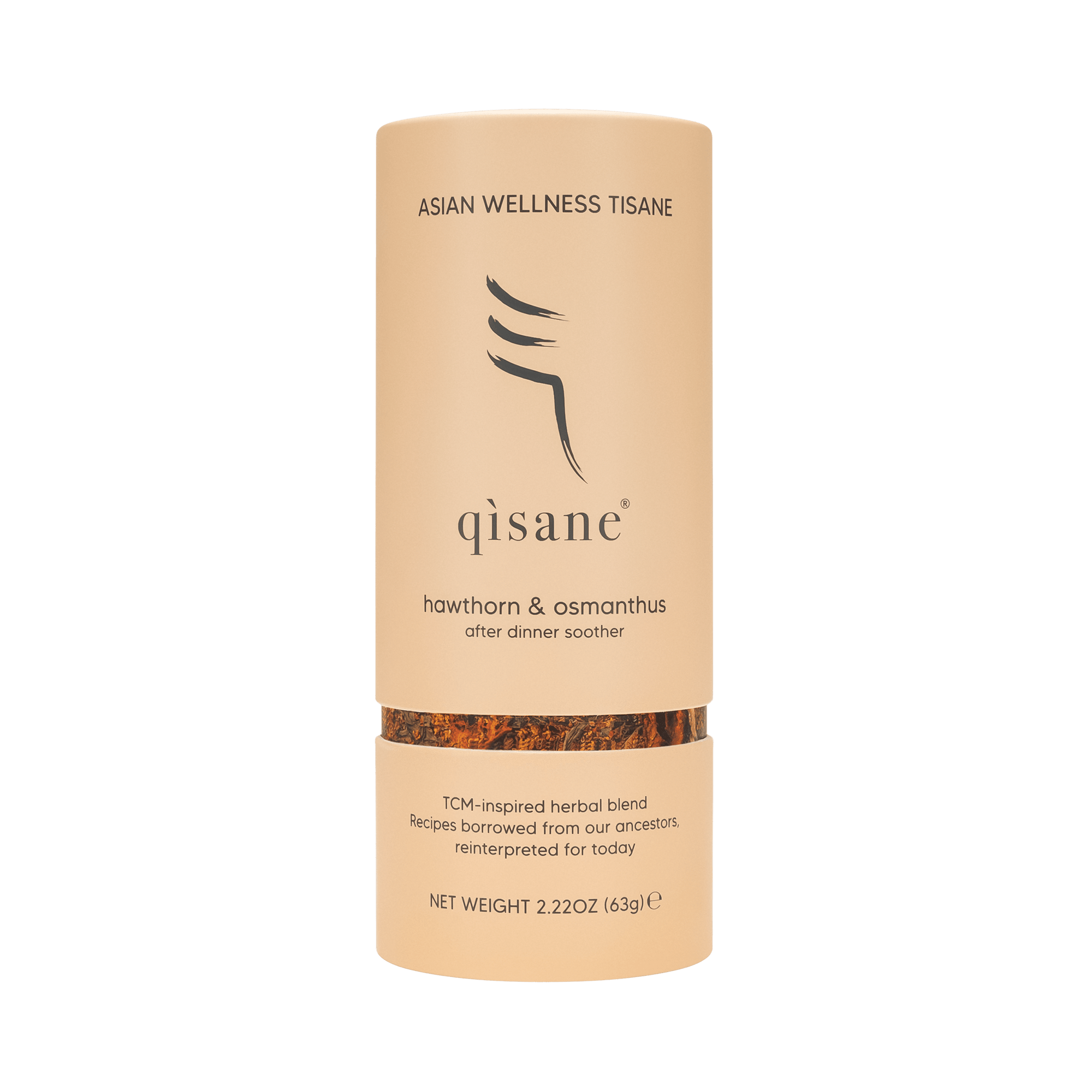
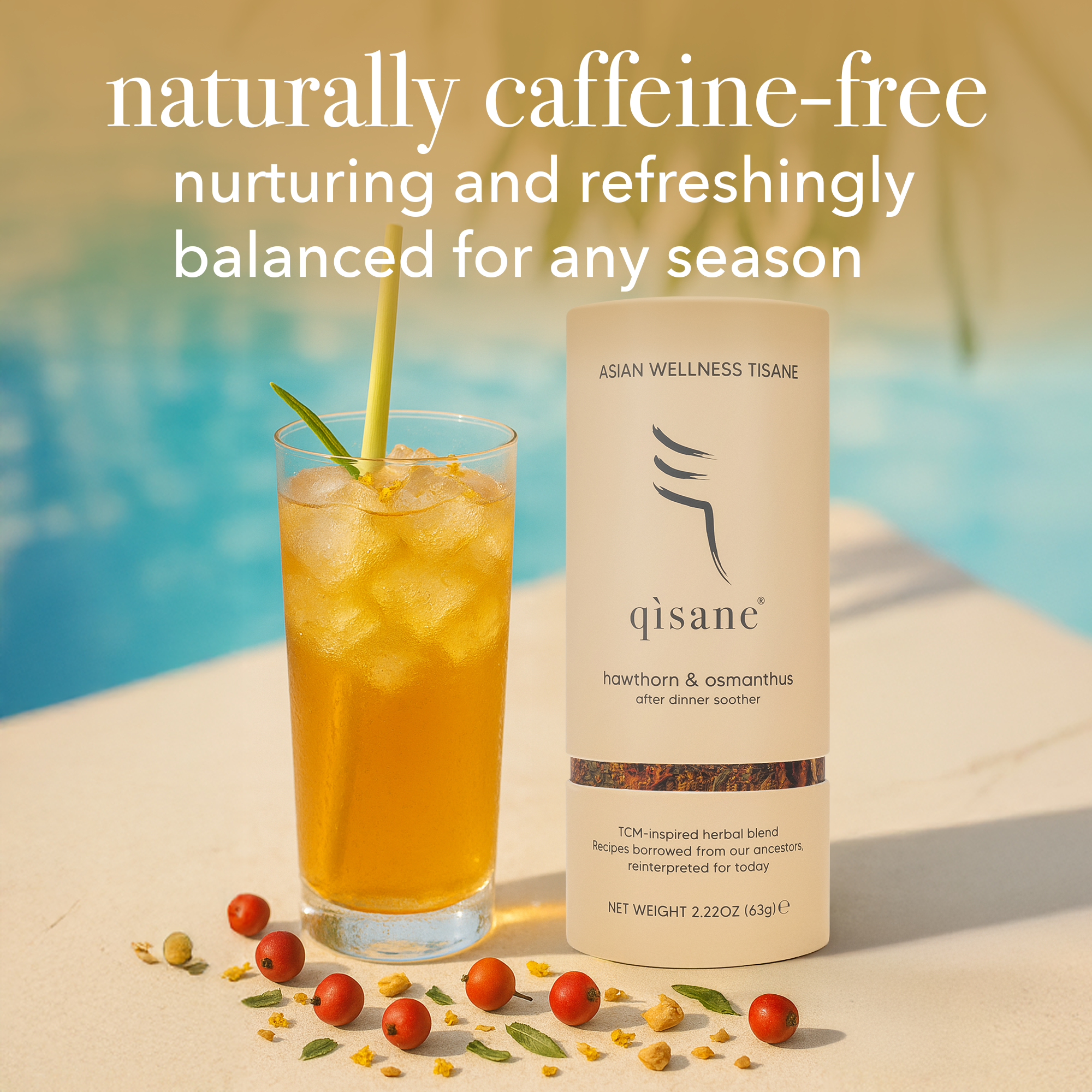
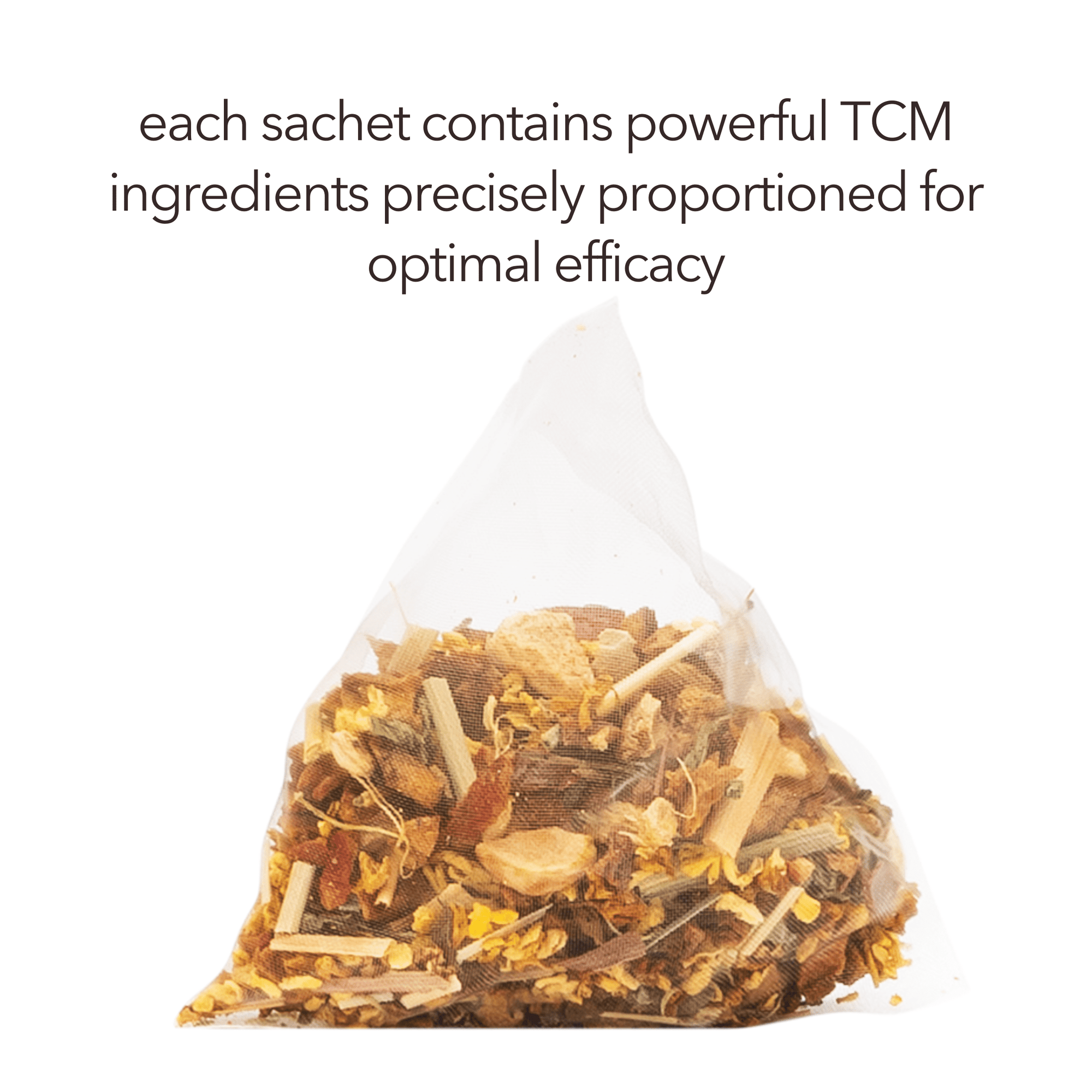
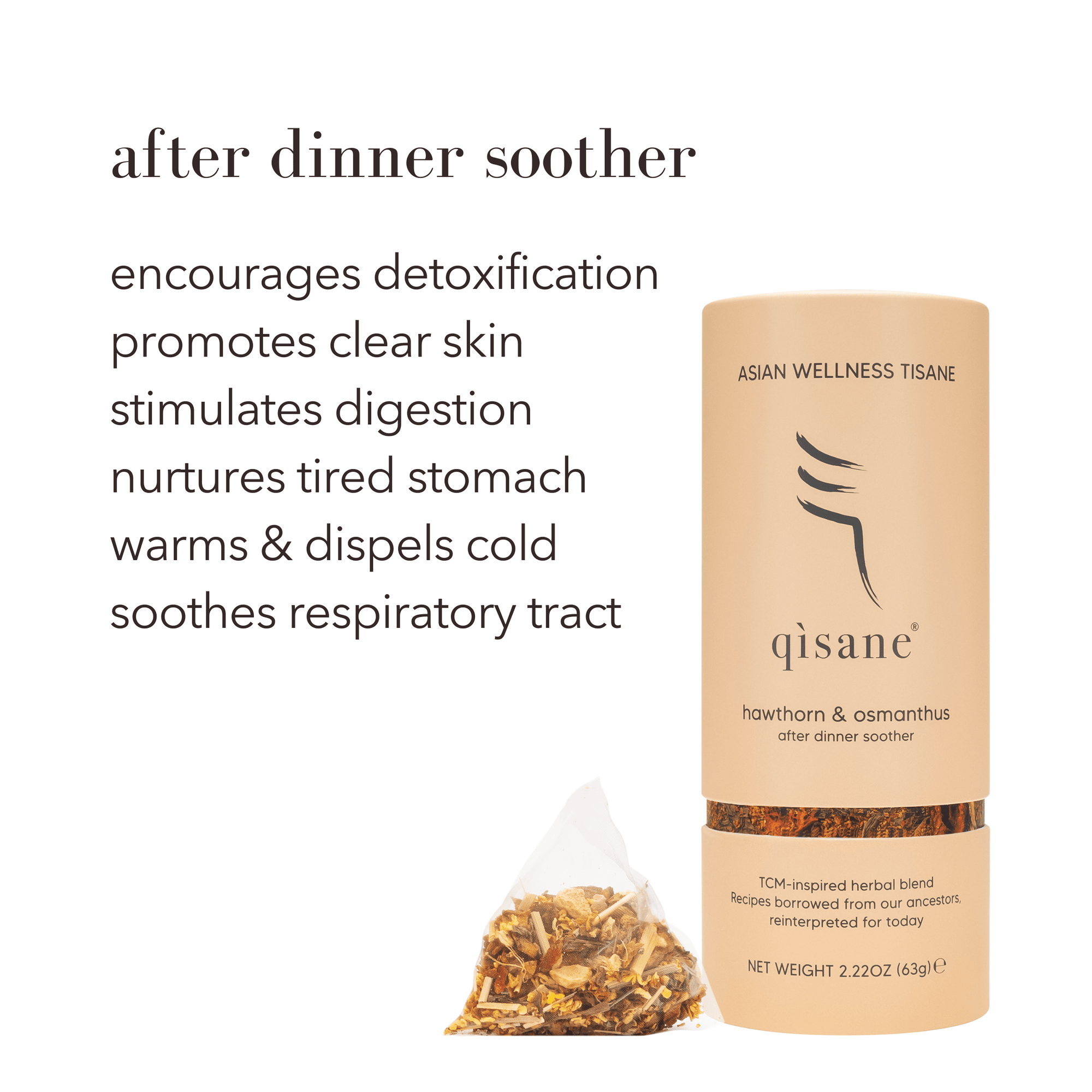
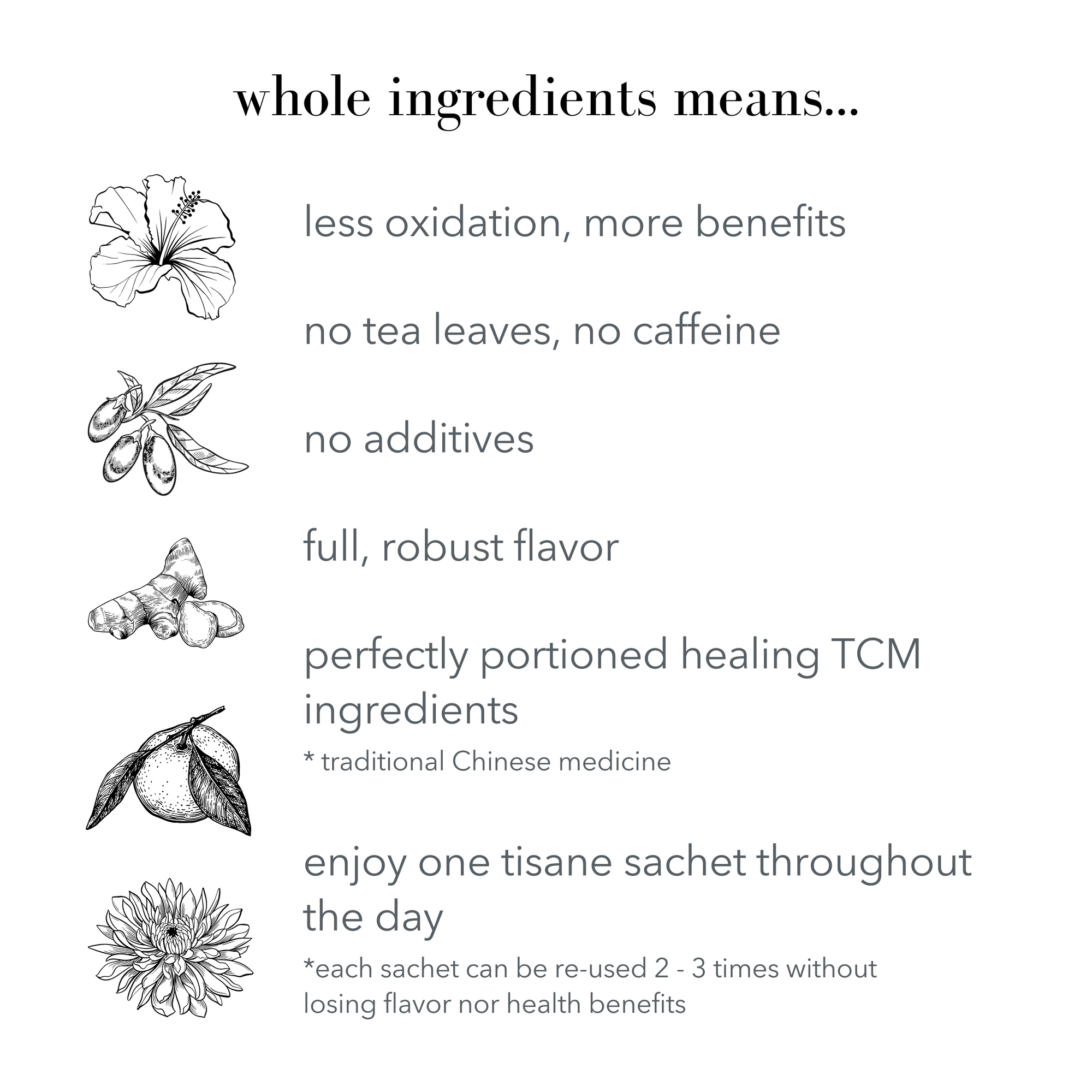
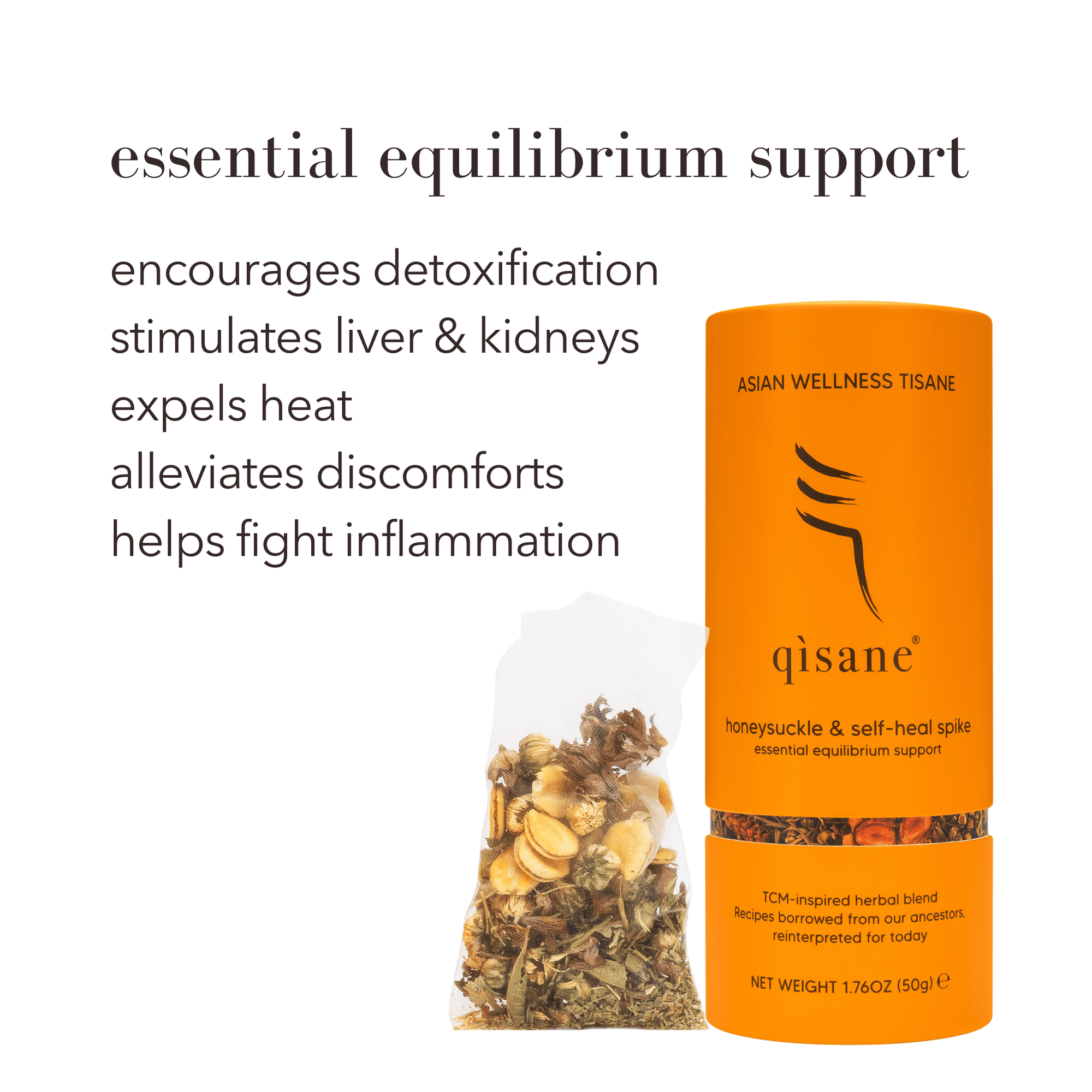
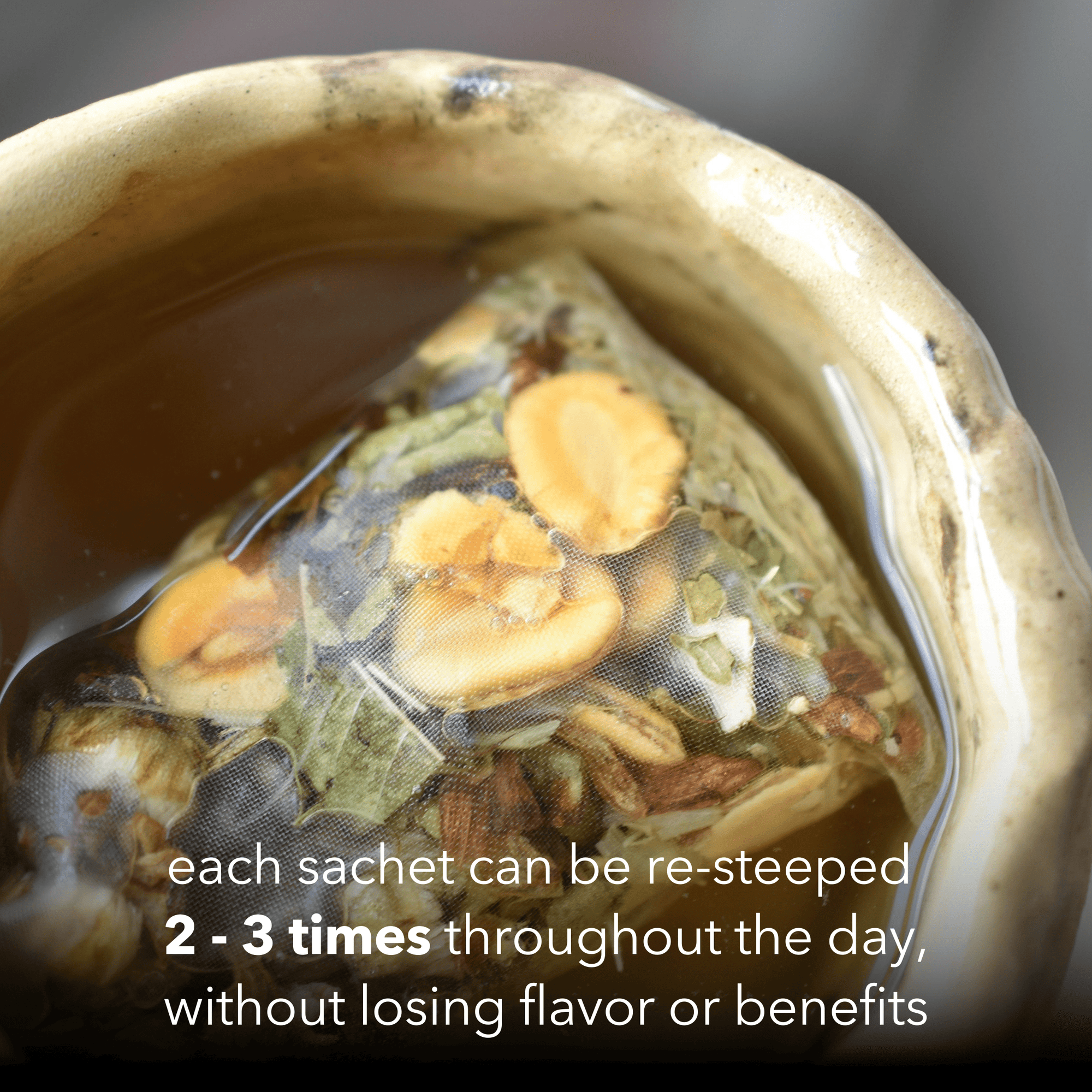
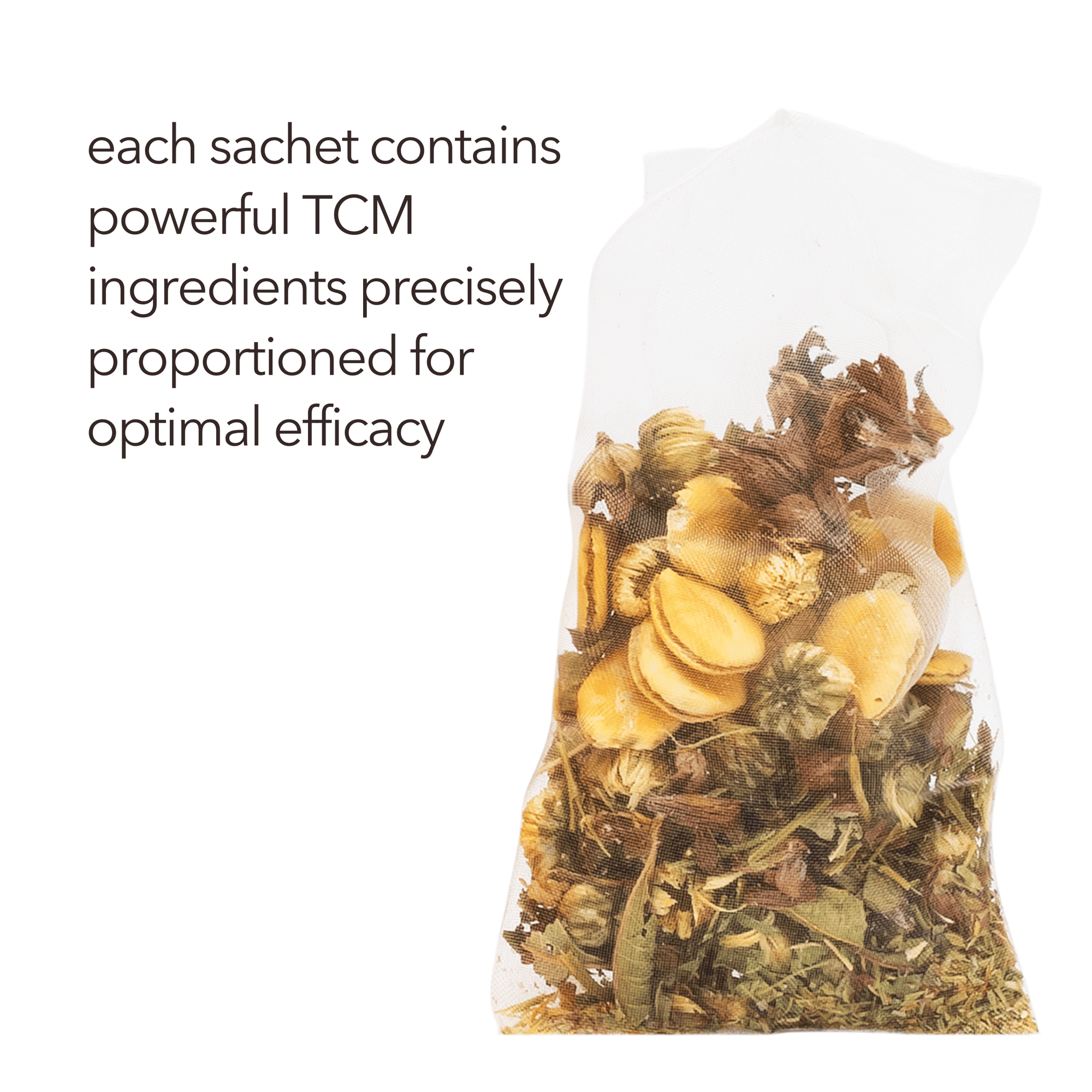
The Hawthorn & Osmanthus blend from qìsane is built around that post-meal logic. It brings hawthorn berry, osmanthus flower, ginger, and lemongrass together in whole dried form, not crushed and not processed, inside a translucent, biodegradable oversized sachet you can steep two to three times. It is completely caffeine free, with no additives.

What stands out, read as a herbalist would read it, is that the blend does not lean on a single trick. Hawthorn brings the post-meal, fat-processing tradition along with its pectin and proanthocyanidins. Osmanthus adds a separate polyphenol profile and its own liver-supportive history in southern China. Ginger contributes warmth and motility. Lemongrass closes it with an aromatic, settling comfort. Four botanicals, two jobs, and a cup that stays easy to drink evening after evening.
- Price: $22.99
- Format: oversized biodegradable sachets, re-steepable two to three times
- Caffeine free: yes, tisanes are not made from tea leaves
- Additives: none
- Inspired by Traditional Chinese Medicine recipes, reinterpreted for modern life
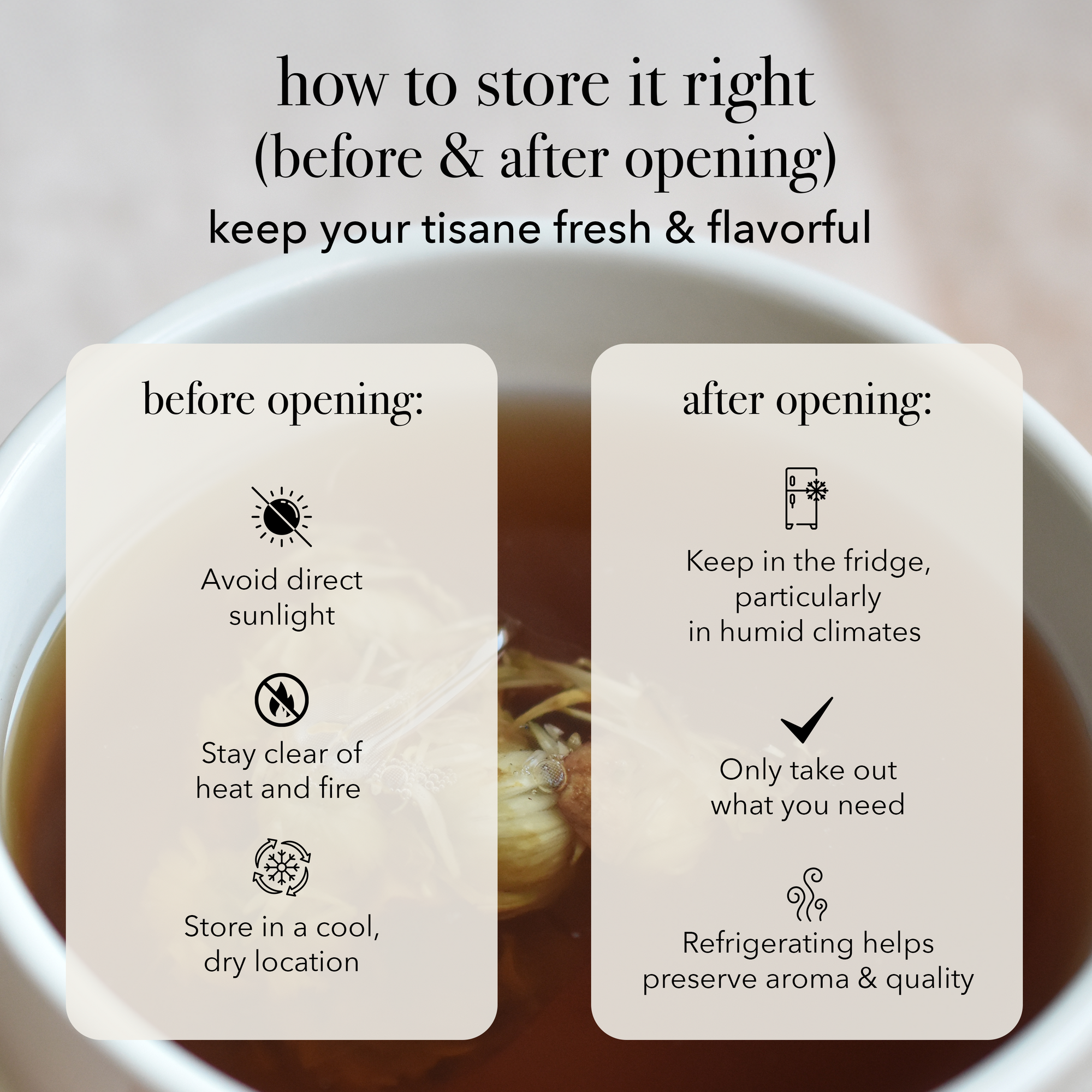
- Steep just off the boil, around 96 to 98°C, for six to seven minutes for a full-bodied cup
If a post-meal tisane suits what you are after, the Hawthorn & Osmanthus tisane for digestion is $22.99 and ships within the US in about five business days.
How it compares to other caffeine-free digestive teas
Most caffeine-free digestive teas lead with an ingredient list rather than a clear use. The table below sets the qìsane blend beside the categories you are most likely to meet, peppermint-fennel-ginger blends, chicory-based prebiotic teas, and standard loose-leaf digestives, on the points that matter after a heavy meal.
| Attribute | qìsane Hawthorn & Osmanthus | Peppermint / fennel / ginger blend | Chicory-based prebiotic tea | Standard loose-leaf digestive |
|---|---|---|---|---|
| Botanicals | Hawthorn, osmanthus, ginger, lemongrass | Peppermint, fennel, ginger | Chicory root, dandelion | Varies: peppermint, chamomile, fennel typical |
| Best-fit moment | After heavy, rich, or fatty meals | Acute cramps and gas | General fiber intake | Everyday soothing cup |
| Fiber or polyphenol content | Pectin (hawthorn) and polyphenols (osmanthus) | Not a focus | Inulin (chicory) | Rarely specified |
| Caffeine free | Yes | Usually yes | Yes | Depends on blend |
| TCM heritage | Yes, inspired by TCM recipes | No | No | No |
| Format | Oversized re-steepable sachet (two to three steeps) | Bagged or loose leaf | Bagged or loose leaf | Loose leaf primarily |
| Price | $22.99 | Typically $8 to $15 | Typically $10 to $18 | Typically $12 to $25 |
Chicory teas are the closest comparison if pure fiber intake is the goal, since inulin is a well-researched prebiotic. The qìsane blend is doing something different: it is built for the after-a-rich-meal moment, pairing hawthorn's traditional post-meal role with ginger and lemongrass for comfort. Peppermint-fennel-ginger blends remain excellent for acute cramps and gas. They are simply not aimed at heavy-meal digestion the way this one is.
Is this the right tisane for you?
Not every digestive tea suits every situation. Consider whether a post-meal tisane like Hawthorn & Osmanthus fits you.
- Your discomfort tends to arrive after large, rich, or fatty meals rather than at random.
- You want a caffeine-free cup you can drink in the evening, after dinner.
- You would rather build a gentle after-meal habit than reach for something only when things go wrong.
- You prefer a whole-botanical, TCM-inspired blend to a single-herb tea bag.
- You enjoy a lightly sweet, aromatic cup; osmanthus keeps hawthorn from tasting too tart.
- You are not on medication that may interact with herbal ingredients. If you are, please check with your doctor first.
If four or more of those ring true, this is an easy blend to fold into a routine. You can read more on whether herbal tea helps with digestion, browse the full qìsane range, or go straight to the Hawthorn & Osmanthus blend if the botanicals already fit your goals.
Frequently asked questions
What is Hawthorn & Osmanthus tisane for?
It is a caffeine-free tisane traditionally used for digestion after heavy, rich, or fatty meals. Hawthorn berry has a long history in Chinese medicine as a post-meal herb for exactly that over-full feeling, and ginger, lemongrass, and osmanthus round it out with warmth, comfort, and a softer flavor. It is meant as part of an after-dinner ritual, not as a quick fix or a treatment.
Is hawthorn berry good for digestion?
In Chinese medicine, hawthorn berry (shan zha) is one of the most widely used digestive herbs, specifically for processing fatty and heavy foods. It is traditionally thought to encourage the digestive enzymes and support the breakdown of fats, which is why it is taken after meals rather than as a daily tonic. Hawthorn also contains pectin, a soluble fiber that some research examines for its effect on gut bacteria, though that side is still being studied.
Is this tisane caffeine free?
Yes. qìsane tisanes are made from whole dried botanicals, flowers, fruits, roots, and herbs, never from tea leaves. Caffeine lives in the tea plant, Camellia sinensis, not in hawthorn, osmanthus, ginger, or lemongrass, so the blend is completely caffeine free. That makes it a comfortable cup after dinner or later in the evening.
Does osmanthus flower do anything, or is it only for flavor?
Both. Osmanthus adds a delicate, apricot-like sweetness that balances hawthorn's tartness, and it carries a long history in southern China as an aromatic, liver-supportive ingredient. It also holds polyphenols such as quercetin and rutin, which botanical research studies for anti-inflammatory and gut-related activity. It has belonged to East Asian herbal traditions for centuries, even if it is less familiar in the West than ginger or peppermint.
How is this different from a probiotic supplement?
A probiotic adds live bacterial cultures to the gut directly. Fiber and polyphenol herbs work from the other side: they can give the bacteria already living in your gut something to feed on. The two ideas are usually described as complementary rather than competing. This tisane is not a probiotic and is not a substitute for one. It is a traditional post-meal digestive blend that happens to include a fiber-rich and a polyphenol-rich herb.
How often can I drink it?
For most healthy adults, a daily cup as part of a varied diet is fine, and it works best as a habit around heavier meals. If you are pregnant, breastfeeding, or taking medication, please check with your doctor before adding any herbal tea to your routine. It is not designed for instant results, so give it a little time.
Are peppermint, ginger, and fennel teas the same kind of thing?
Not quite. Peppermint, ginger, and fennel are mainly carminatives: they work on the muscles and nerves of the gut to ease cramps, spasm, and gas, and relief is usually quick. Hawthorn sits closer to the post-meal, food-moving tradition and adds fiber to the mix. The blends overlap in comfort, but hawthorn and osmanthus are what point this one toward heavy-meal digestion specifically.
A note on wellness claims: This article is for general education, not medical advice. The herbal perspectives here are traditional context, not a clinical prescription, and individual results will vary. If you have a chronic digestive condition, are pregnant or breastfeeding, or take prescription medication, please speak with a qualified healthcare provider before adding any herbal tea to your routine.
These statements have not been evaluated by the Food and Drug Administration. This product is not intended to diagnose, treat, cure, or prevent any disease.
Related reading: