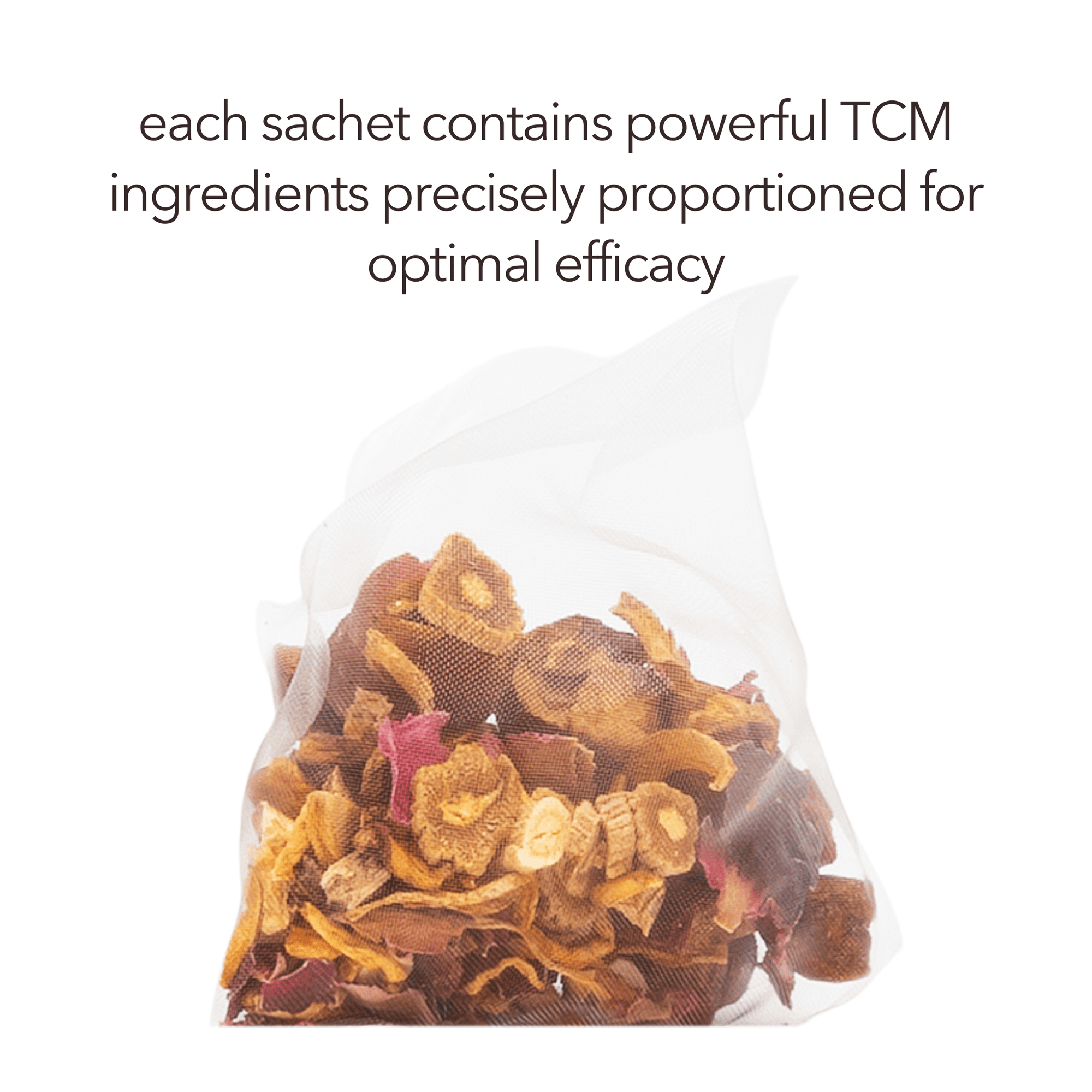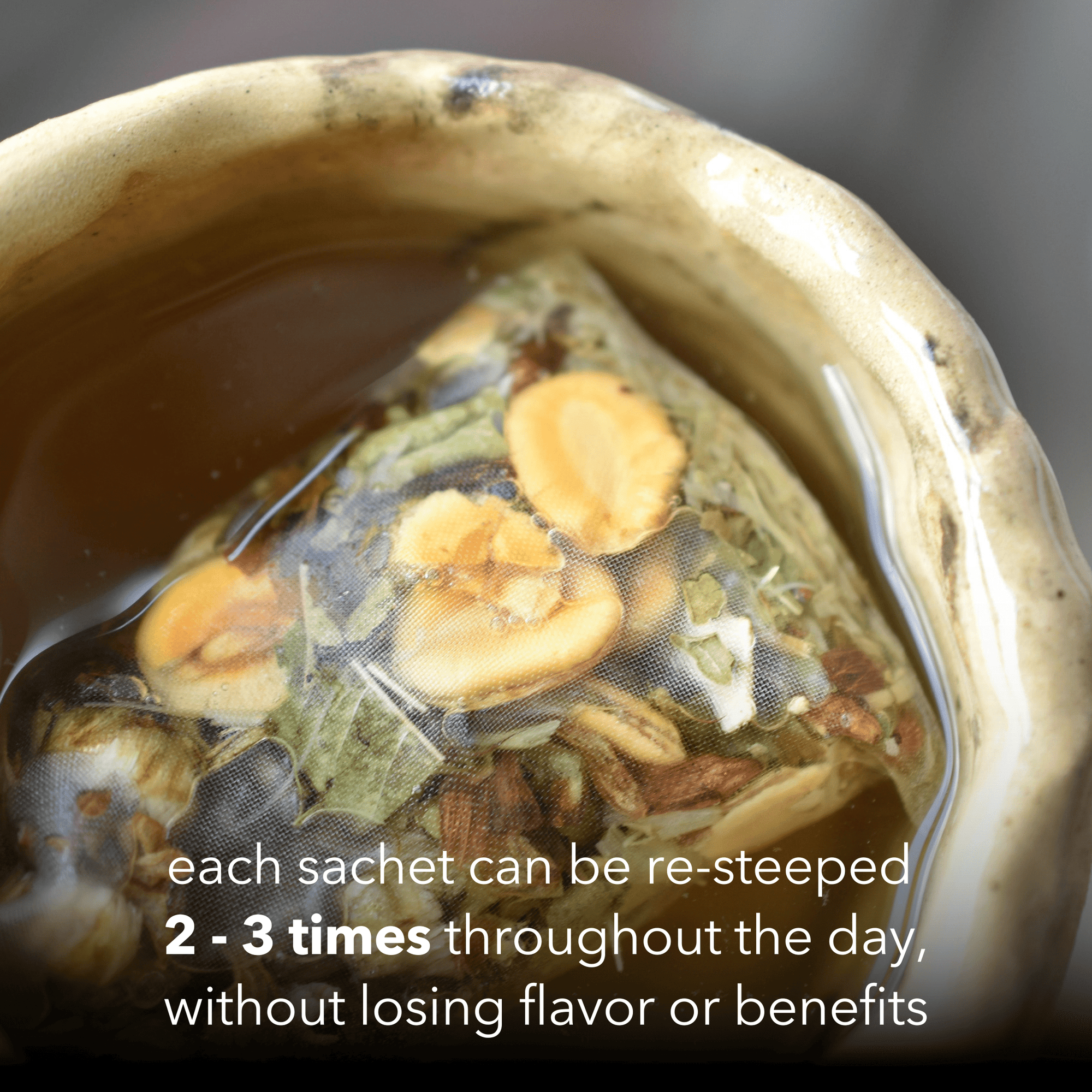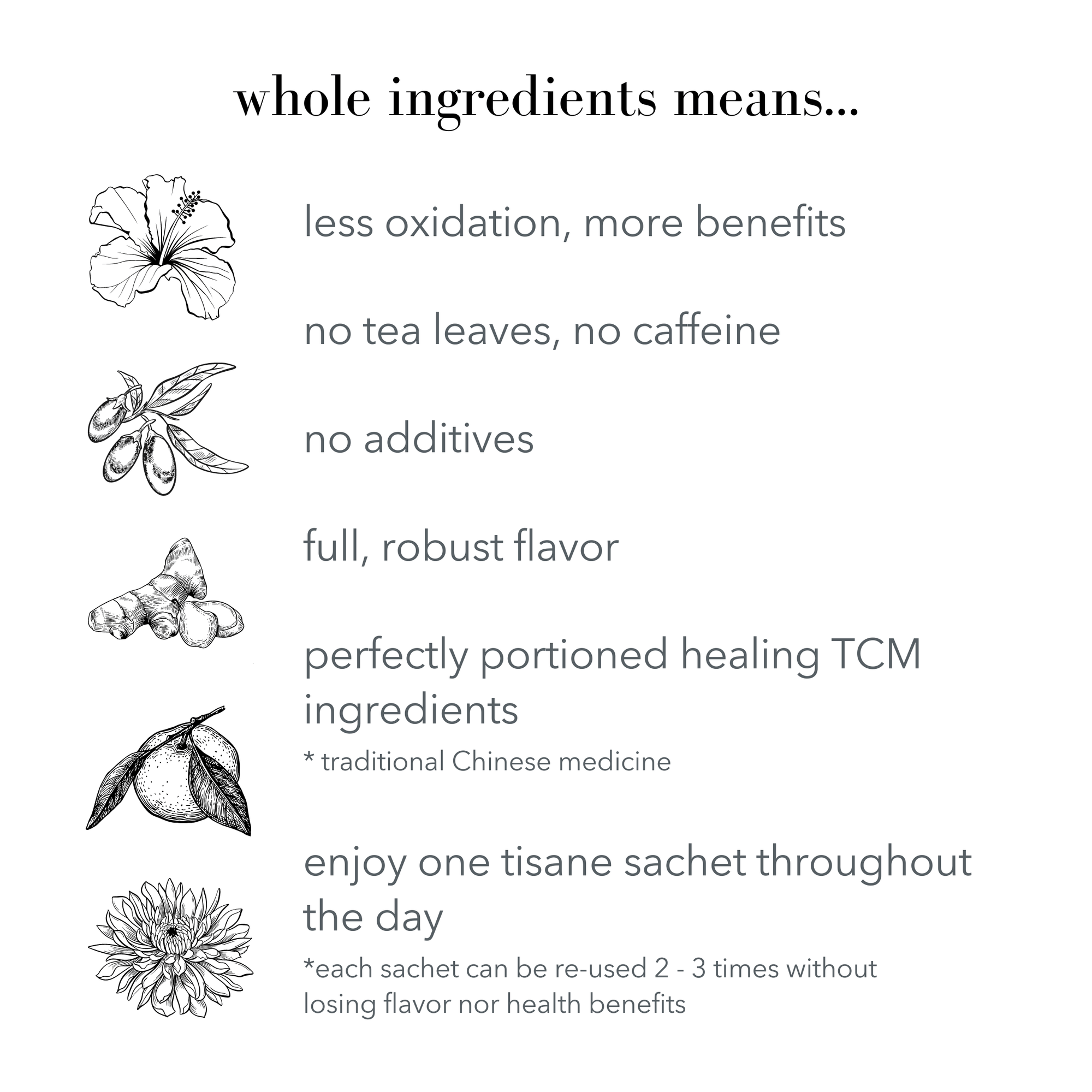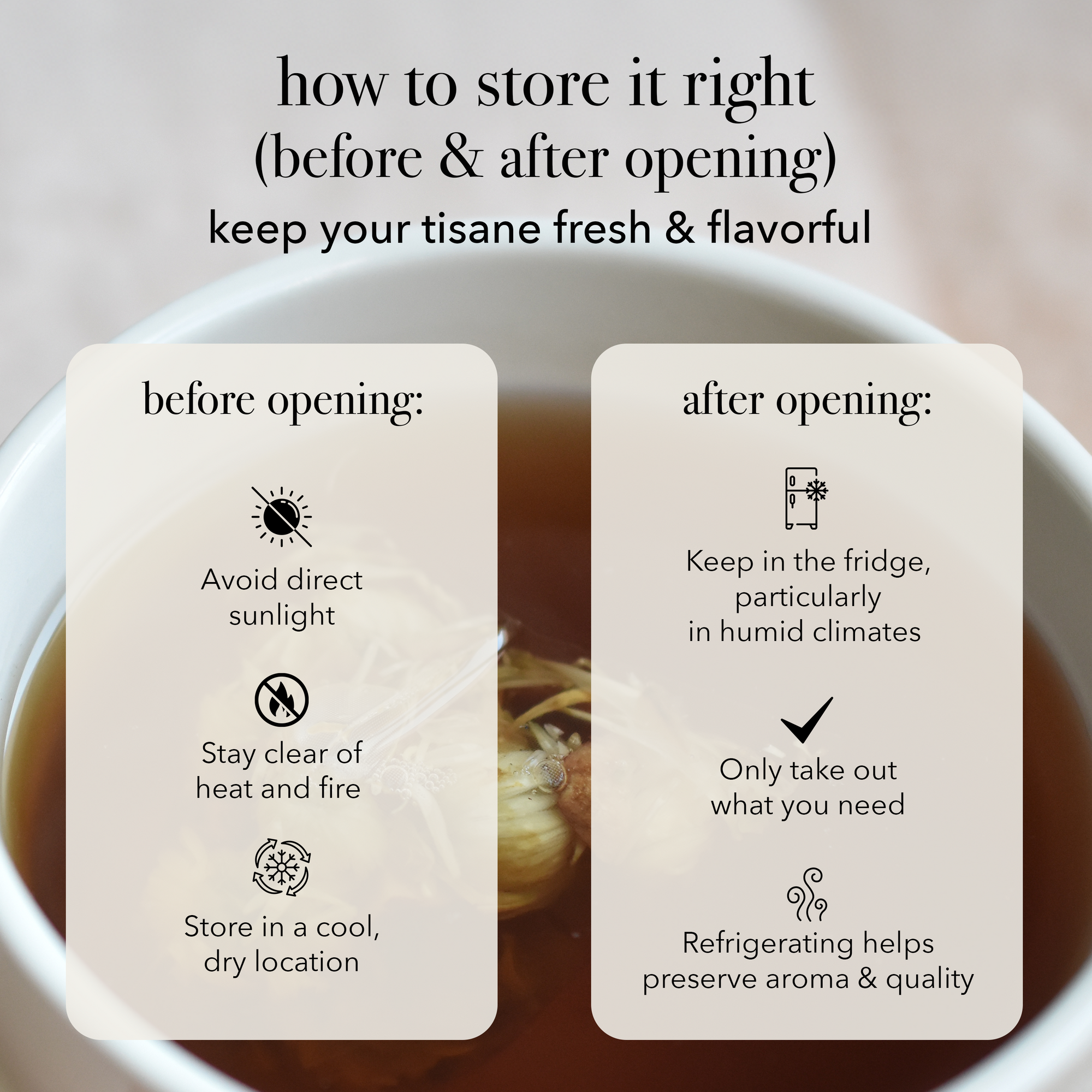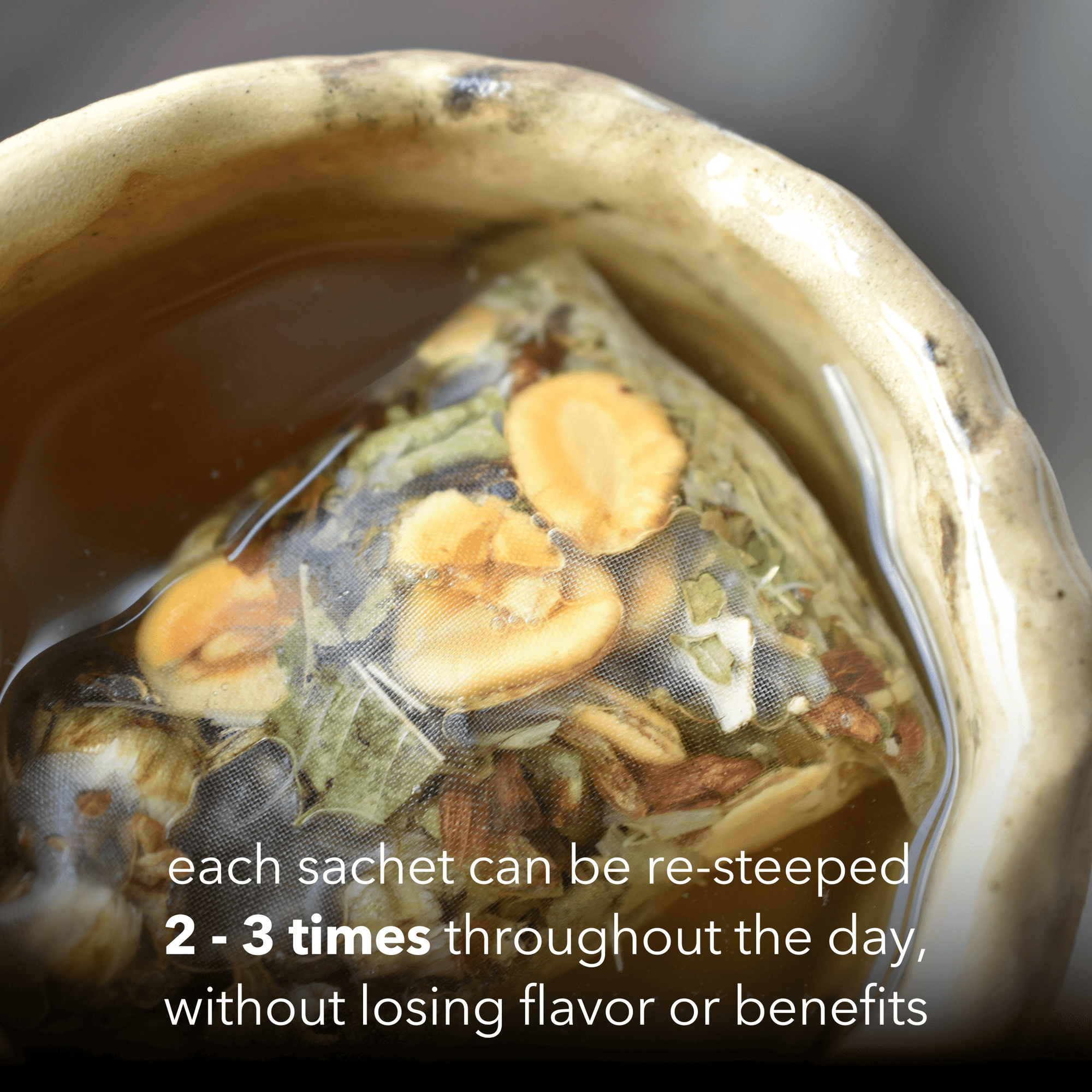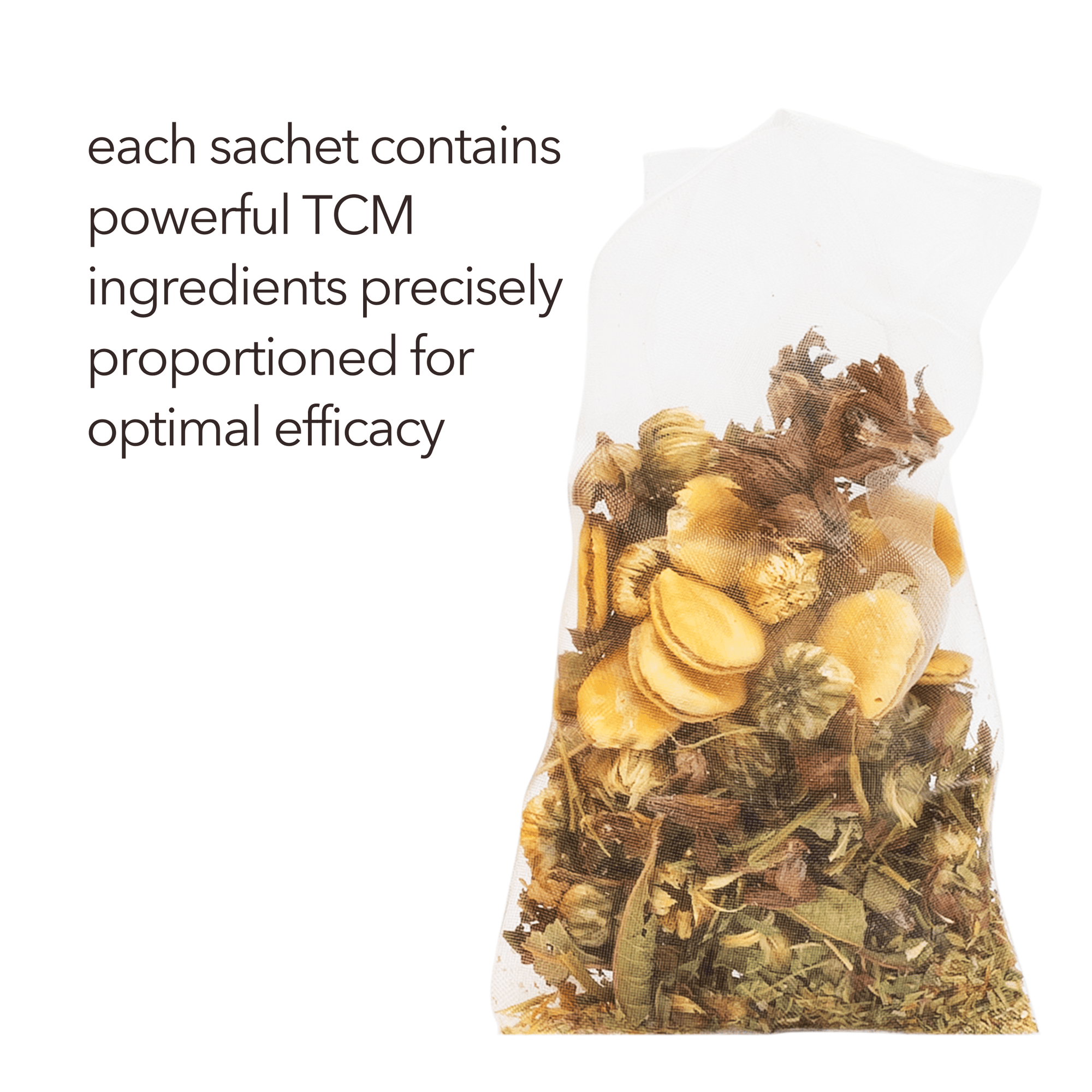


You do not need a cupboard full of herbs or a simmering pot to enjoy a TCM-inspired drink. A ready-to-steep sachet is the simplest option: add hot water, allow the ingredients to infuse and enjoy. Food-grade chrysanthemum flowers or a few fresh ginger slices offer other easy starting points, with a little measuring or slicing.
The aim is a manageable daily ritual, not a thirty-second self-diagnosis. Choose a cup for its flavor, the moment you want to create and the traditional ingredient story that interests you. Persistent fatigue, unexplained thirst or ongoing digestive discomfort deserves attention beyond changing your tea.
What does “balance” mean in a TCM-inspired drink?
Traditional Chinese medicine describes foods and herbs using qualities such as warming and cooling. These are traditional classifications, not the temperature of the water or a laboratory reading of what happens in your body. A cooling herb can still be served in a hot cup.
For example, the Chinese Pharmacopoeia entry for chrysanthemum flower, reproduced in Westlake University’s ShennongAlpha resource, describes it as slightly cold and records its traditional heat-clearing role. That explains an important part of chrysanthemum’s place in Chinese herbal culture. It does not establish that an everyday blend lowers inflammation, treats eye disease or changes body temperature.
You can appreciate this framework without trying to identify an imbalance from cold hands or a stressful afternoon. For individualized TCM guidance, a qualified practitioner considers a fuller picture than a quick checklist.
The lowest-effort choice: a ready-to-steep tisane
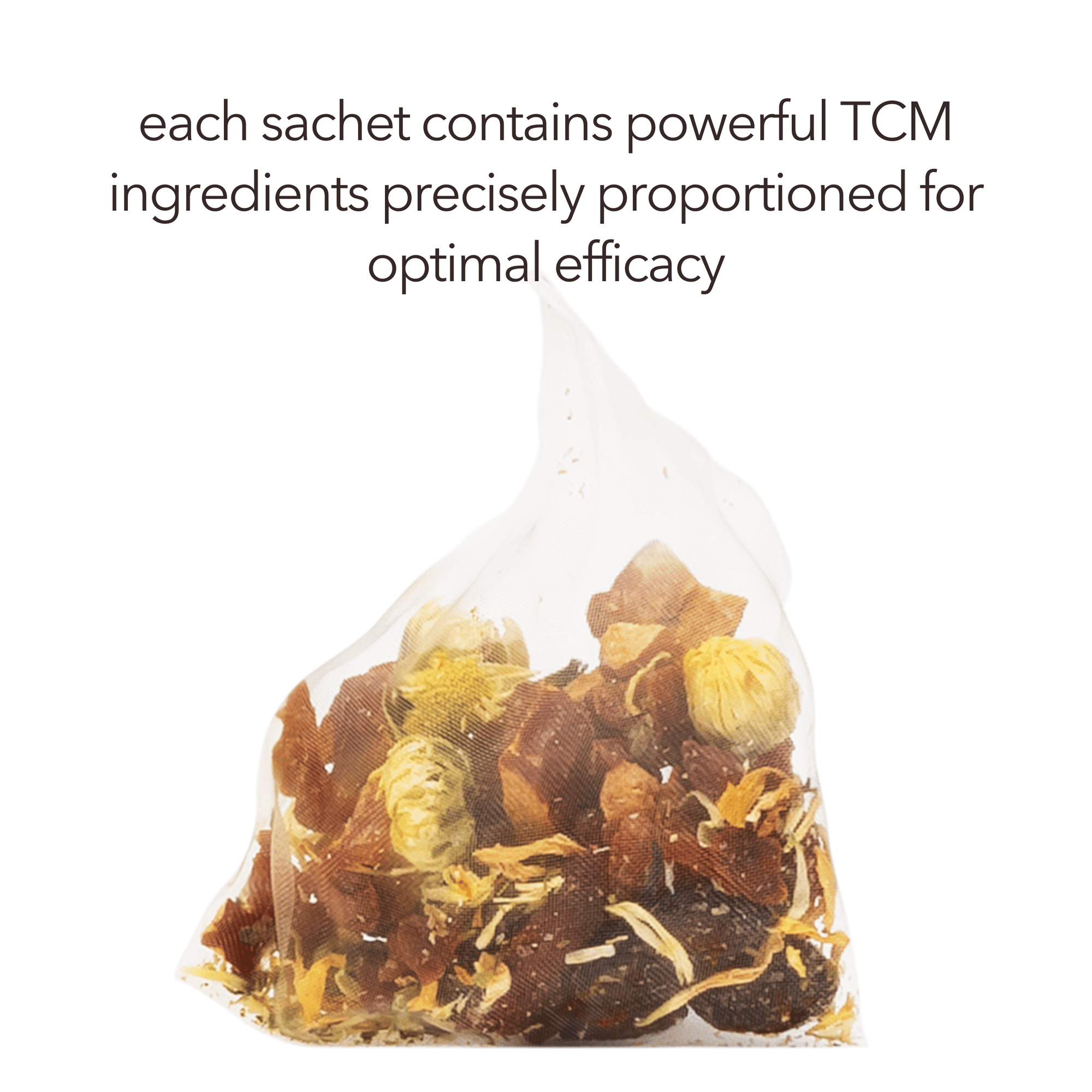
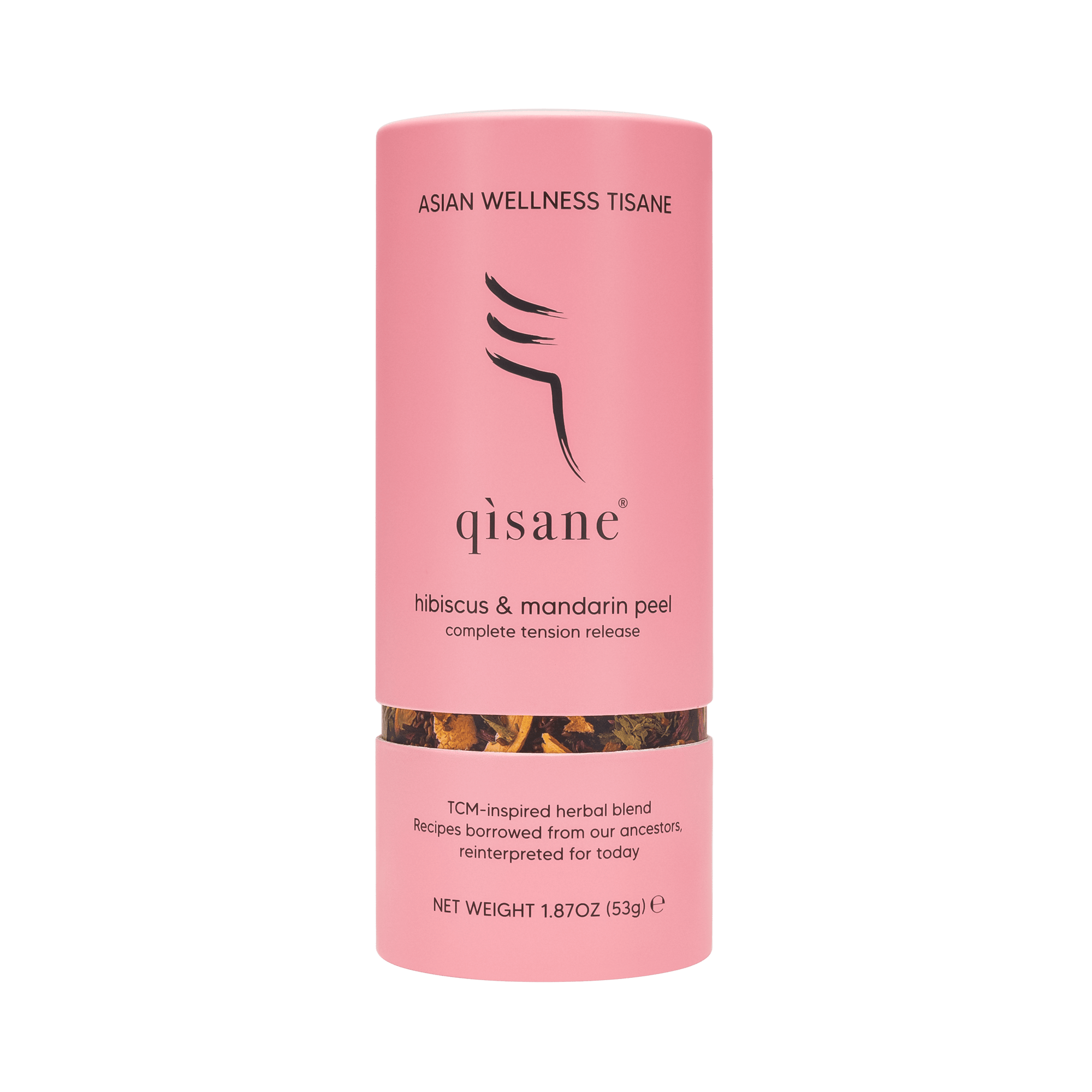
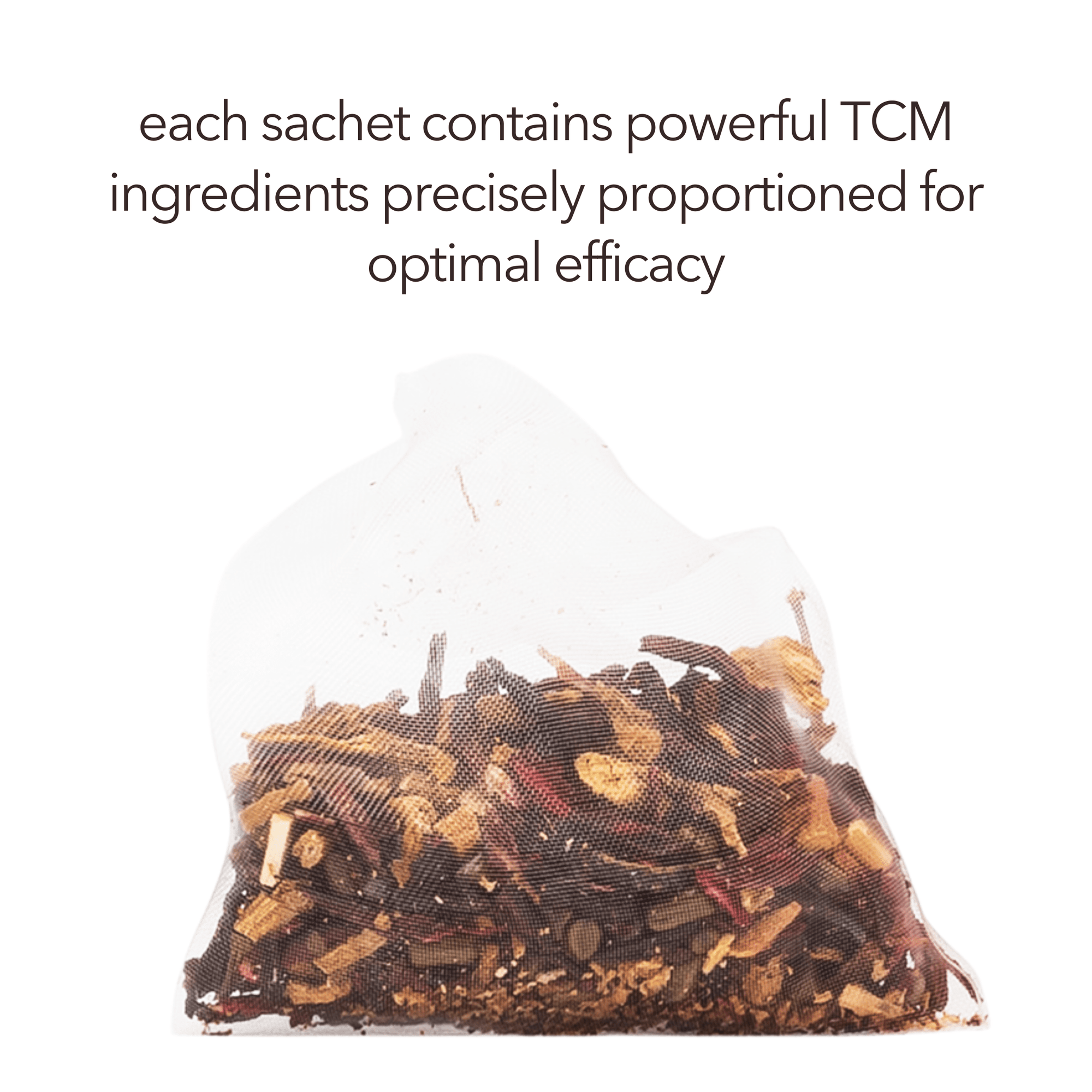
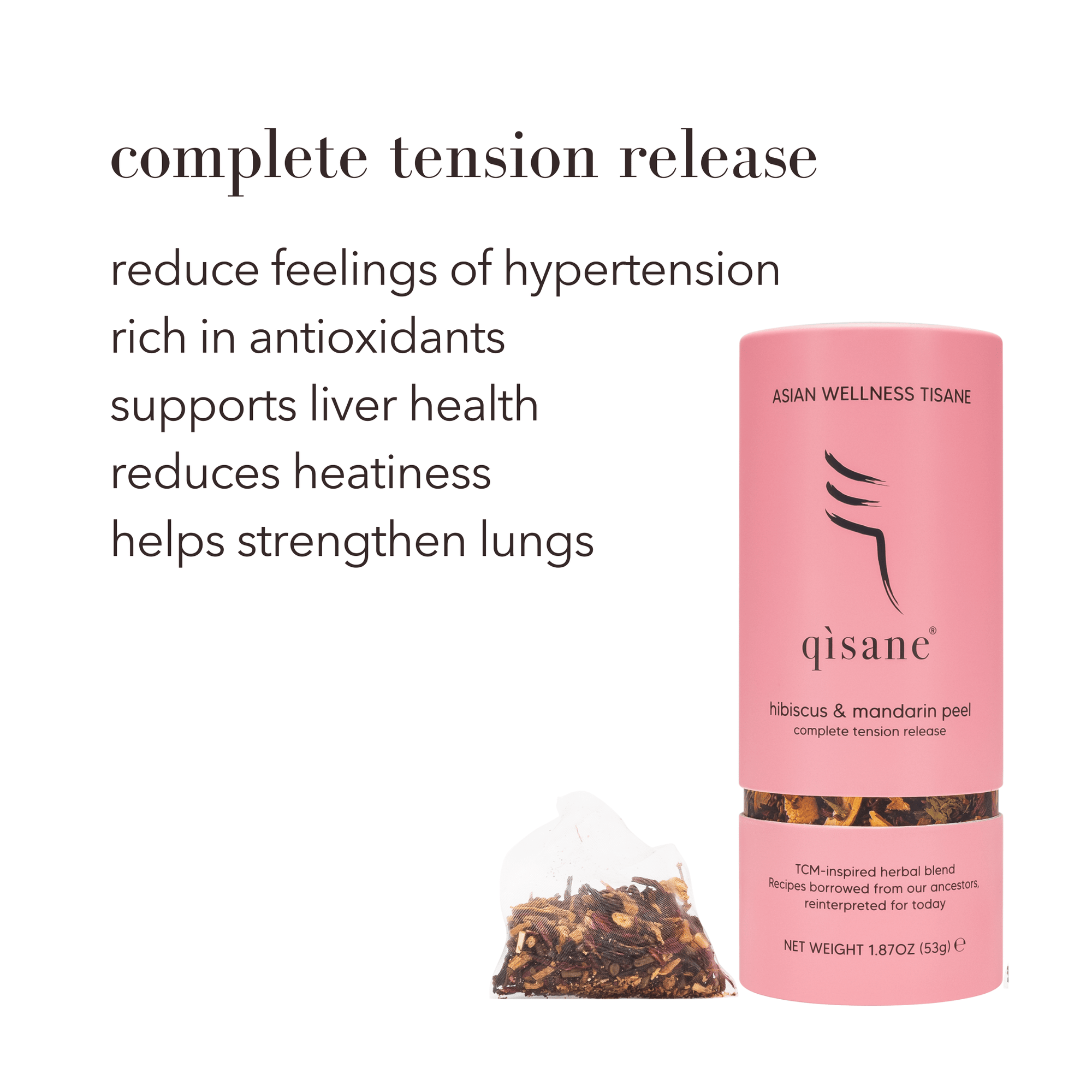
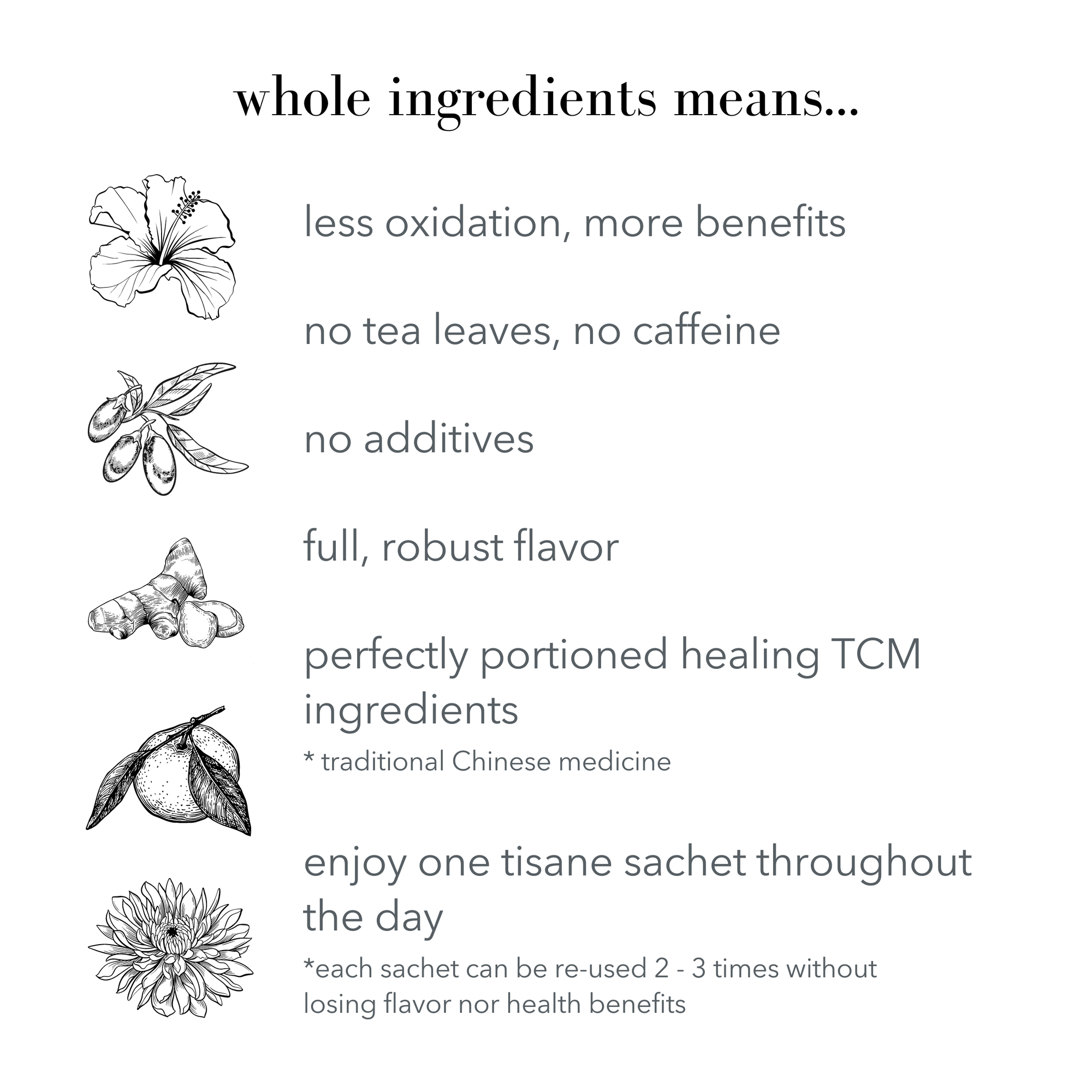
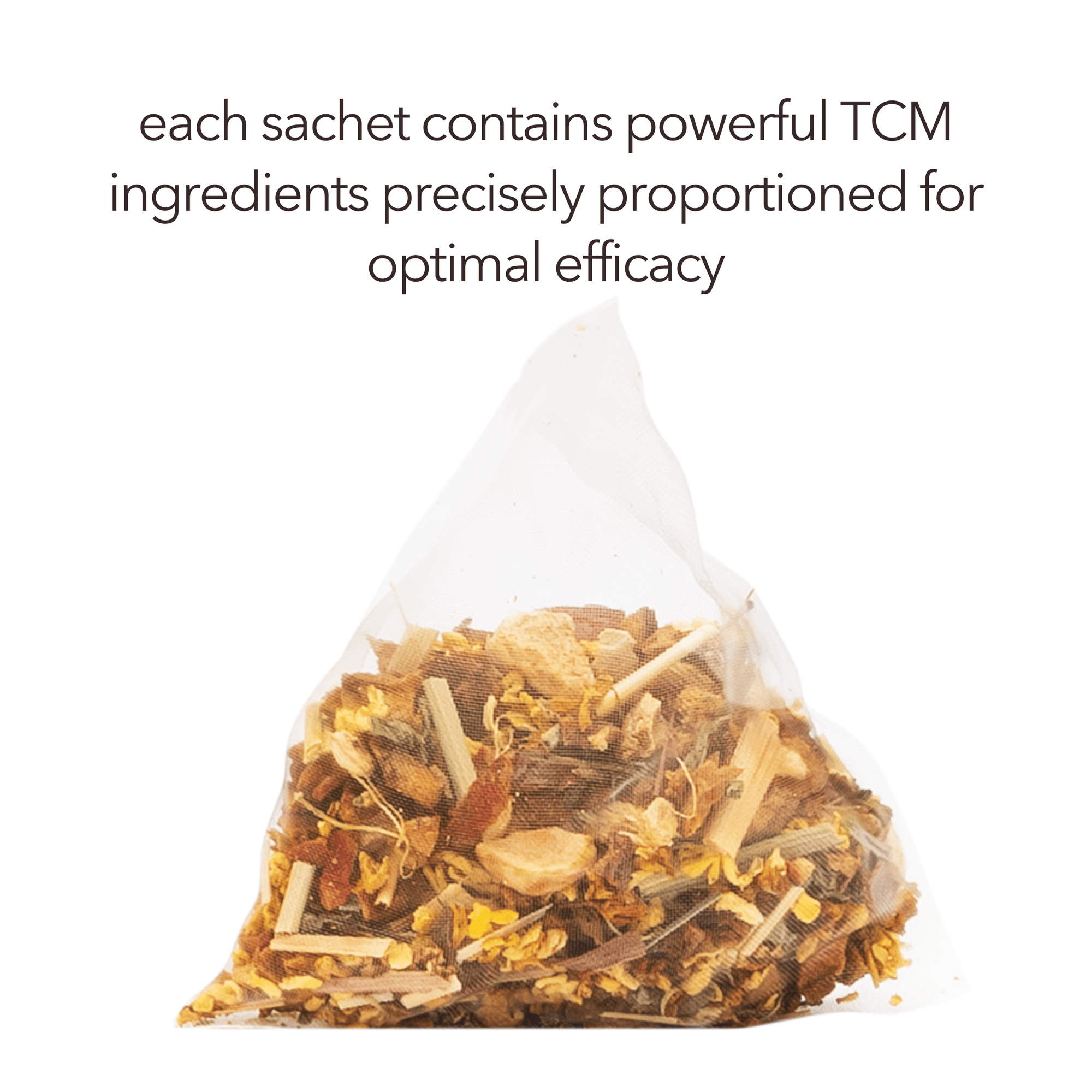
A prepared sachet removes the sourcing, measuring and straining steps. It is ready to steep, rather than ready to drink: the ingredients still need water and brewing time. That distinction matters if you are comparing a dry tisane with a bottled beverage.
qìsane grew from the desire to make the herbal traditions of founder Rebecca’s Singapore childhood more practical for modern days. Its brand story centers on bringing familiar botanical rituals into a convenient format without losing their sensory pleasure.
Start with one blend that sounds appealing rather than feeling you need a different tea for every hour:
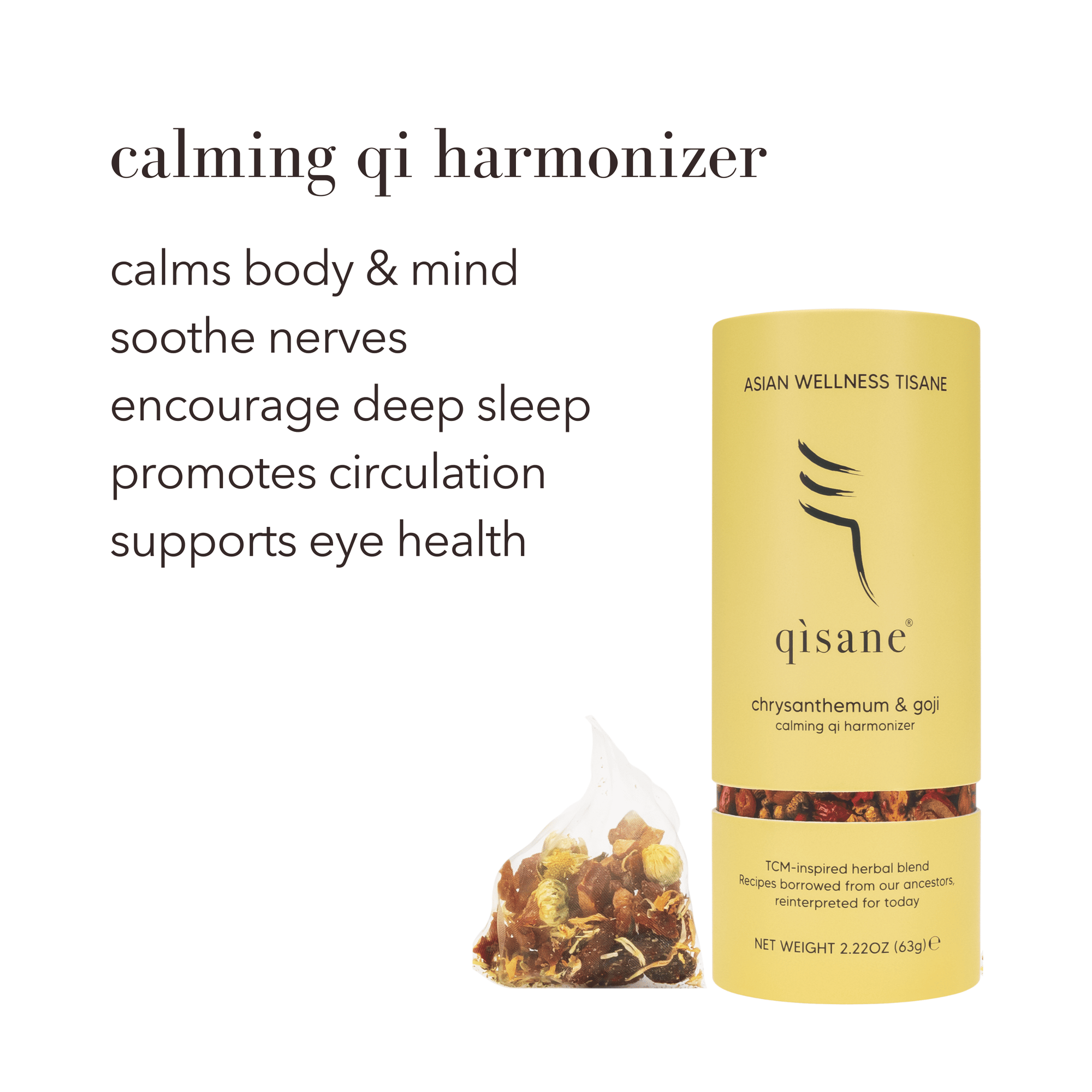
- chrysanthemum & goji offers a gently sweet floral cup with chrysanthemum flowers, organic goji berries, jujube dates and longans. It suits a deliberate pause when you want something soft and rounded.
- cordyceps & rose brings a more earthy-floral character, combining pink roses, cordyceps, jujube dates, organic astragalus root and codonopsis root. Choose it when you want that grounded flavor in a caffeine-free cup.
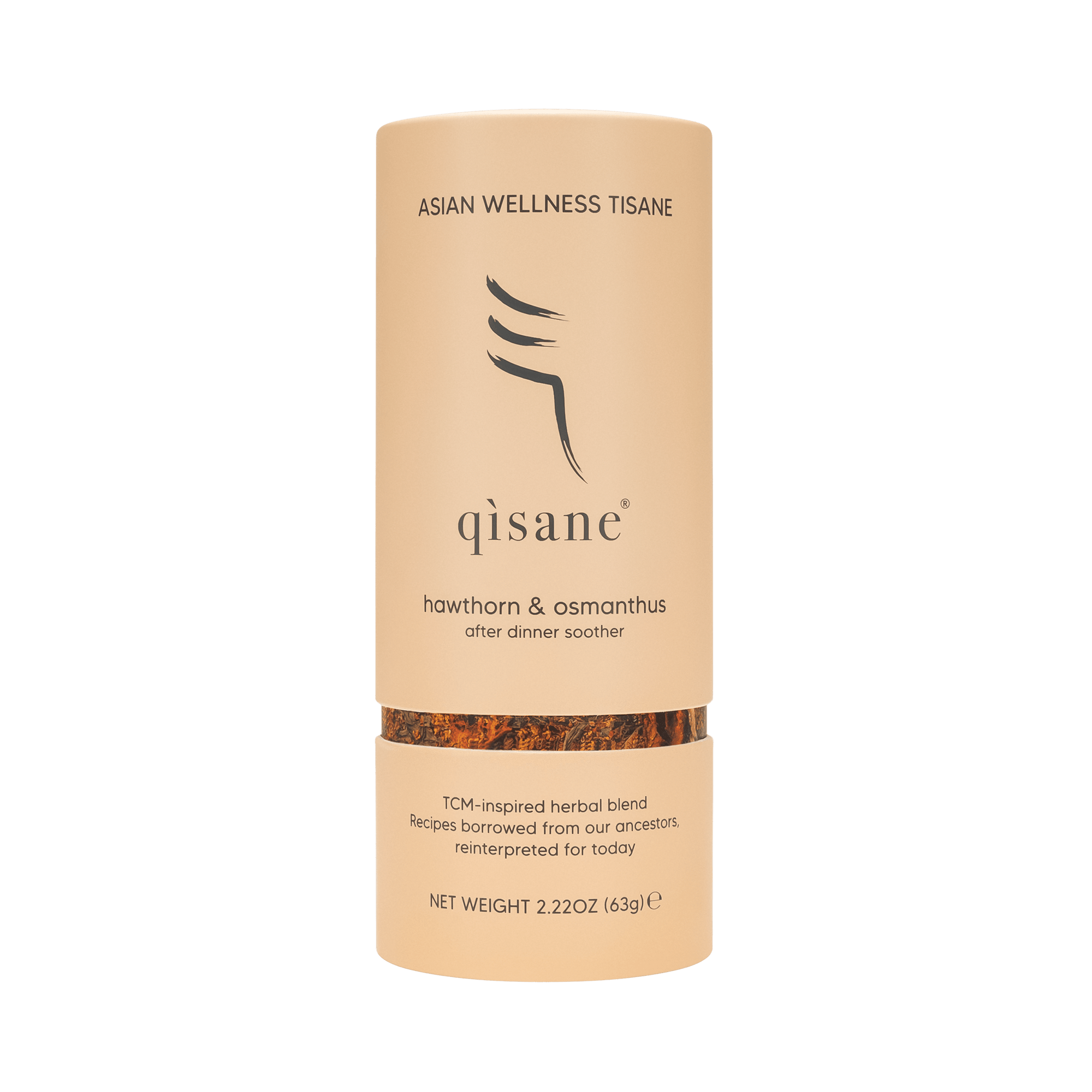
- hawthorn & osmanthus pairs berry and floral notes with organic ginger and organic lemongrass. It makes a flavorful way to finish a meal without turning the cup into a promise to fix digestive symptoms.
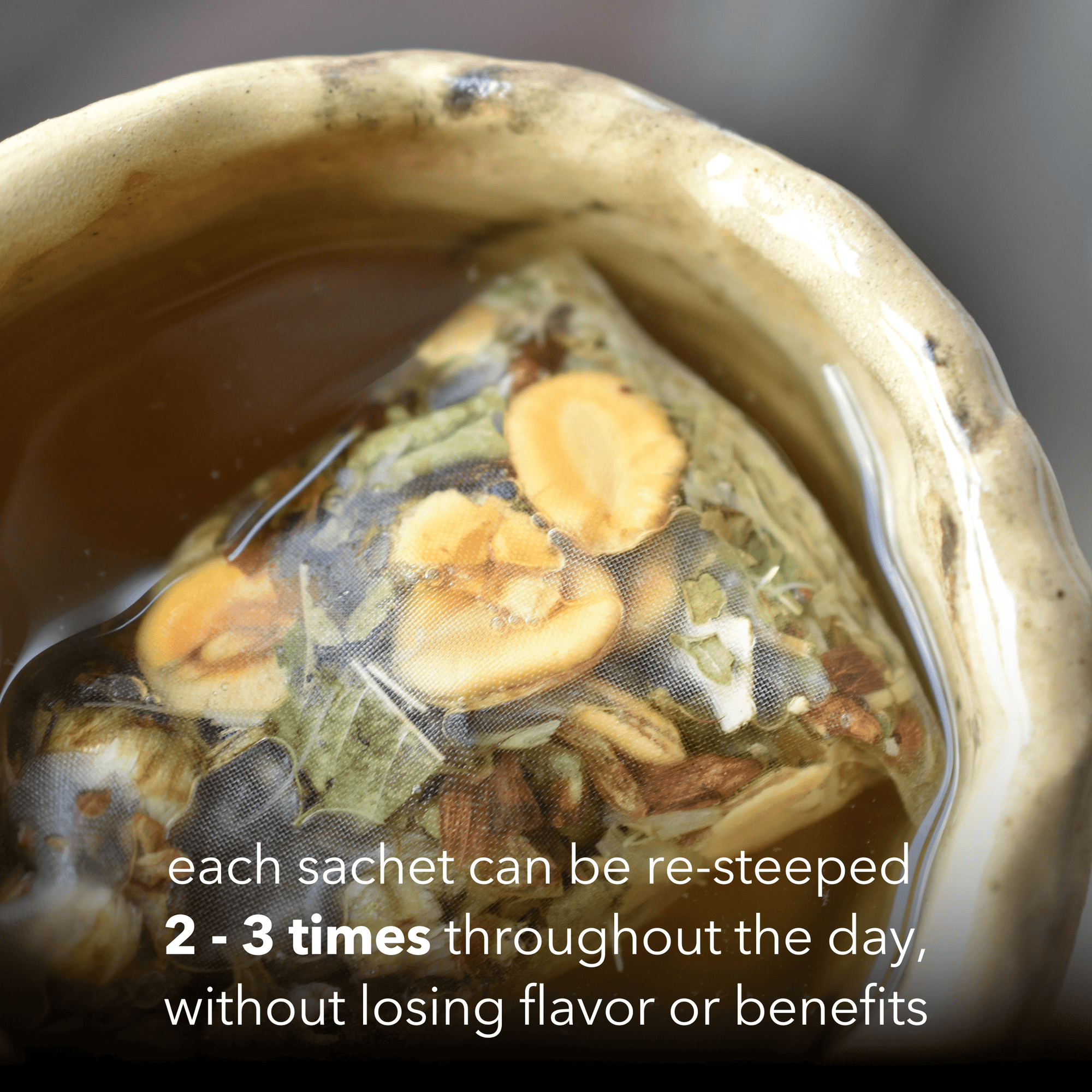
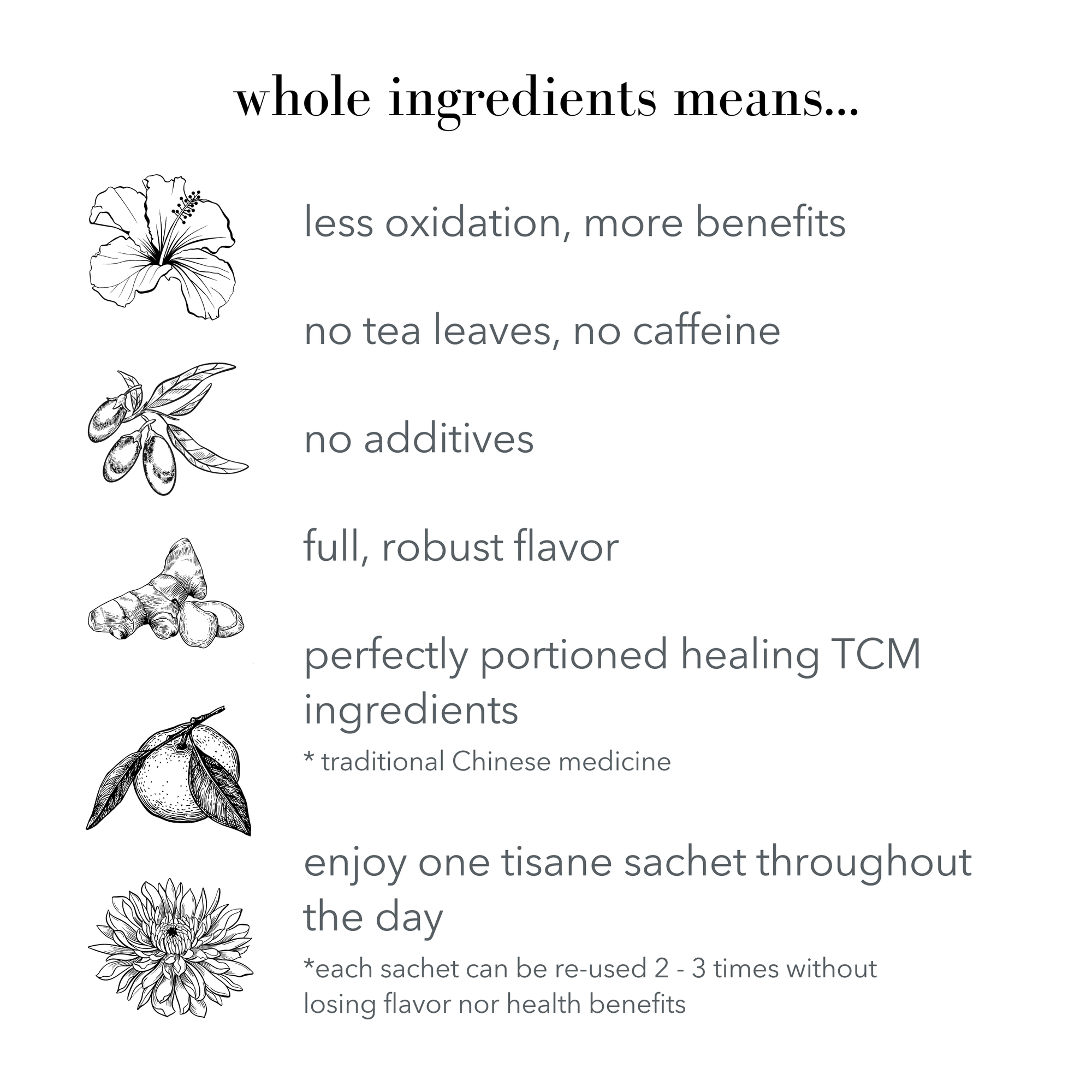
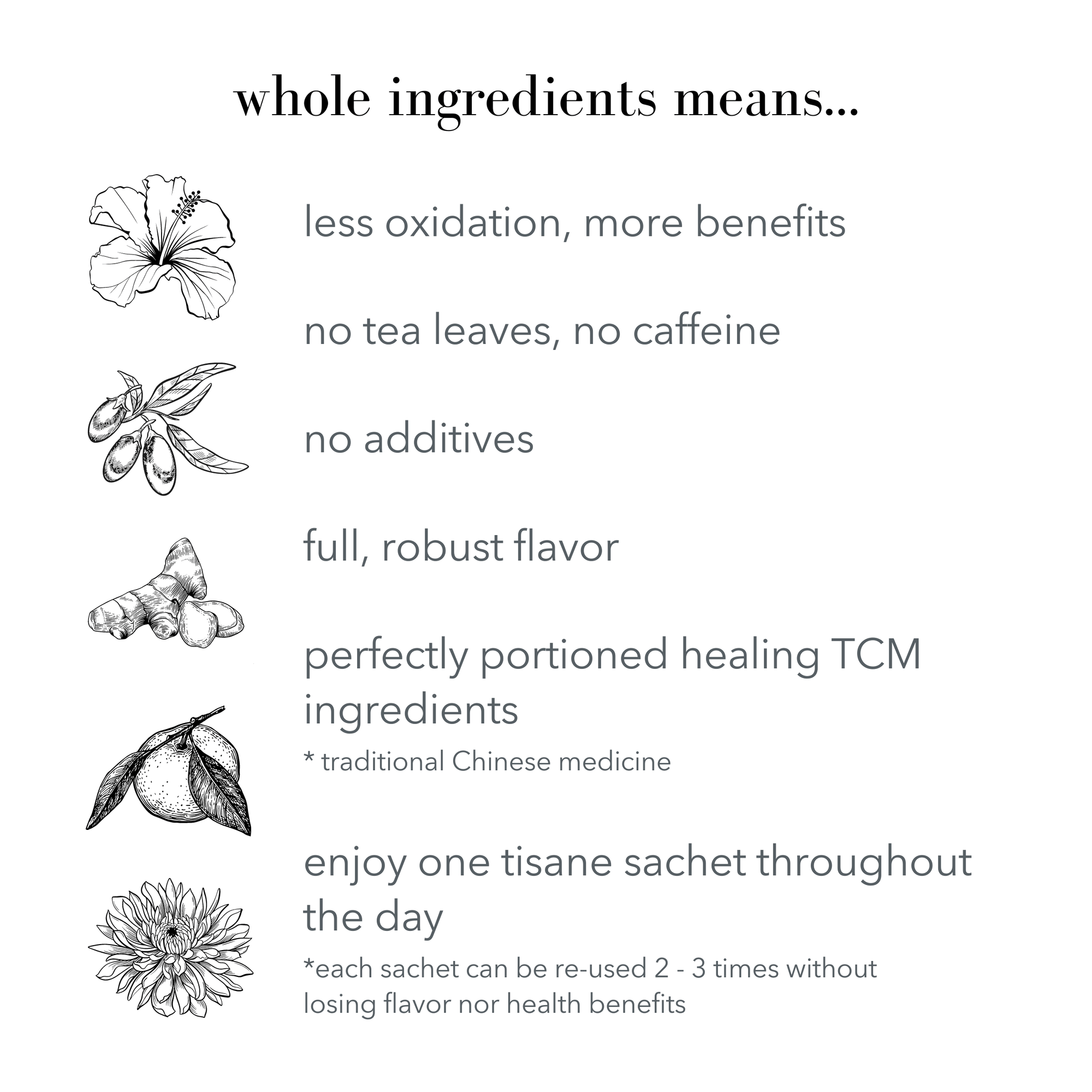
These blends are caffeine-free. Their product directions call for water at 96–98°C (about 205–208°F) and a six- to seven-minute steep. Follow the directions on your current package, use a heat-safe cup and let the drink cool to a comfortable sipping temperature.
If you enjoy a little hands-on preparation
A simple chrysanthemum infusion
Buy dried chrysanthemum flowers sold specifically for food or tea, rather than using florist flowers. Follow the supplier’s brewing directions and use a strainer if the flowers are loose. This is a good route when you want to explore the floral ingredient on its own before choosing a blend.
A fresh ginger cup
Wash a piece of fresh culinary ginger, slice it thinly and steep a few slices in hot water in a heat-safe mug. Taste once it has cooled comfortably and adjust the amount or steeping time next time. The result is a fragrant, spicy drink, not a measured medicinal preparation. A stronger taste is not automatically a better choice.
Neither option is literally zero-prep, but both keep the equipment simple: a kettle, mug and, for loose flowers, a strainer. A sachet remains the easier choice when you do not want to handle individual ingredients.
Make the ritual fit your day
Keep one favorite blend where you take a regular break. Use the steeping time to step away from a screen or clear your place after a meal. A lid or saucer can make a useful brewing companion; a timer helps you repeat the flavor you enjoyed.
If the practical goal is less caffeine, choose a verified caffeine-free drink rather than assuming every herbal blend is caffeine-free. If the goal is convenience, compare the number of steps—not an impressive list of herbs. And if you prefer a bottled drink, read its full ingredients and added-sugar information rather than assuming its formula matches a traditional infusion.
Do I need to drink the same blend every day?
No. You can keep one reliable favorite or rotate flavors. There is no need to force a drink that does not suit your taste, and “traditional” does not mean suitable for every person. Check the full ingredients; if you take medicines, are pregnant or breastfeeding, or need advice for a health condition, ask a clinician or pharmacist about the particular blend before making it a regular habit.
A useful TCM-inspired ritual can be as modest as choosing thoughtfully and giving the cup a few unhurried minutes. The preparation can be simple without making the ingredients—or their heritage—an afterthought.