

When sleep will not come, adaptogens are often the first thing suggested — and the instinct is understandable, because adaptogens do help the body navigate stress. The complication is that many of them are energizing rather than calming, which makes them a poor companion for a restless evening. Traditional Chinese Medicine takes a different route: not sedation, but cooling — botanicals chosen to settle an overheated, overactive mind so that rest can arrive on its own terms. This is the thinking behind qìsane's Chrysanthemum & Goji, and why the blend is built the way it is.
What adaptogens actually do
Adaptogens help the body hold its balance under stress by steadying the HPA axis, the neuroendocrine system that governs the stress hormone cortisol. Steadying, though, is not the same as sedating, and that difference shapes which moment of the day they serve.
The term was coined in the mid-twentieth century by Soviet researchers studying how certain plants helped people sustain performance under extreme conditions. The shared mechanism involves the hypothalamic-pituitary-adrenal axis: when the body meets a stressor, the hypothalamus signals the pituitary, which prompts the adrenals to release cortisol. In brief bursts, cortisol is useful — it mobilizes energy and sharpens focus. Left running, it keeps the system elevated at precisely the moment the body should be winding down.
Adaptogens are described as amphoteric: they move the system toward balance, damping an overactive stress response or building resilience when you are depleted. For most people, that means more steadiness and more capacity through the day — not drowsiness at night, which is why so many adaptogens belong to the morning cup rather than the evening one.
Why adaptogens are not automatically sleep herbs
Most adaptogens lean energizing, which is precisely why the evening is rarely the right moment for them. Reach for the wrong one late in the day and it can leave you more alert, not less.
The best-known adaptogens, their typical effect, and when they suit:
| Adaptogen | Typical effect | Best time of day |
|---|---|---|
| Cordyceps | Energizing; supports stamina and qi | Morning to midday |
| Rhodiola | Stimulating; anti-fatigue | Morning |
| Ginseng | Energizing, tonic | Morning to midday |
| Ashwagandha | Calming, cortisol-lowering | Flexible; often evening |
| Reishi | Calming; spirit-settling in TCM | Evening |
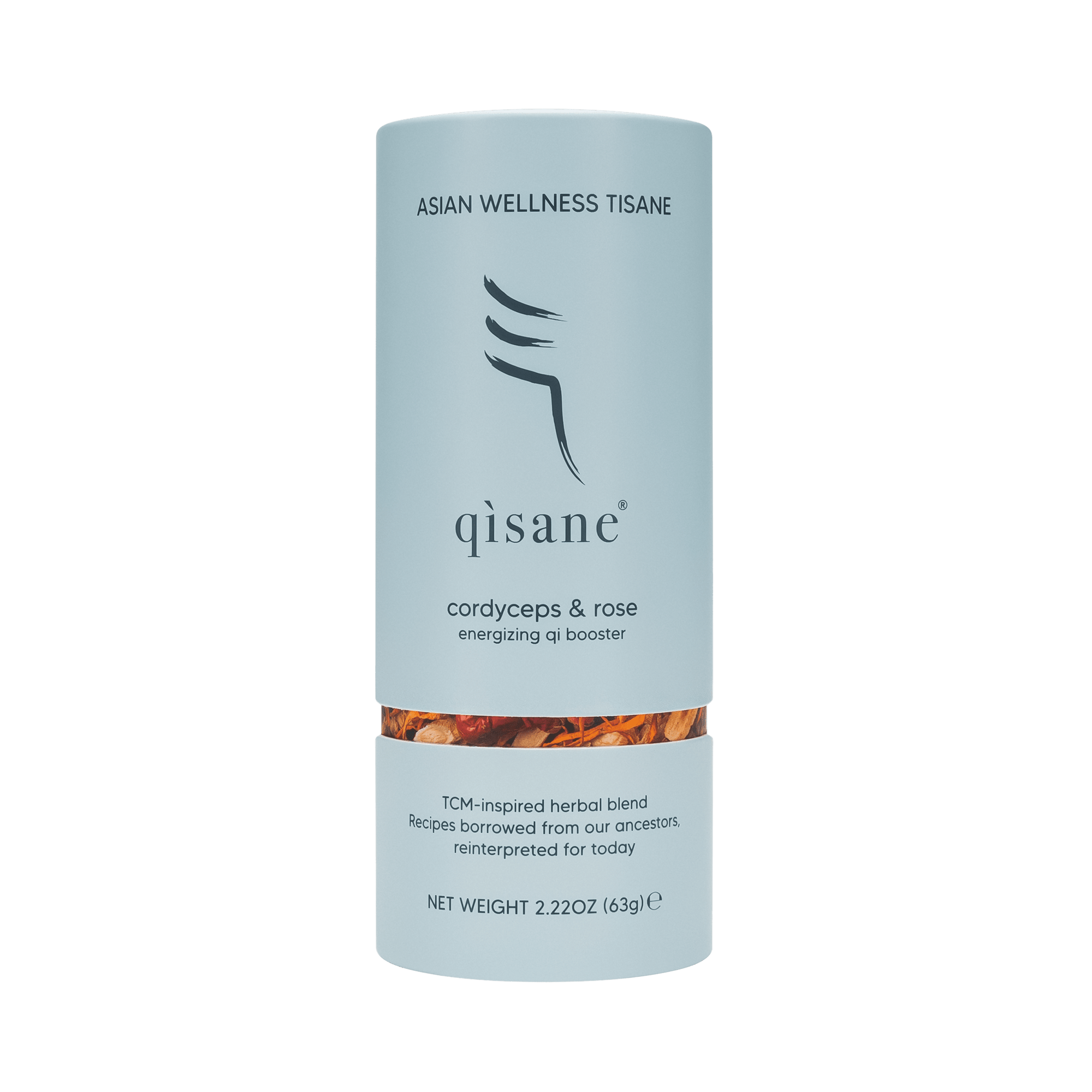
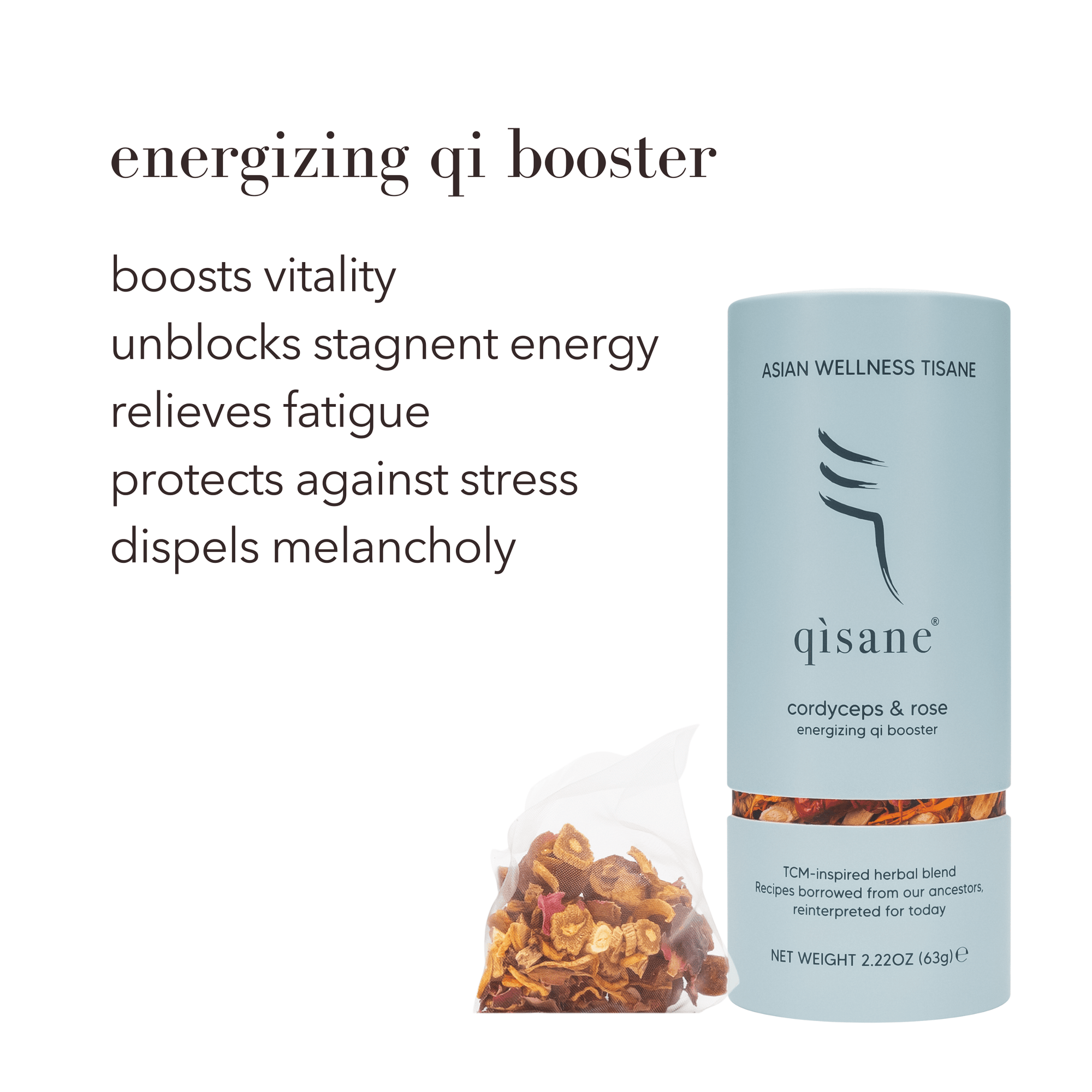
The adaptogen family skews strongly toward energy and daytime resilience, with only a handful sitting comfortably near bedtime. qìsane works with cordyceps for exactly that reason, placing it in Cordyceps & Rose — a caffeine-free daytime blend designed to bring steady clarity through the day. The evening belongs to a different kind of botanical entirely.
How Traditional Chinese Medicine settles a restless evening
Chinese medicine reads a wired, over-tired evening as excess internal heat rather than a signal to sedate, and it reaches for cooling botanicals to clear it — a different approach from the Western habit of dialing the nervous system down.
There is a particular kind of tired that does not lead to sleep: the body spent, but the mind still turning. In Traditional Chinese Medicine, that restlessness is often understood as heat that has not yet settled — the kind that shows up as irritability, a busy head, or warm, tired eyes at the end of a long day. The remedy is not suppression but balance: cool the heat, nourish what the day has drawn down, and let rest follow on its own terms.
Two botanicals sit at the centre of this approach. Chrysanthemum (ju hua) is classified in TCM as a cooling, liver-clearing flower; modern chemistry identifies flavonoids such as apigenin, associated with a mild calming effect without sedation. Goji berry (gou qi zi) is yin-nourishing, traditionally used where restlessness comes from depletion rather than agitation. Neither is an adaptogen, and they work through a cooling, restoring logic that suits the evening precisely because it does not stimulate.
qìsane's Chrysanthemum & Goji: the evening cup
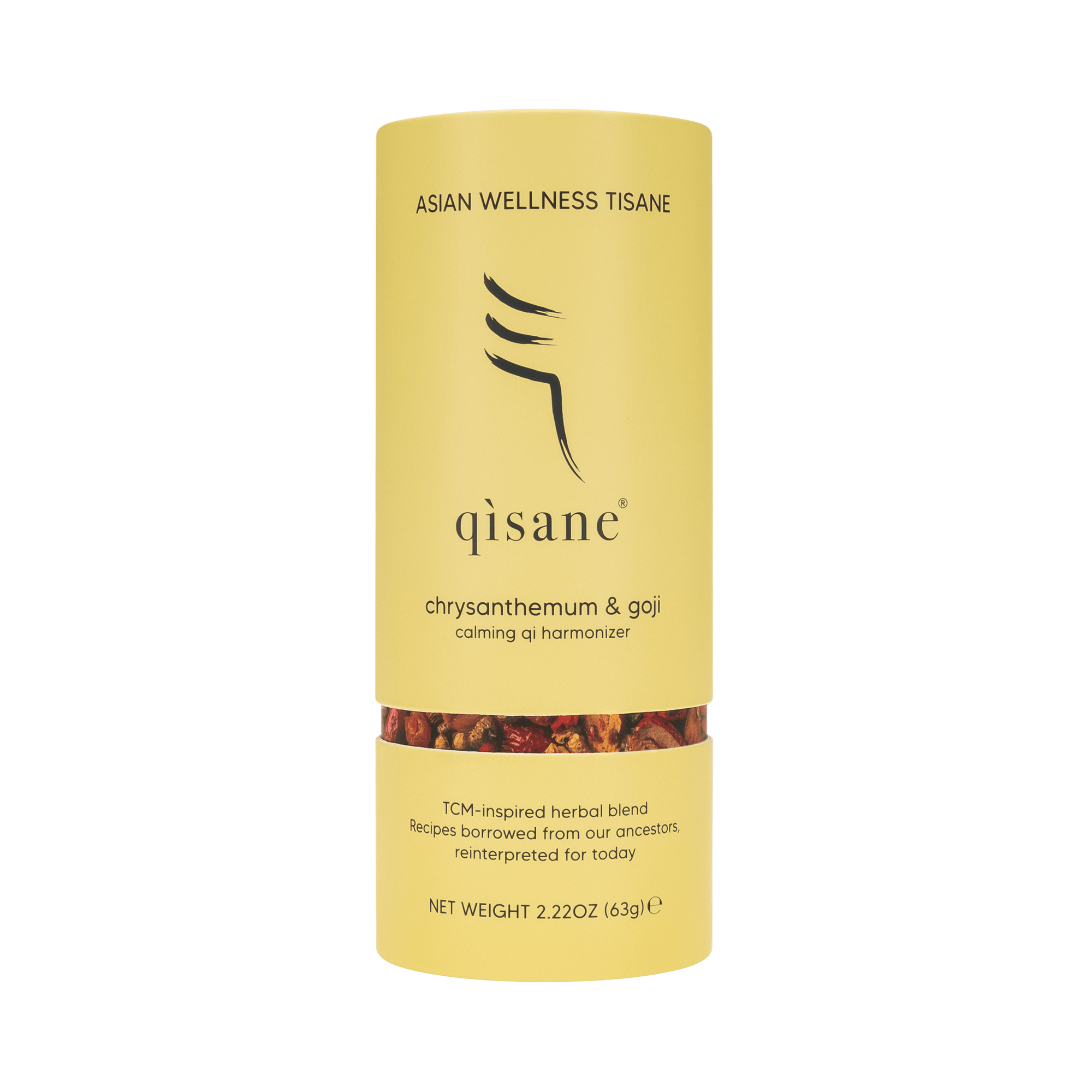
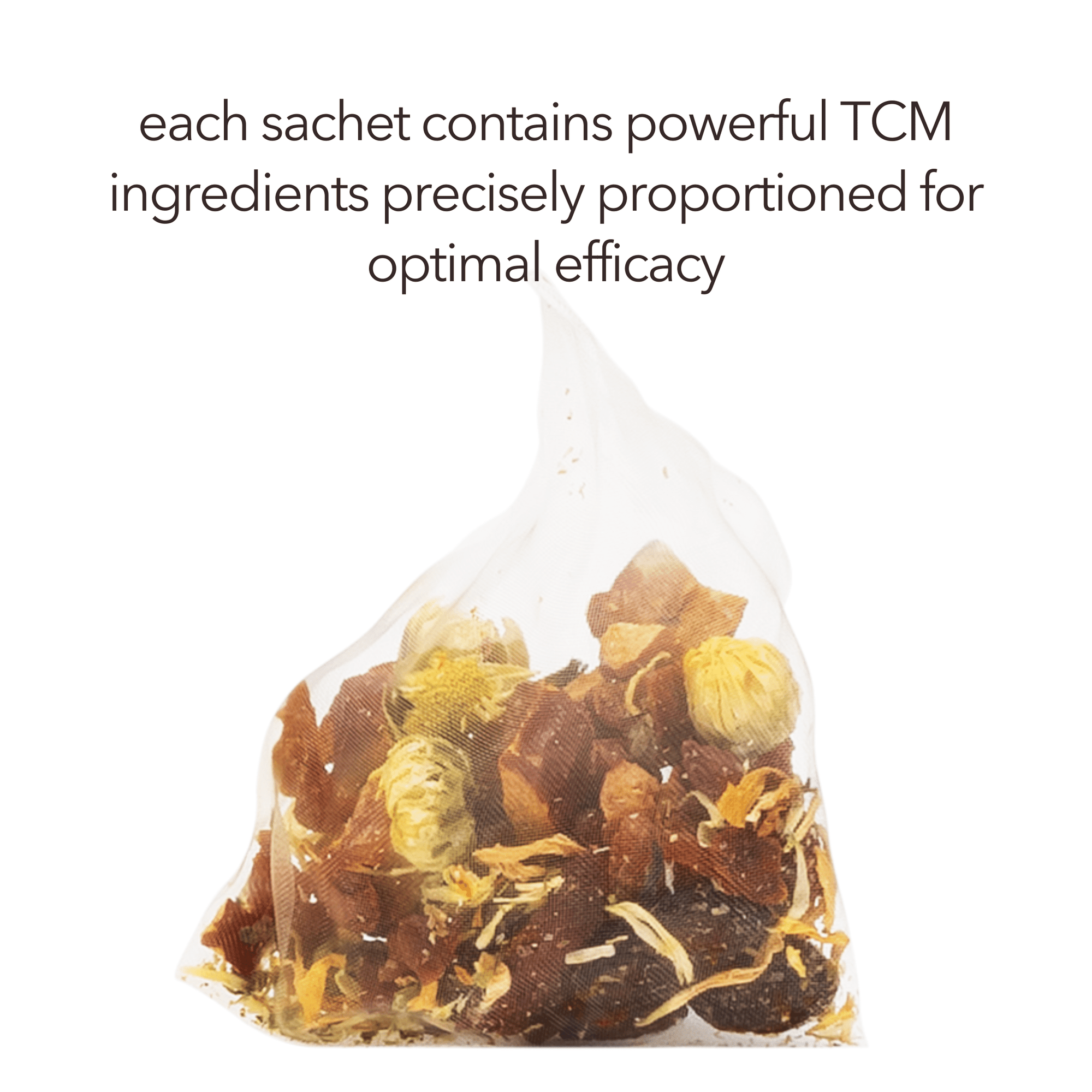
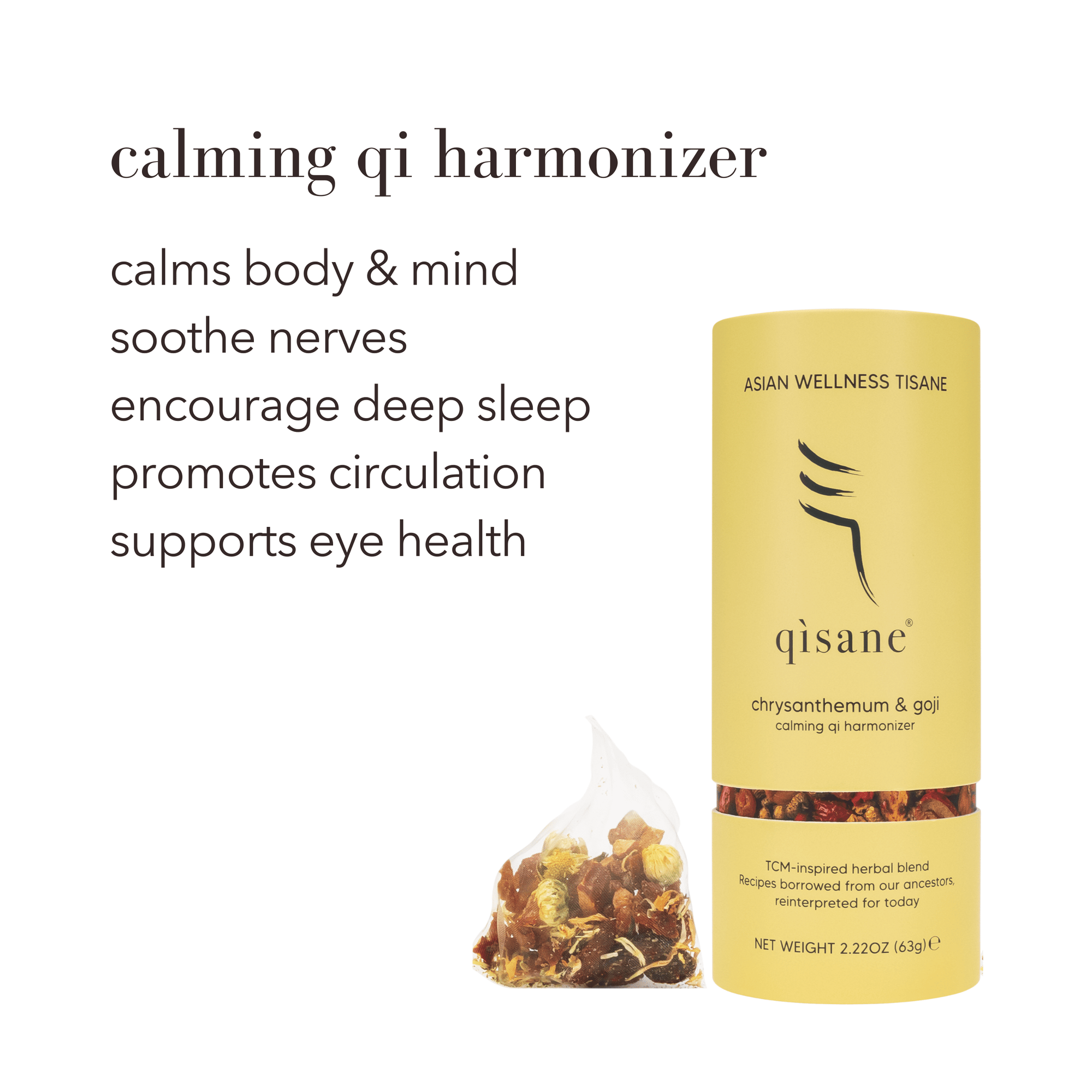
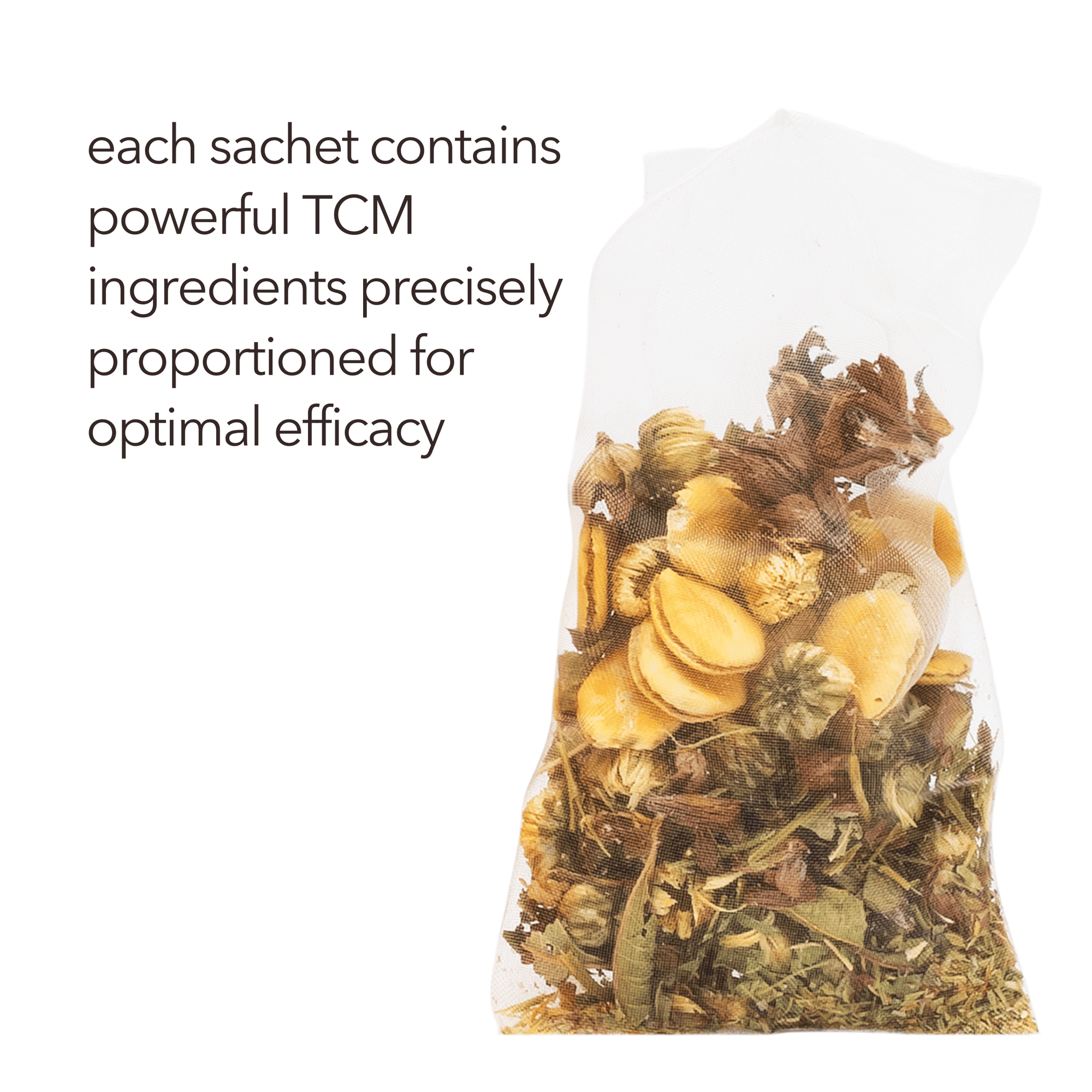
qìsane's Chrysanthemum & Goji is built for that wind-down moment: a golden-hued, floral tisane of whole chrysanthemum flowers, goji berries, sweet longan, and soothing jujube, caffeine-free and free of adaptogens by design. Rather than sedating, it works the way chrysanthemum has been prepared in China for centuries — as an evening cup that cools internal heat and helps the body return to a place where rest can happen naturally.
Each botanical plays its part. Chrysanthemum cools and clears. Goji nourishes the yin that a demanding day draws down. Longan and jujube are traditionally calming and quietly sweet, so the cup needs nothing added. The flavour is softly floral, gently sweet, and grounding — the kind of ritual that is easy to return to each evening.
qìsane Tisane Collection · Sleep & Wind-Down
Chrysanthemum & Goji
Evening ritual — 60 to 90 minutes before bed
A soft, golden tisane built on one of the most enduring pairings in Chinese herbal tradition. Whole chrysanthemum flowers, goji berries, longan, and jujube — each chosen for the role it plays in cooling and restoring, rather than in sedating. For anyone new to a TCM approach to rest, a gentle and approachable place to begin.
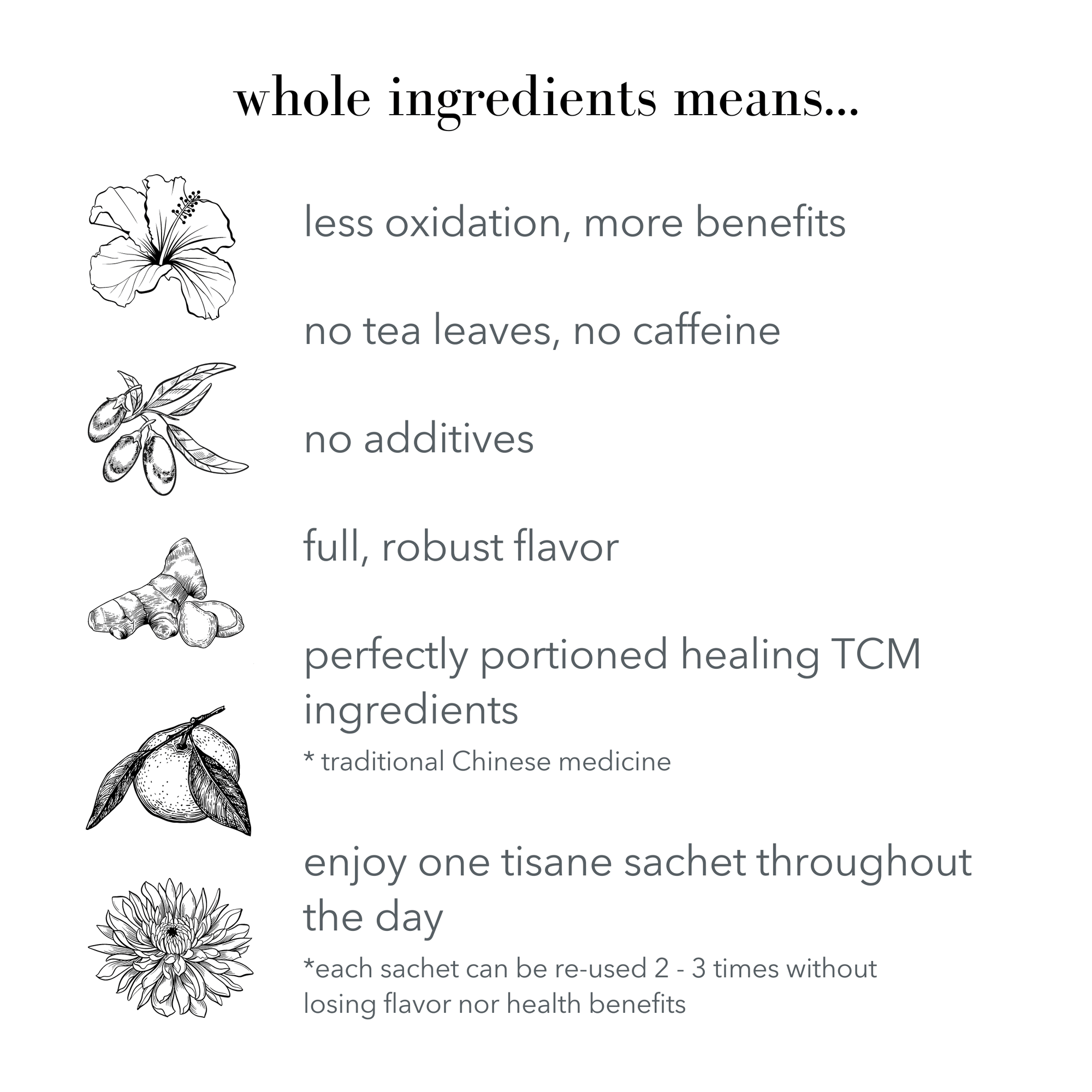
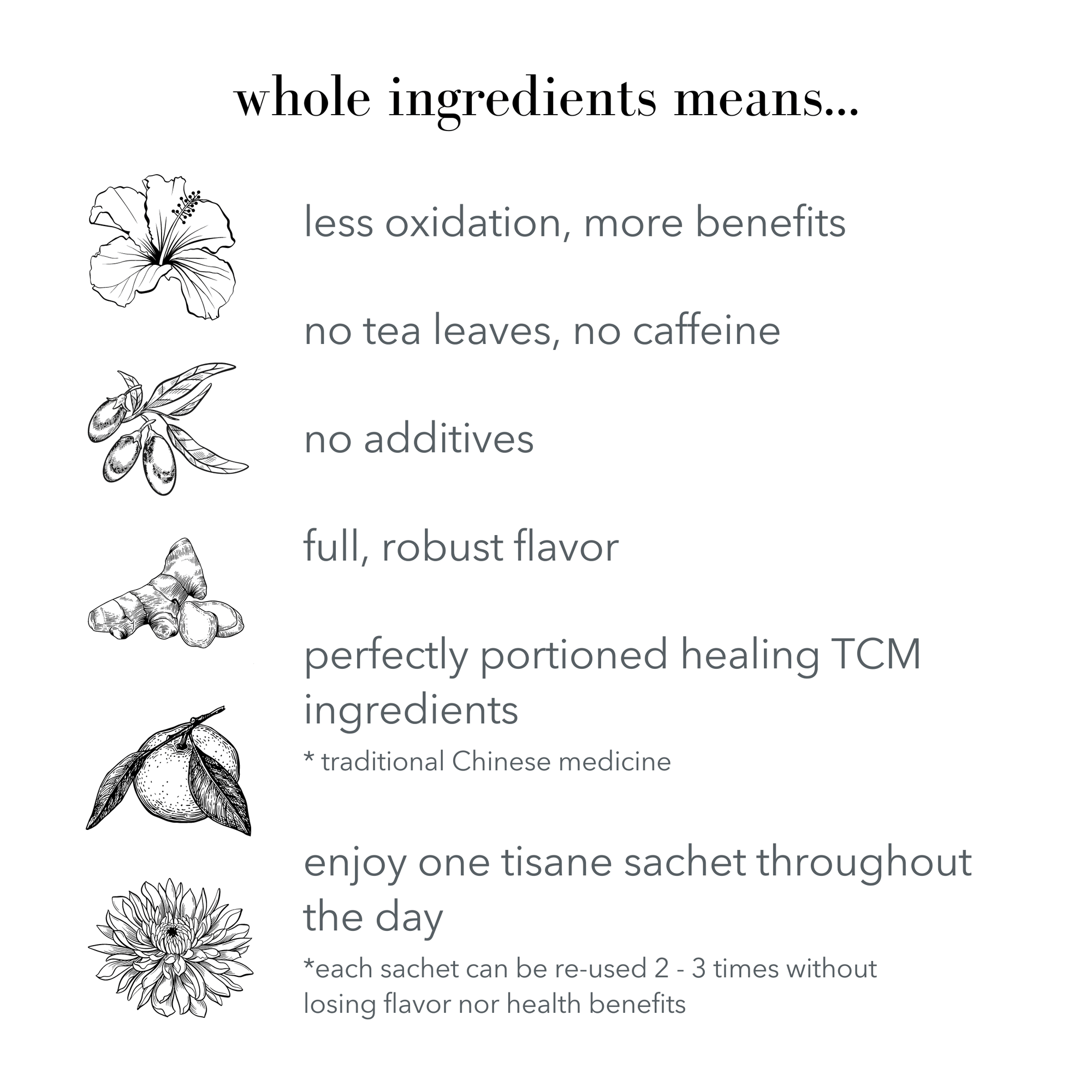
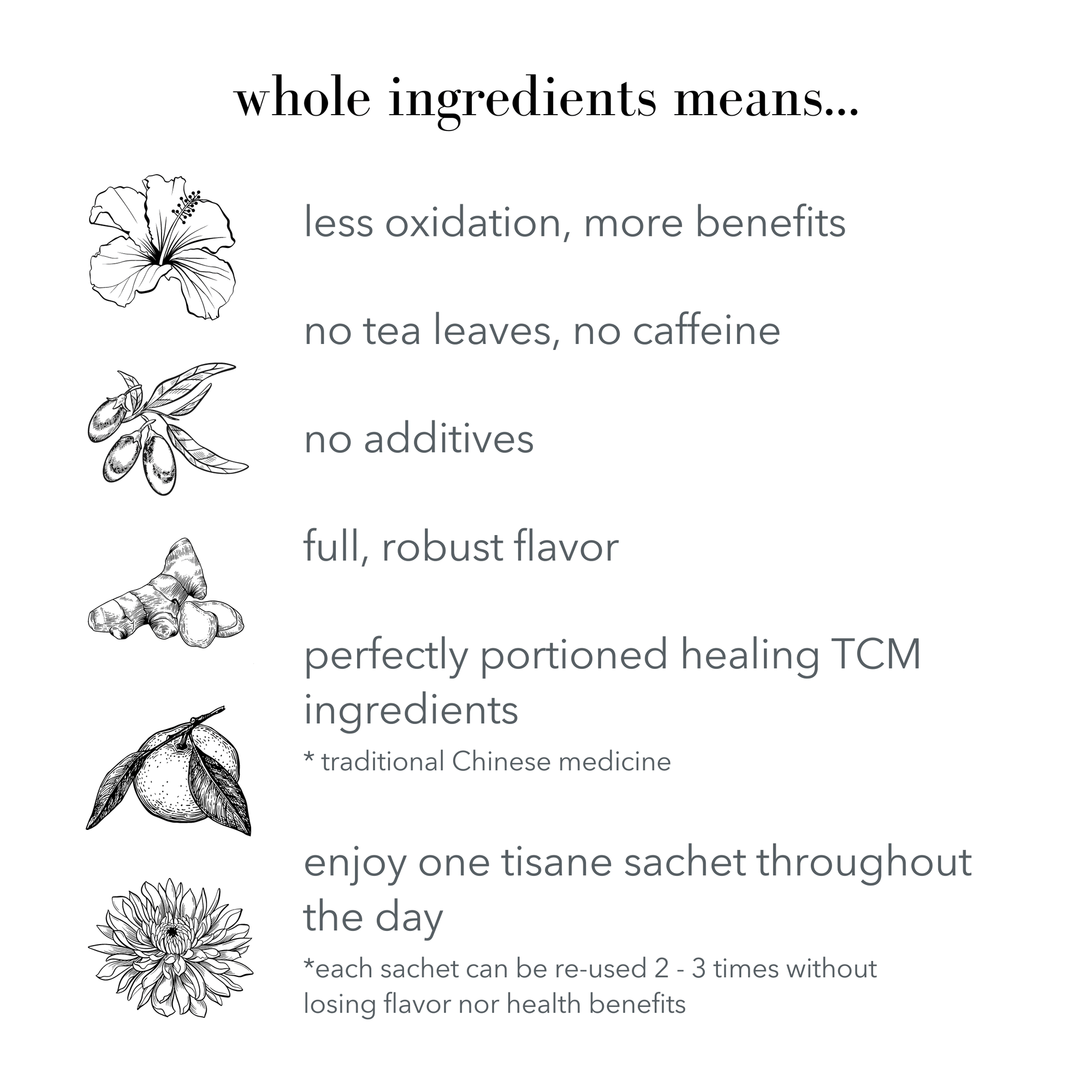
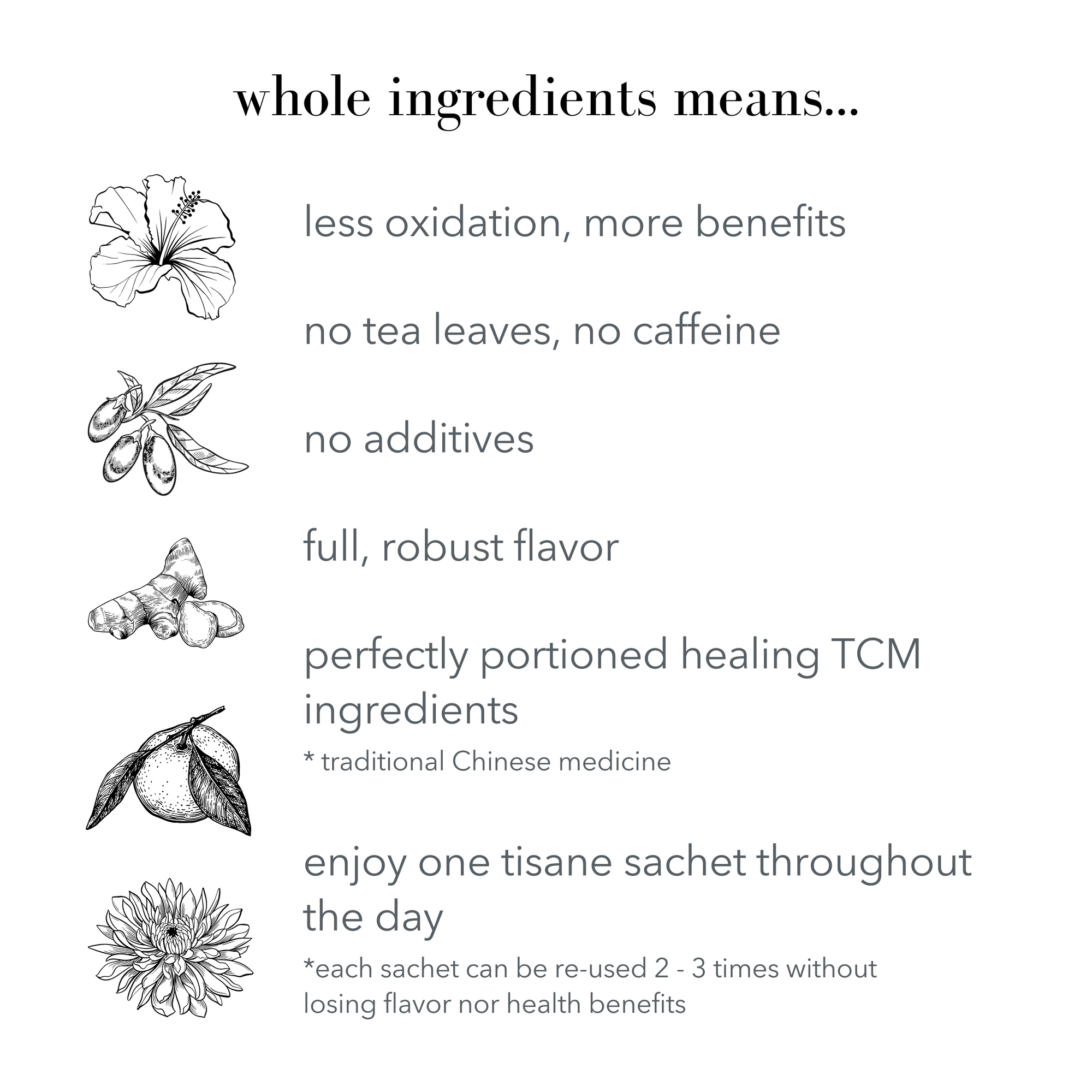
- Whole, visible botanicals — no crushed filler, no additives
- Caffeine-free; suitable for nightly use
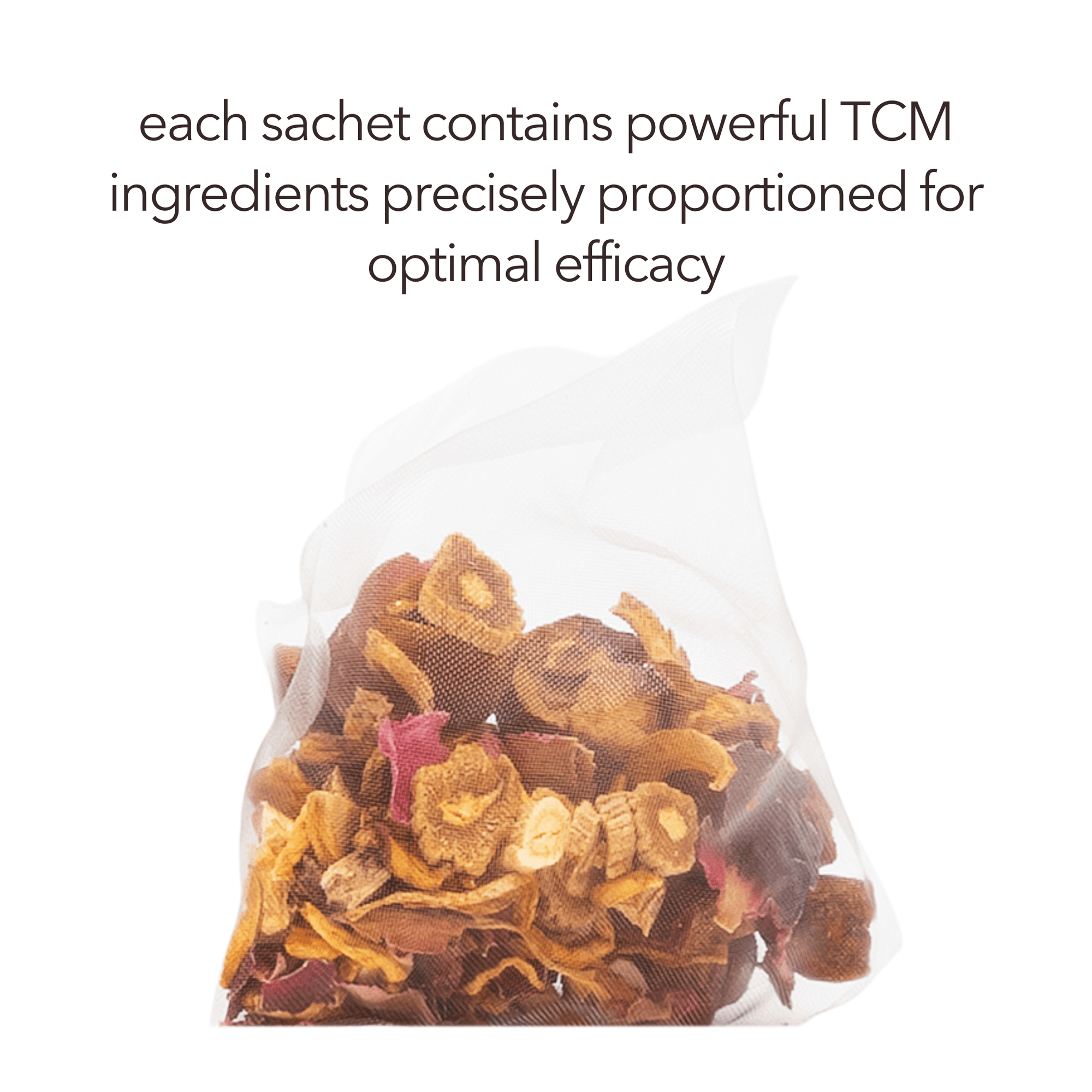
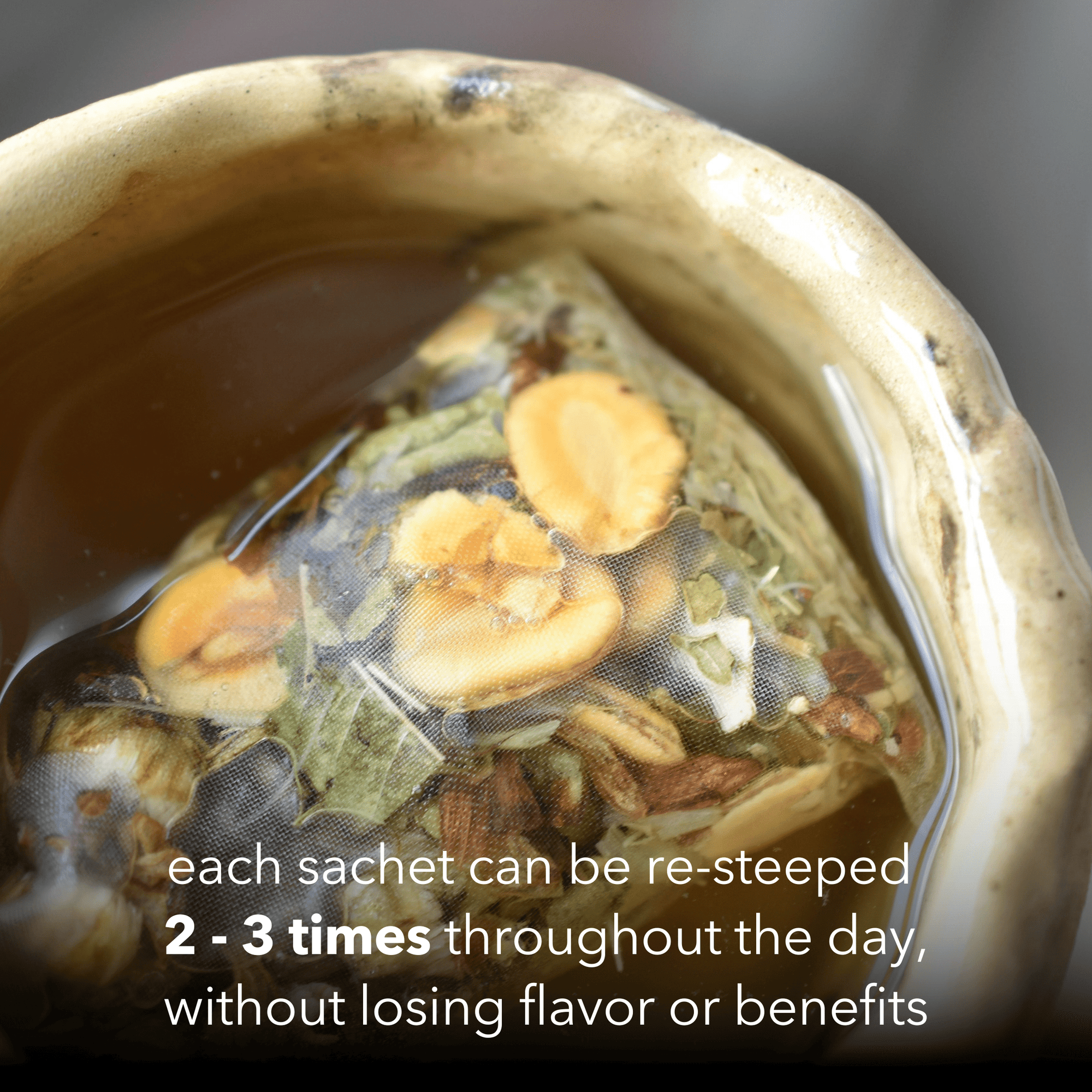
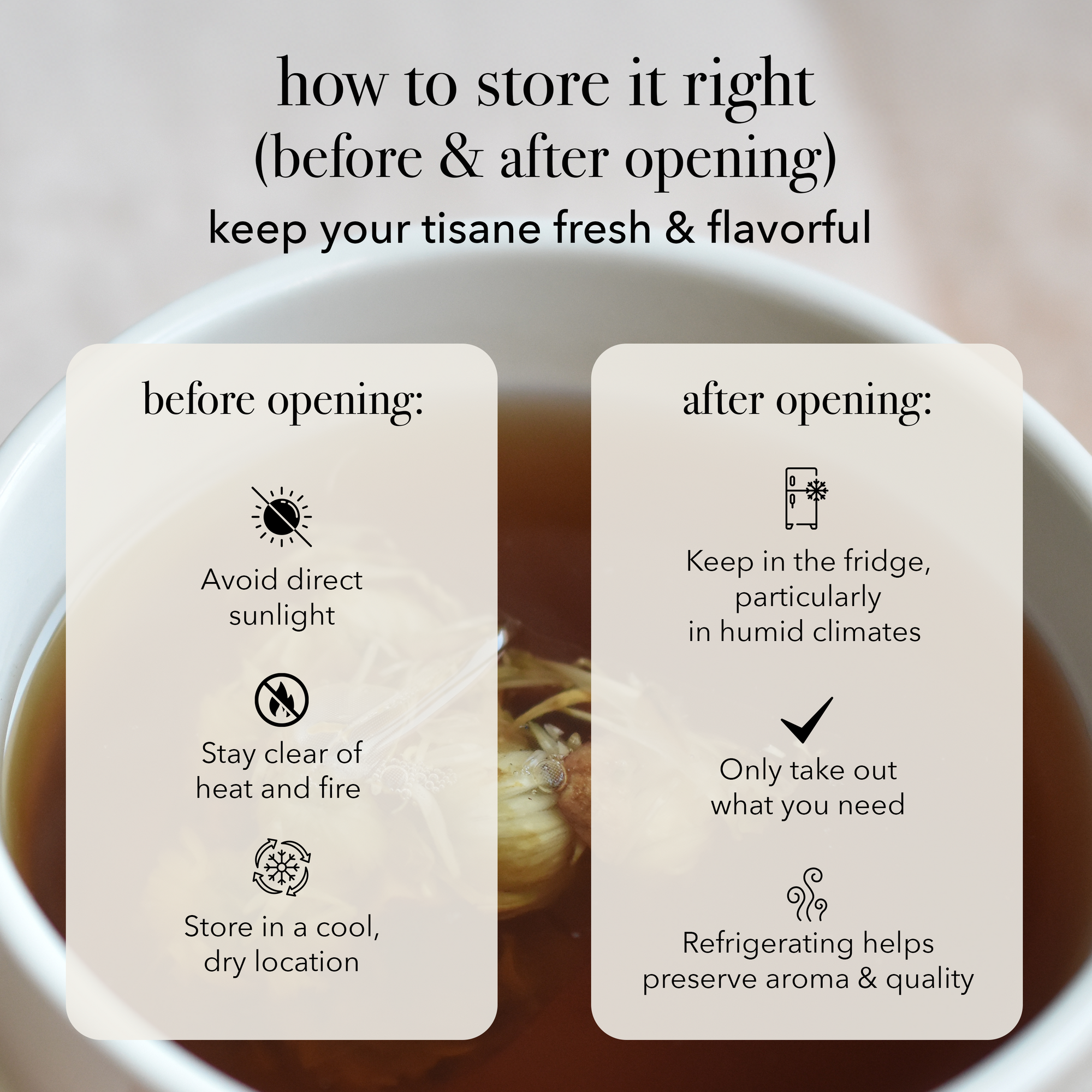
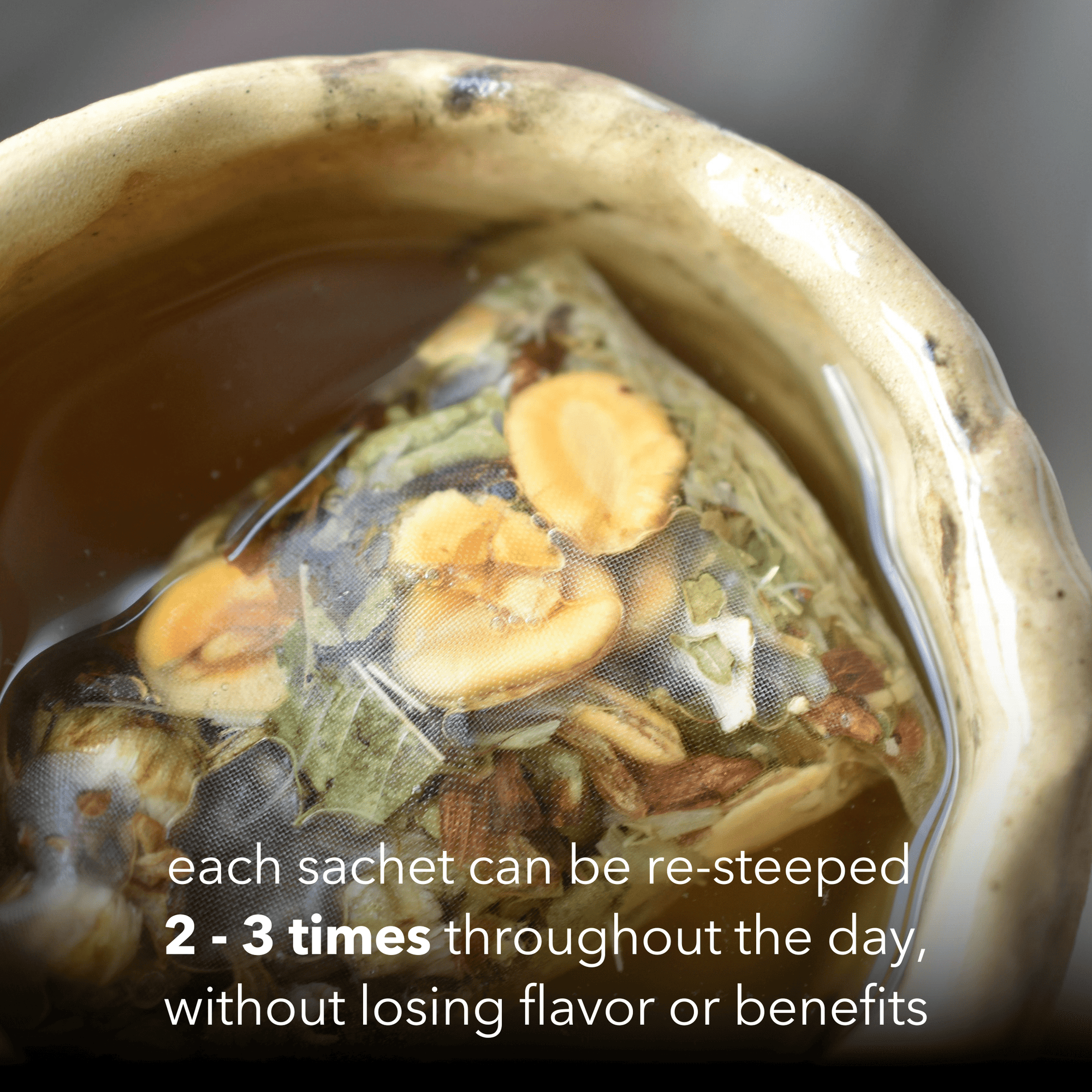
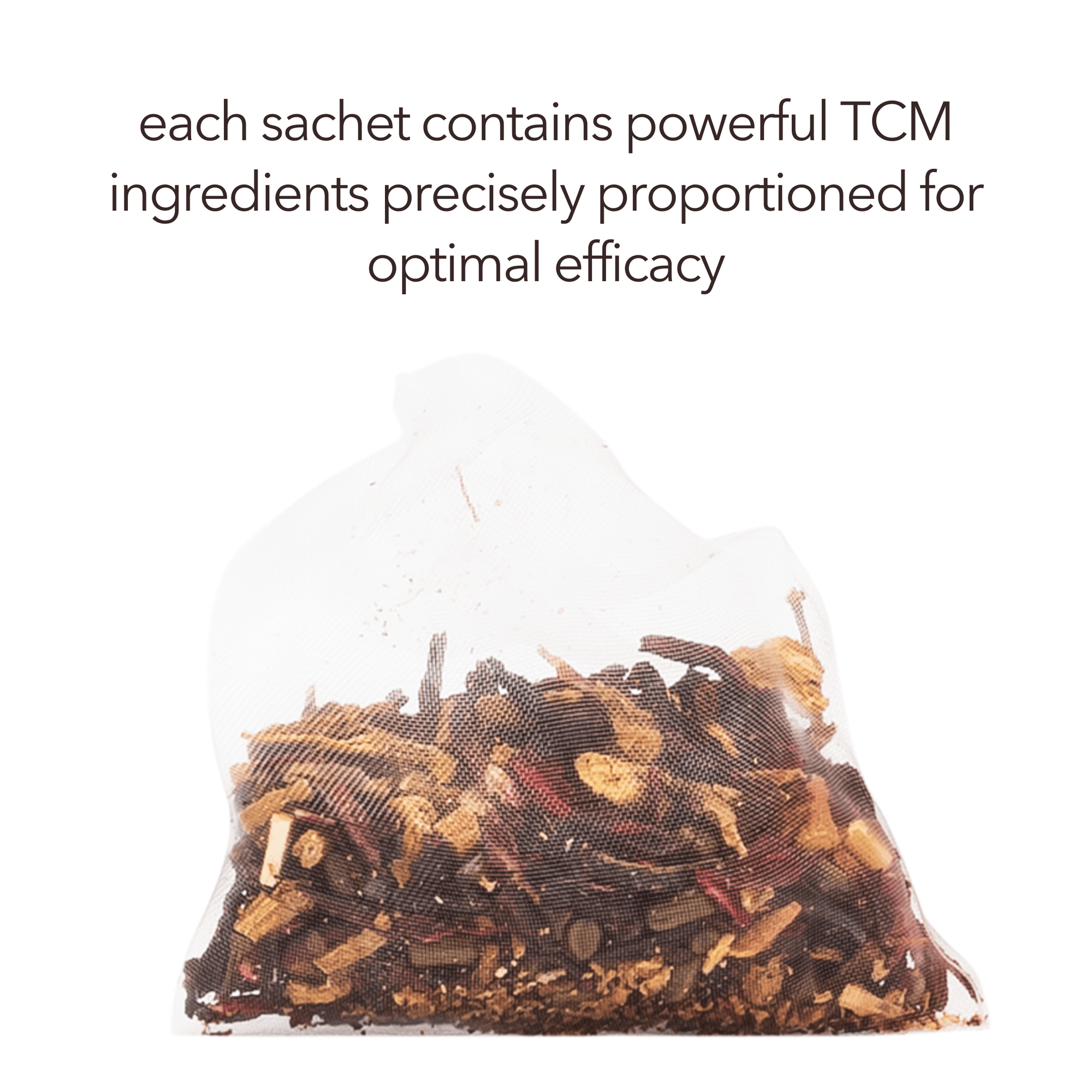
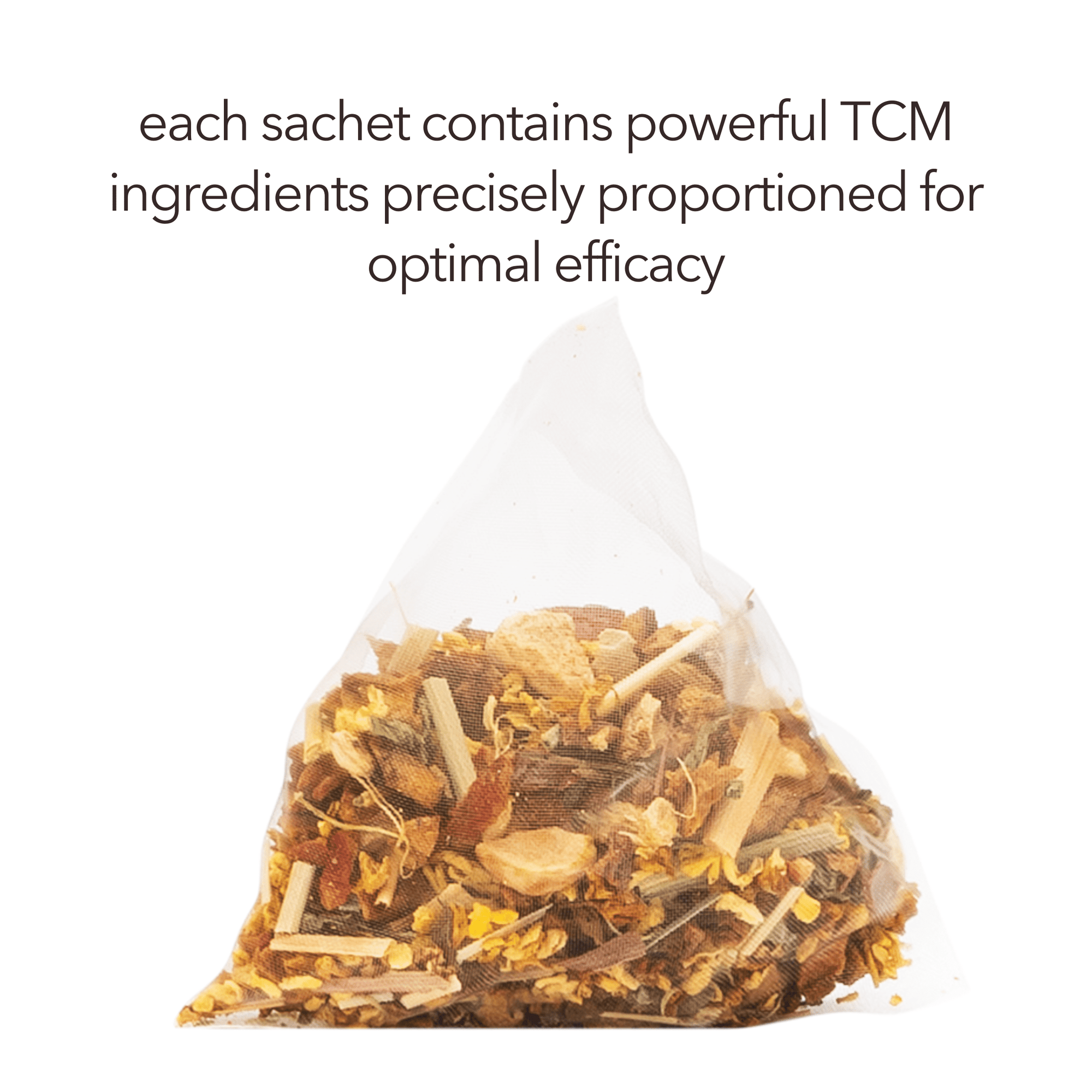
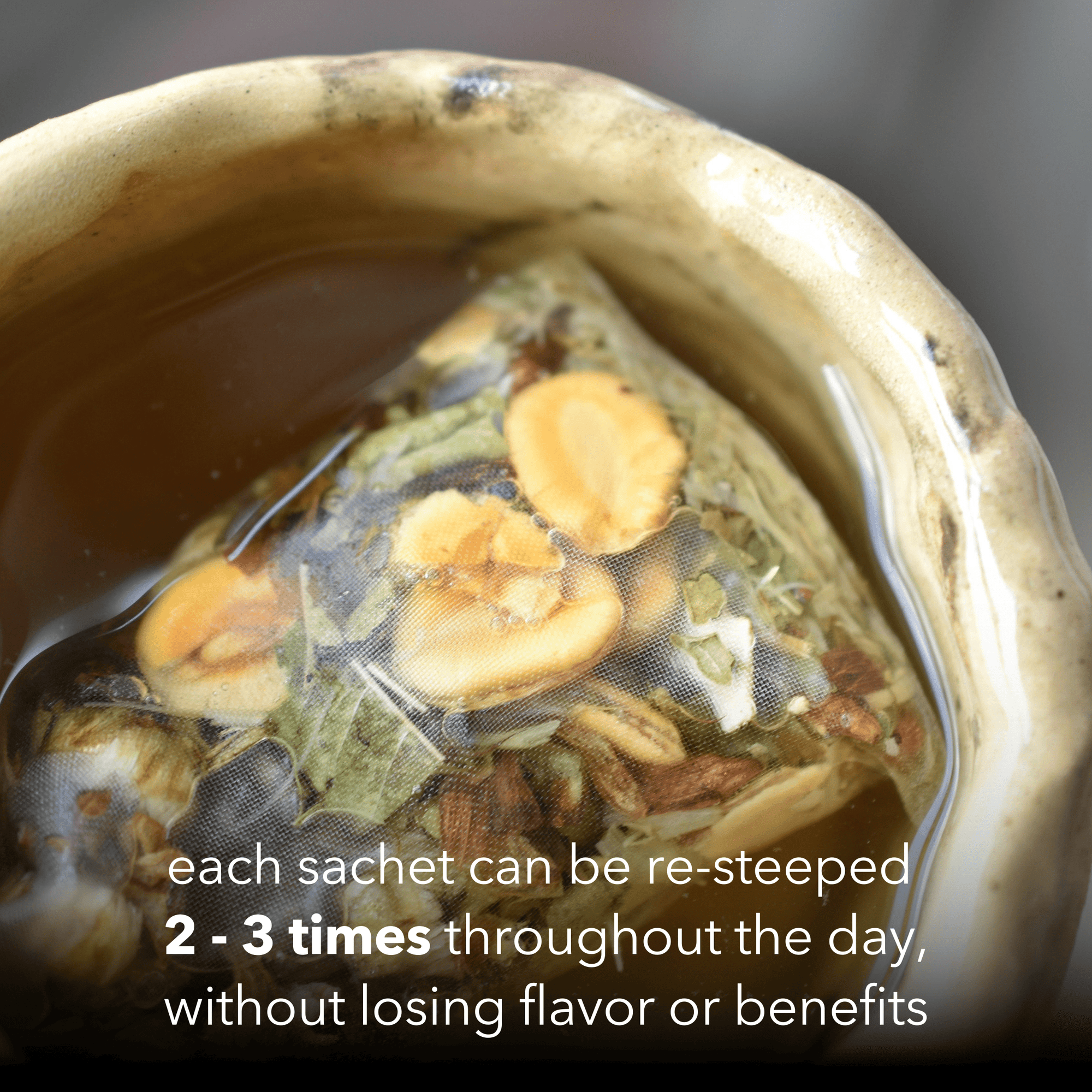
- Oversized sachet yields two to three full steeps
- No adaptogens — cooling and yin-nourishing by design
Best for: Evening wind-down, restlessness from a long or demanding day, those seeking a TCM-rooted alternative to conventional sleep teas.
When an adaptogen tisane does make sense
Adaptogens have a considered place in the day — it is simply earlier than the pillow. A few situations where they serve well:
Daytime fatigue that rest alone does not resolve. Persistent tiredness, understood in TCM as qi depletion, is where a blend like Cordyceps & Rose is designed to help — steady energy through the day without the spike and crash of caffeine.
Demanding seasons and recovery from burnout. Adaptogens can support resilience across a hard stretch, though they are no substitute for rest, lighter days, and time.
Moving away from coffee. A caffeine-free adaptogen tisane in the morning can hold the day steady in the space where a fourth cup of coffee would only unsettle it.
For the evening, a cooling tisane is the more considered choice.
How to brew the evening cup
An evening tisane rewards a little care, and timing matters as much as method.
Temperature and steeping time: just off the boil, around 96 to 98°C, for six to seven minutes. Chrysanthemum flowers can turn bitter if left much longer, so keep to the window.
When to drink it: around 60 to 90 minutes before bed, giving the body time to settle and time to process the liquid so sleep is less likely to be disturbed.
Consistency over intensity: a single cup, brewed well, most evenings does more than an occasional strong one. Treat it as a nightly ritual rather than an emergency measure.
With or without food: gentle on an empty stomach, and a light snack alongside is fine if you prefer.
Cooling tisanes, Western sedatives, and adaptogens compared
Three approaches to rest, and what each is actually suited for:
| Feature | Cooling TCM tisane (e.g. Chrysanthemum & Goji) | Western sedative teas | Adaptogens |
|---|---|---|---|
| What it does | Clears internal heat, nourishes yin, settles a busy mind | Direct nervous-system calming | Steadies the stress response and energy |
| Example botanicals | Chrysanthemum, goji, longan, jujube | Chamomile, valerian, passionflower | Cordyceps, rhodiola, ginseng, ashwagandha, reishi |
| Best time of day | Evening | Evening | Mostly morning to midday |
| Effect on sleep | Supports natural wind-down | Encourages drowsiness | Indirect; several are energizing and can hinder sleep |
| Caffeine | None | Usually none | None, though energizing by action |
Frequently asked questions
Do adaptogens help you sleep?
Not usually, and some can make sleep harder. Adaptogens steady the body's stress response, but many — cordyceps, rhodiola, and ginseng among them — are energizing and better suited to daytime use. A calmer few, such as ashwagandha and reishi, sit closer to the evening. For winding down, a cooling tisane or gentle sedative herb is the more reliable choice.
Does Chrysanthemum & Goji contain adaptogens?
No. It is made of chrysanthemum, goji, longan, and jujube — none of which are adaptogens. It supports rest through a cooling, yin-nourishing approach rooted in Traditional Chinese Medicine, rather than by stimulating the body or sedating it.
Is Chrysanthemum & Goji a sedative?
No. In the Traditional Chinese Medicine view, a restless evening often reflects excess internal heat, and chrysanthemum is used to cool and clear it so the body can settle on its own. The effect is gentle and cumulative — it builds with a regular evening habit rather than acting as a switch.
Which qìsane tisane contains adaptogens?
Cordyceps & Rose. It is an energizing daytime blend built around cordyceps and astragalus to support steady qi through the day — a caffeine-free alternative to coffee, made for morning or midday rather than evening.
When should I drink an evening tisane?
Around 60 to 90 minutes before bed. That leaves time for the cup to settle the body and for the liquid to be processed, so sleep is less likely to be interrupted through the night.
How long before I notice a difference?
An evening tisane works best as a habit. Some people feel a difference within a few evenings; for most, the benefit deepens over a couple of weeks of consistent use, and lives as much in the ritual of the cup as in the botanicals themselves.
Can I drink it every night?
For most healthy adults, yes — it is caffeine-free, additive-free, and gentle enough for nightly use. If you are pregnant, breastfeeding, taking prescription medication, or managing a health condition, please seek guidance from your doctor before beginning any new herbal routine.
This article is for general education only and is not a substitute for the diagnosis or treatment of a sleep disorder or any other medical condition. If you experience chronic insomnia, sleep apnea, or persistent sleep difficulties, please consult a healthcare provider. If you are pregnant, breastfeeding, taking prescription medication, or living with a health condition, seek medical guidance before starting a new herbal routine. Individual responses vary; discontinue use if you experience any adverse effect.
These statements have not been evaluated by the Food and Drug Administration. This product is not intended to diagnose, treat, cure, or prevent any disease.
Related reading: