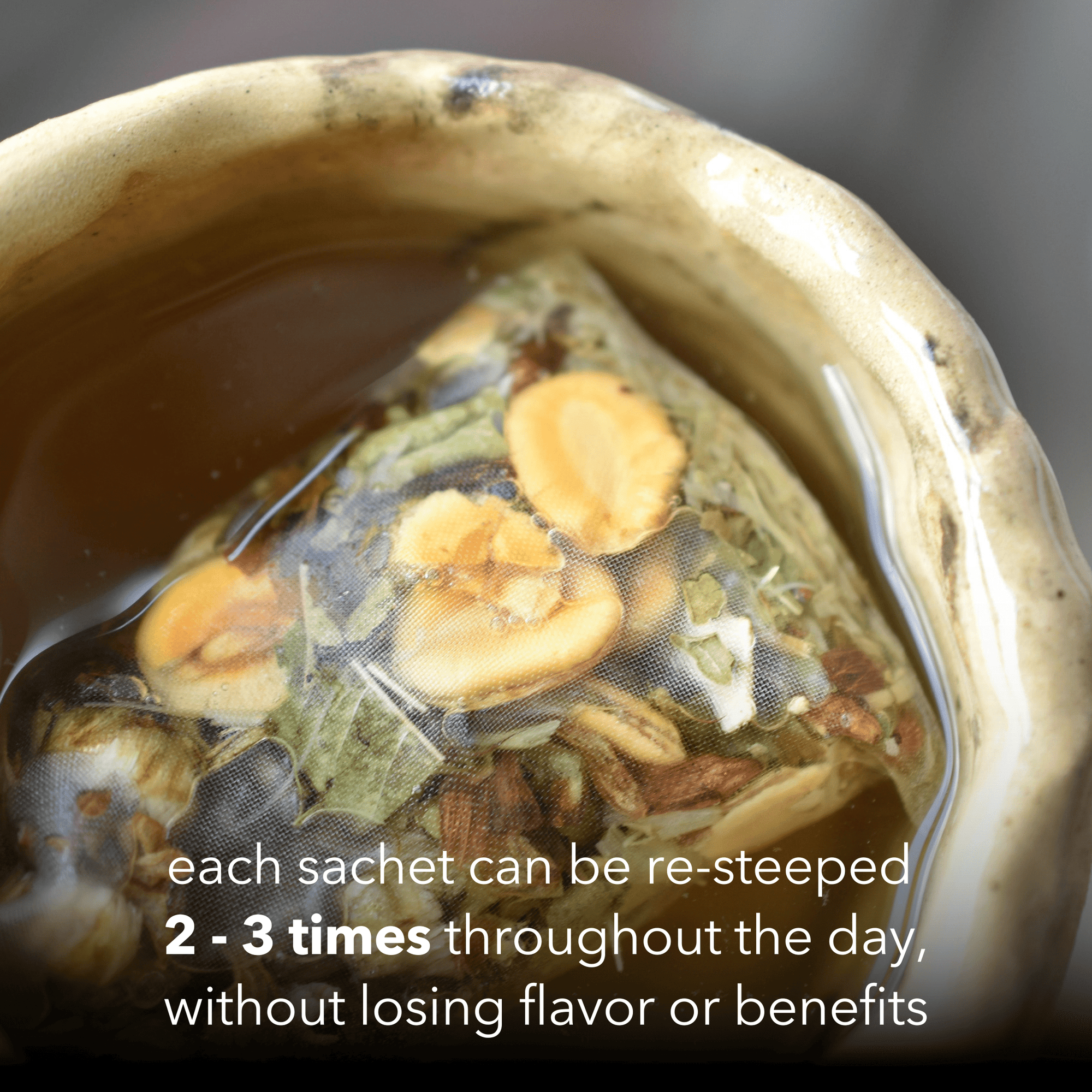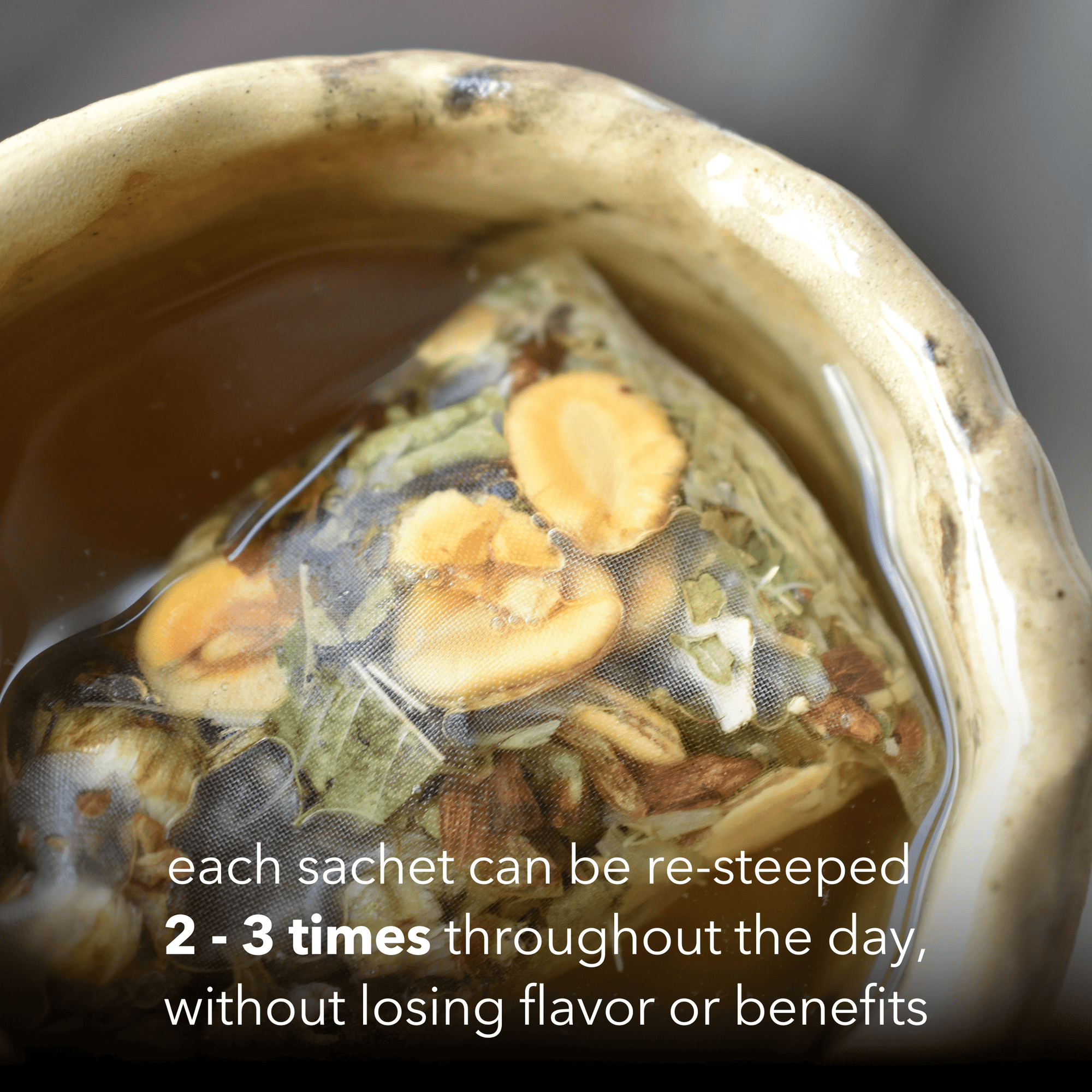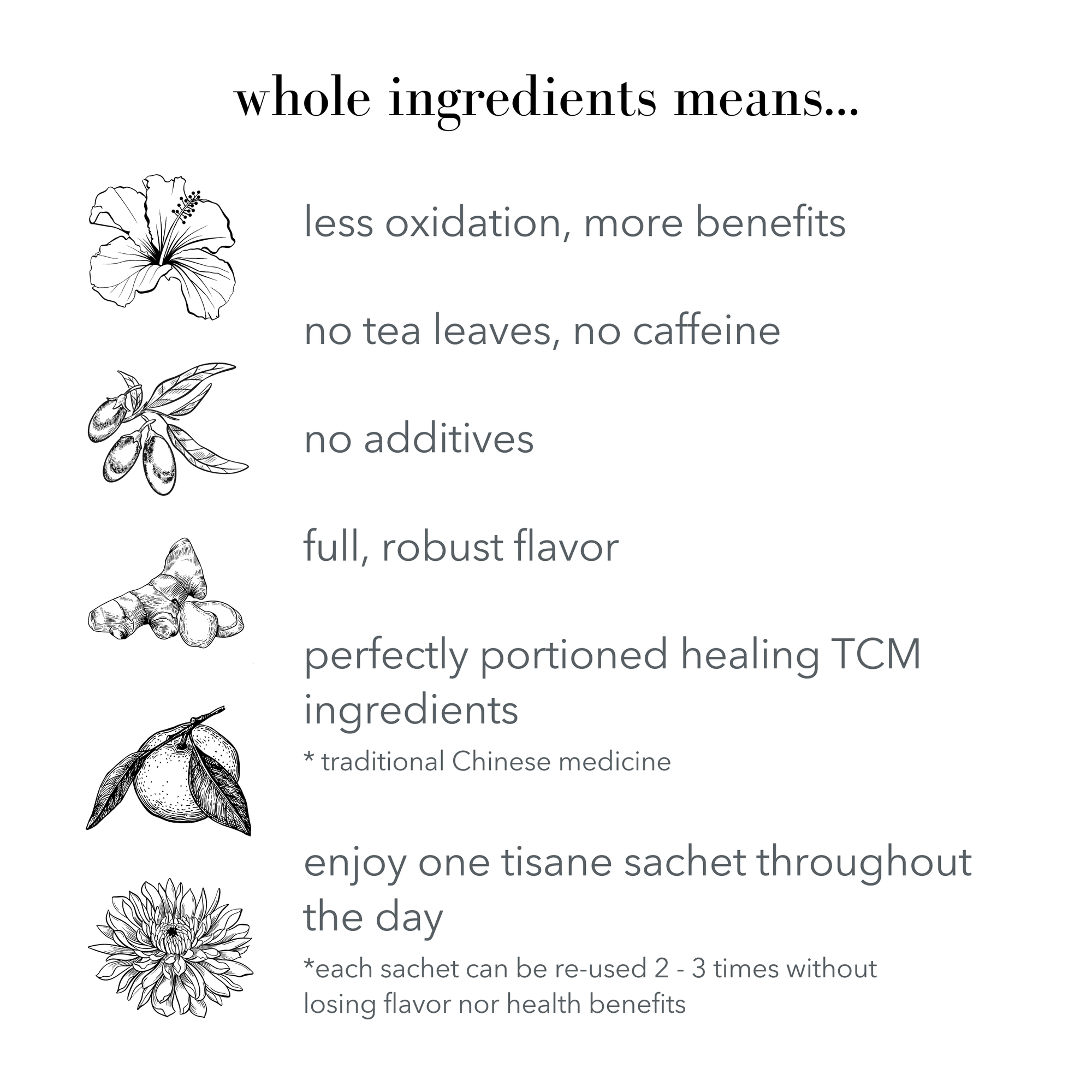


To taste what whole flowers and fruit bring to an herbal infusion, brew the same blend twice and put the cups next to each other. Keep the water, temperature and steep time the same. The one thing that changes is that the second pour goes over ingredients you’ve already steeped. Compare the two cups as they cool. You might prefer the softer second cup to the first.
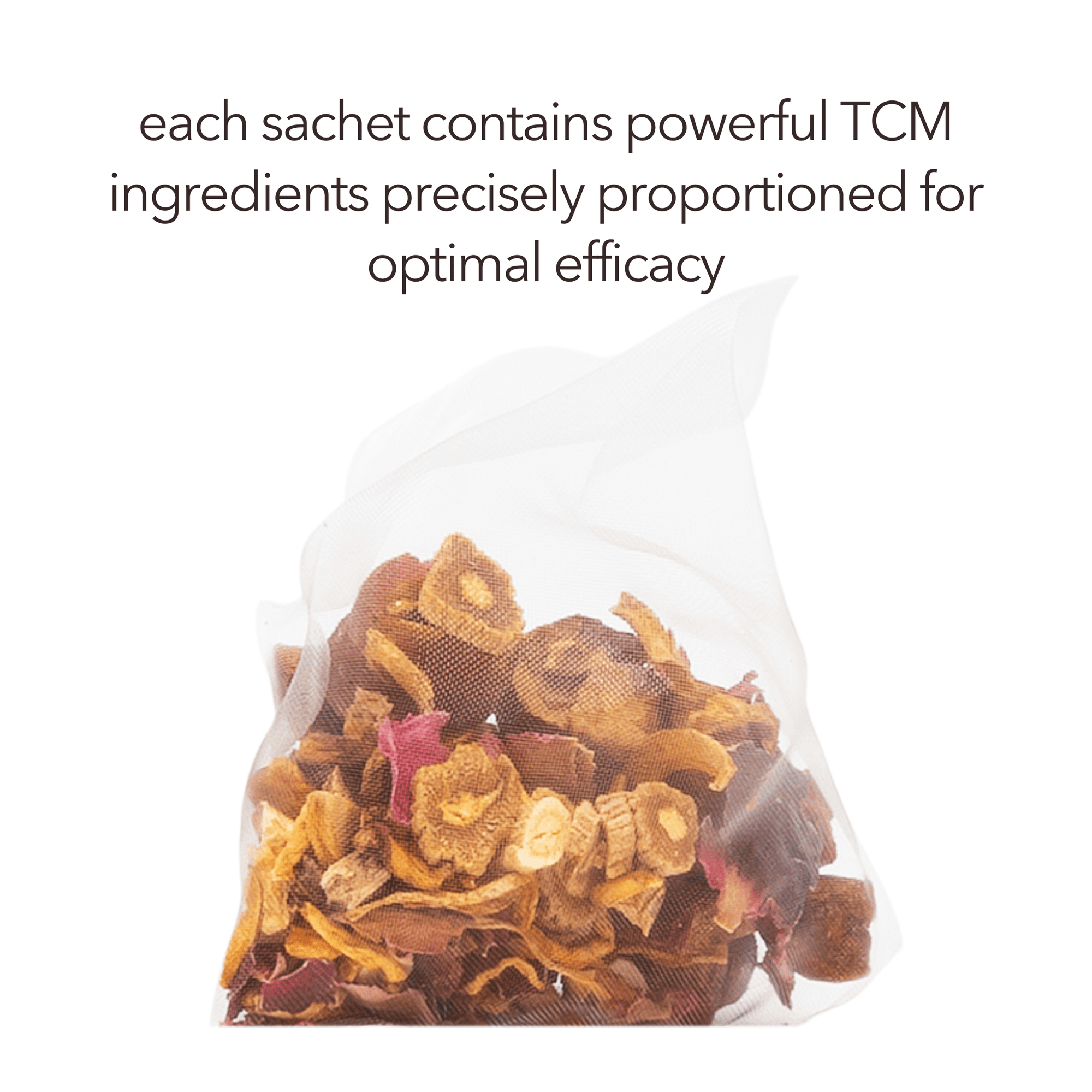
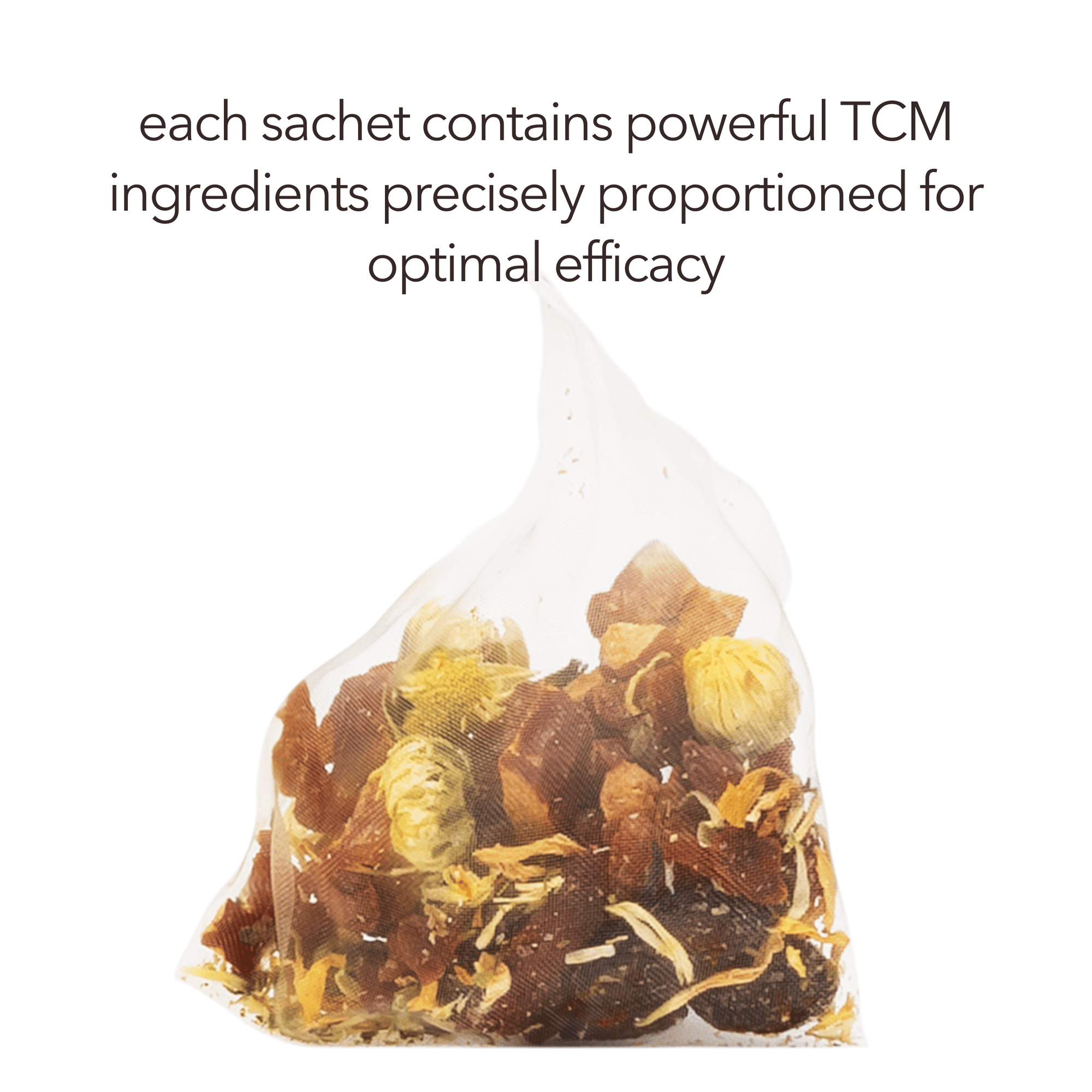
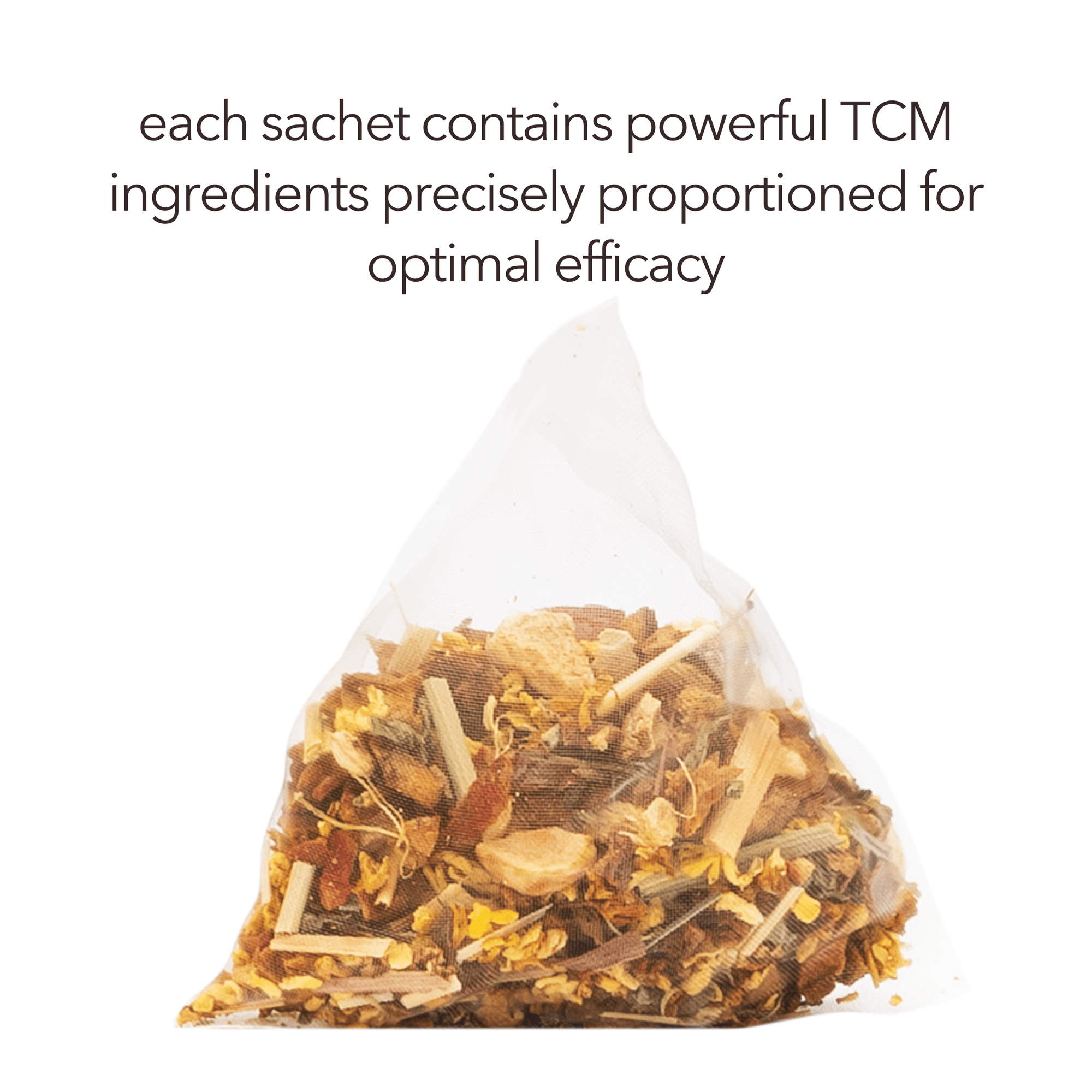
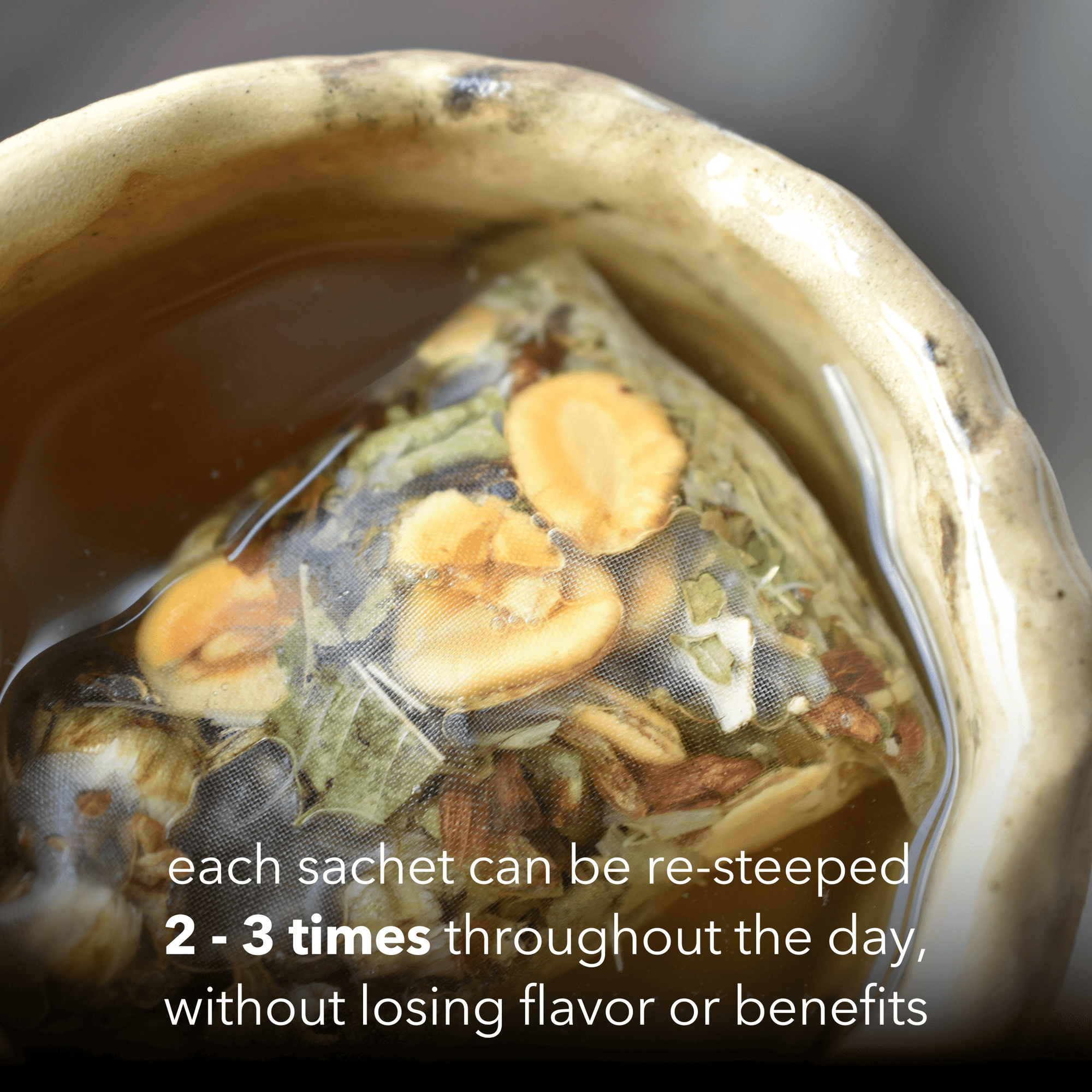
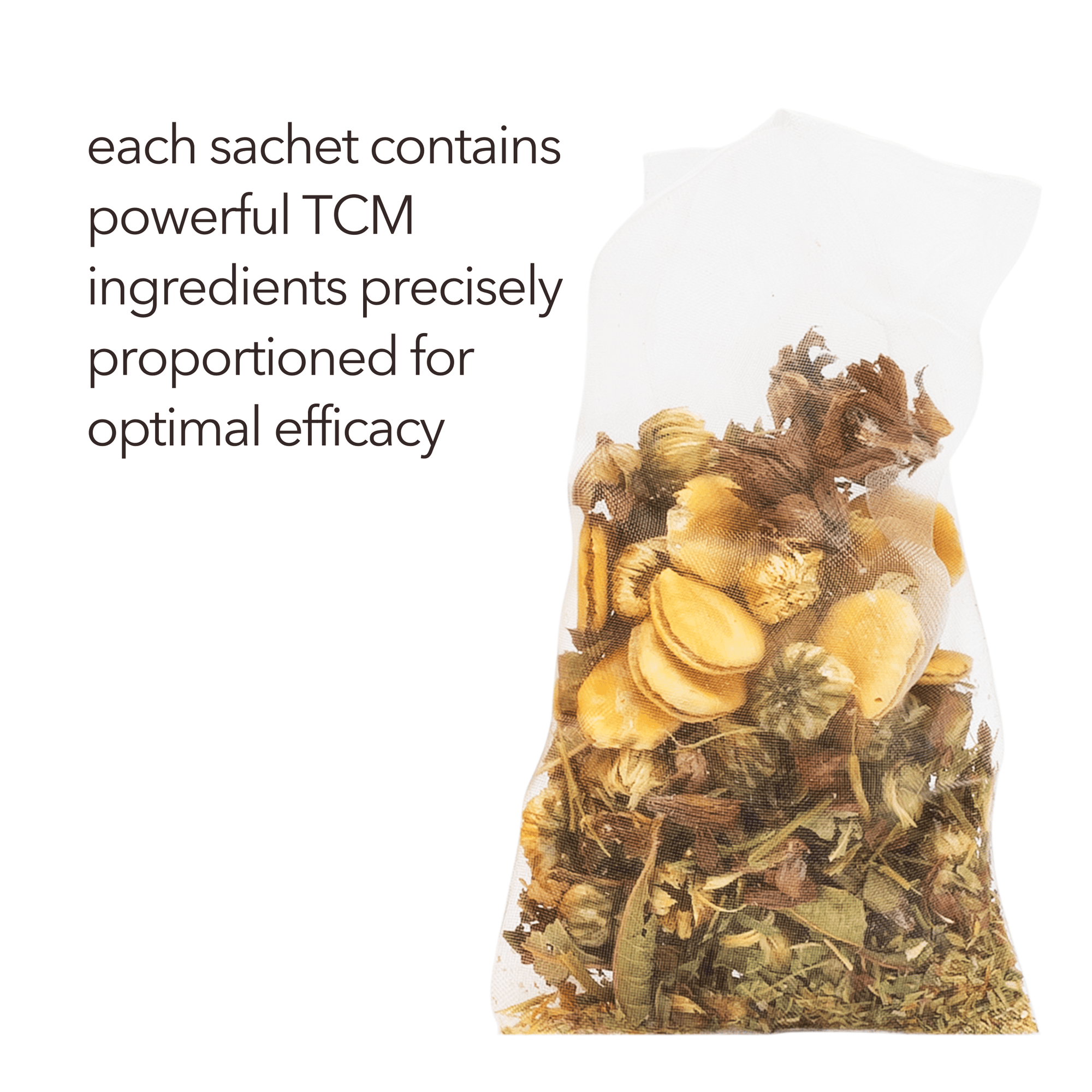
You can do this with loose botanicals and a strainer or with a roomy sachet that holds whole pieces. A clear, heat-safe cup lets you watch the flowers and fruit soften, but any two matching mugs work for the tasting.
Brew two cups from the same ingredients
- Pick a blend with a clear flavor contrast. For a floral cup with fruit underneath, try qìsane’s chrysanthemum & goji. The flowers are gently floral, and goji berries, jujube dates and longan add a rounder sweetness. Use the same sachet for both pours, or use the same batch of loose ingredients in a strainer.
- Follow the blend’s directions for the first cup. For qìsane’s chrysanthemum & goji, that’s 96–98°C (205–208°F) for 6–7 minutes. Other botanicals and blends have their own directions. Use the same amount of water for each pour; if you don’t have a measuring cup, fill each matching mug to the same point.
- Repeat right away with fresh hot water. Move the sachet or strainer to the second mug and pour in fresh water at the same temperature. Keep the steep time the same for this comparison. Remove the botanicals when the timer goes off.
- Set aside a little of each cup, then taste when both are comfortably warm. The first cup has had more time to cool. If the second is still much hotter, give it a minute; temperature itself can change what you notice. Taste without honey or lemon first, so you’re comparing the infusion rather than the additions.
Compare color, aroma and flavor
You only need three short notes per cup. Try naming what you notice before deciding which steep you like better.
| Notice | Ask yourself |
|---|---|
| Color | Does the second cup look paler or much the same? Hold both in the same light. |
| Aroma | Which scent comes forward first: something floral, fruit-like or faintly grassy? |
| Flavor | What do you taste on the first sip, and what lingers after you swallow? |
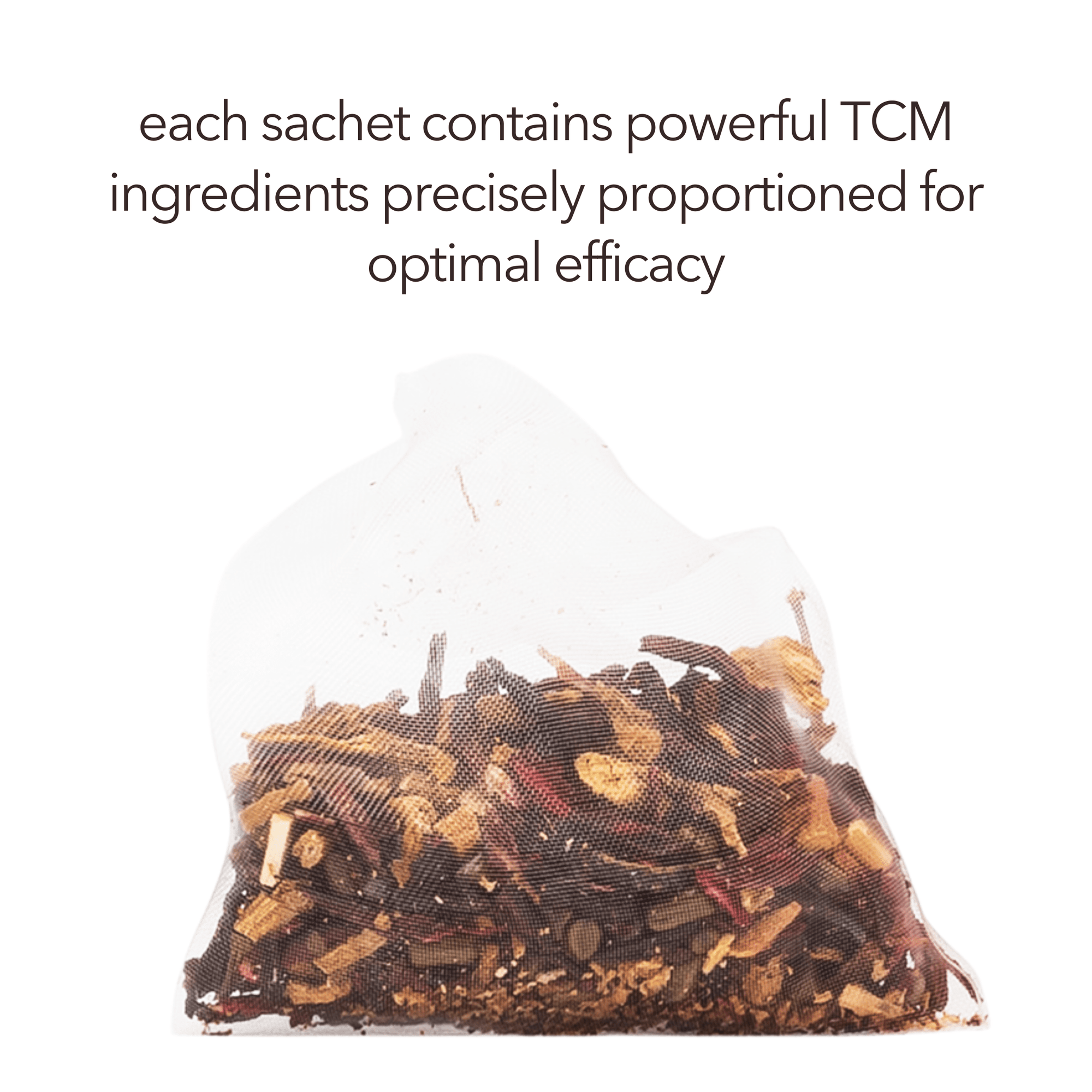
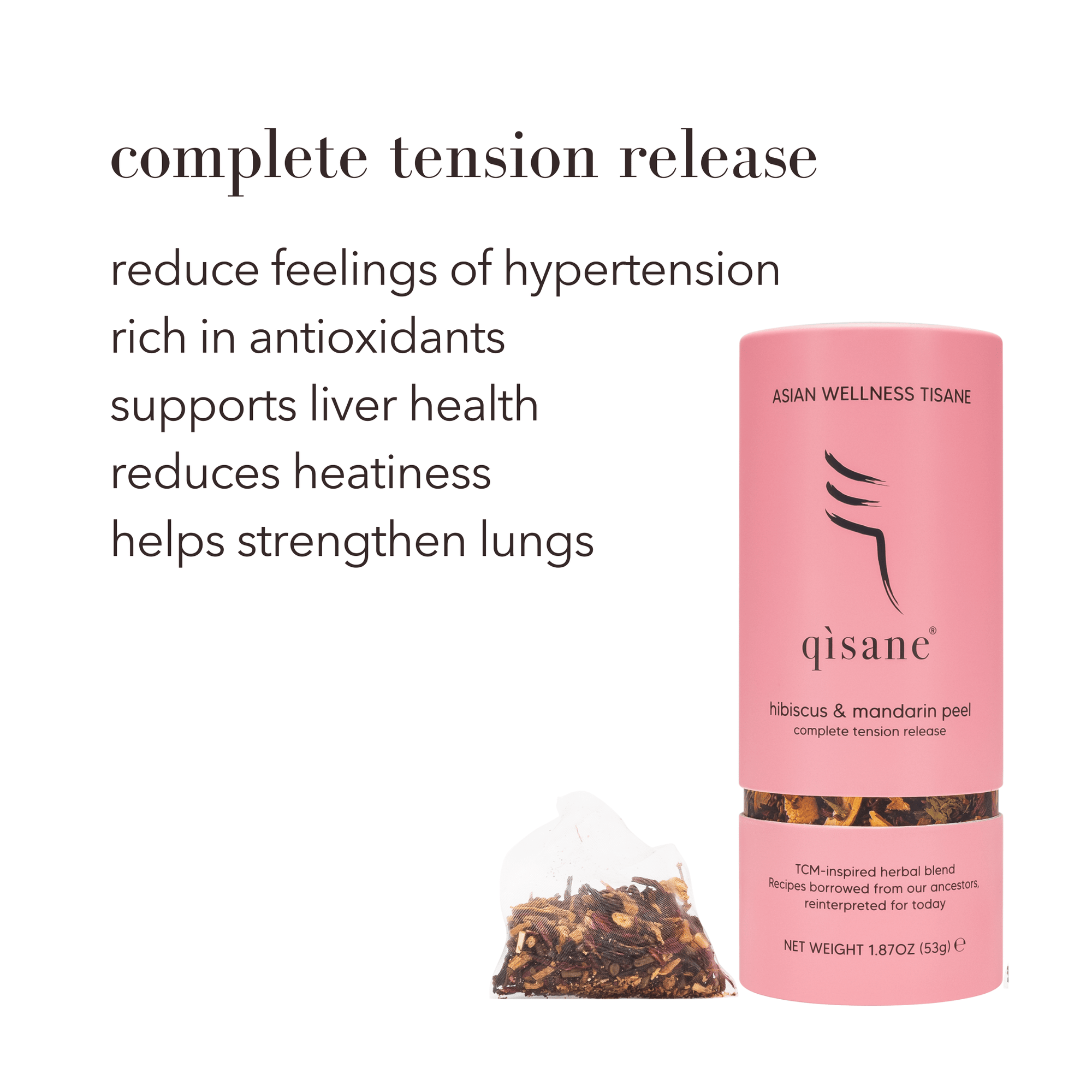
In chrysanthemum & goji, look for a clean floral note in the first cup and see whether the honeyed longan note is easier to pick out in the second. If you want a tarter contrast another day, qìsane’s hibiscus & mandarin peel combines hibiscus, mandarin peel, licorice root and cassia seeds. The product directions also call for 96–98°C (205–208°F) for 6–7 minutes. The first steep is tangier; the second is a chance to notice the citrus warmth once the tartness softens.
Chrysanthemum and goji are a familiar pairing in Chinese herbal traditions. The two-cup comparison is an at-home tasting exercise, not a traditional prescription or a way to measure health effects. A deeper color, for example, tells you what you see, not how beneficial the cup is.
Change one thing next time
If the second cup is too light for you, give it a little more time on your next tasting and keep the water amount the same. If you want to compare loose flowers with a sachet instead, use the same botanical in both and follow each product’s directions. That’s a useful preference test, not proof that one format is better or that an opaque bag contains lower-quality ingredients.
Keep the tasting note that matters most: which cup would I make again? If it’s the second, you don’t have to treat it as an afterthought. It can be the cup you look forward to.